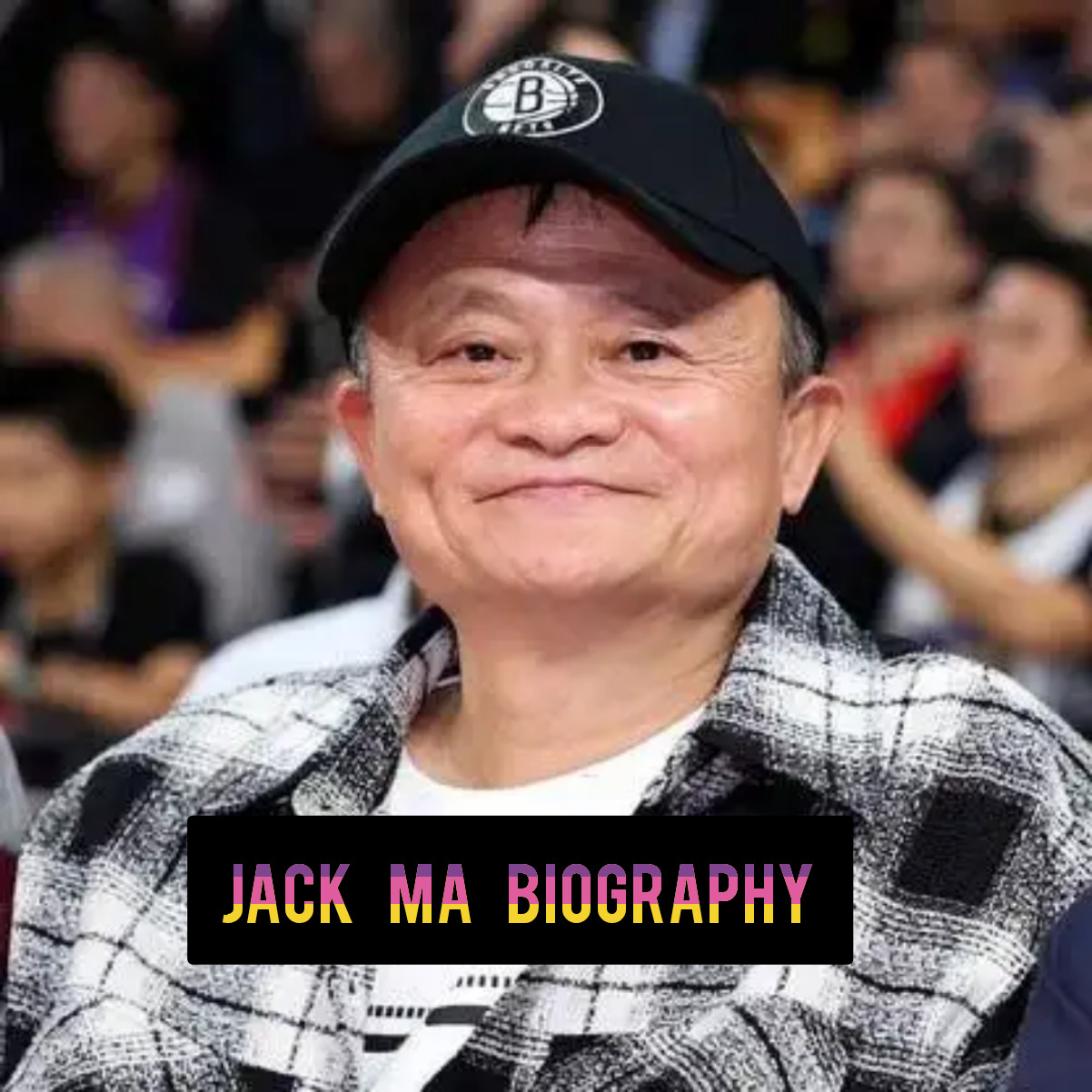
Jack Ma Biography
Jack Ma stands as one of the most remarkable self-made entrepreneurs of the modern era. From a modest upbringing in Hangzhou to building Alibaba into a global e-commerce powerhouse that transformed how hundreds of millions of people buy, sell, and pay, his journey captures the spirit of persistence and vision. This biography explores the full arc of his life, from childhood struggles to lasting influence on business, education, and philanthropy.
Did you know that Jack Ma, the man who co-founded Alibaba and helped bring e-commerce to China on a massive scale, failed his college entrance exam twice and was rejected from more than a dozen jobs, including a position at KFC, before ever launching a successful company? That early string of setbacks shaped the resilient mindset that later allowed him to turn a small apartment startup into one of the world’s most valuable technology firms.
Jack Ma Early Life
Jack Ma was born Ma Yun on September 10, 1964, in Hangzhou, the capital of Zhejiang province in eastern China. His birth came during a turbulent period in the country’s history, as the Cultural Revolution was underway and many traditional cultural practices faced severe restrictions. His father, Ma Laifa, worked as a photographer and performed traditional storytelling known as pingtan, a form of musical narrative popular in the region. His mother, Cui Wencai, worked on a factory production line. The family lived modestly, and young Ma grew up with an older brother and a younger sister in an environment where resources were limited and opportunities often depended on personal determination rather than connections or privilege.
From an early age Ma showed a strong curiosity about the world beyond China’s borders. He became fascinated with the English language and began teaching himself by listening to English radio broadcasts on a small pocket radio he bought at the age of twelve. Hangzhou, with its scenic West Lake and growing tourism after President Nixon’s visit in 1972, attracted foreign visitors. Ma seized this opportunity. For nine years he rode his bicycle about twenty-seven kilometers each day to the Hangzhou International Hotel, where he offered free guided tours to English-speaking tourists in exchange for conversation practice. One Australian family he met, led by Ken Morley, became lifelong friends. Their son David found Ma’s Chinese name difficult to pronounce and began calling him Jack, a nickname that stuck. The Morleys later invited the teenage Ma to visit Australia, an experience he has described as life-changing because it opened his eyes to different ways of thinking and living.
Academic life proved far more difficult. Ma struggled particularly with mathematics. He failed the national college entrance examination, known as the gaokao, on his first two attempts. His math score on one of those tries was extremely low. Family members urged him to pursue a different path, yet he persisted. On his third attempt he improved enough to gain admission in 1984 to Hangzhou Teachers College, later known as Hangzhou Normal University. He studied English and graduated with a bachelor’s degree in 1988. During his student years he served as head of the student council and continued refining his language skills. After graduation he was assigned to teach English and international trade at the Hangzhou Institute of Electronics and Engineering, now Hangzhou Dianzi University. The salary was modest, roughly twelve dollars a month at the time, yet he found genuine satisfaction in the classroom and earned a reputation as an engaging instructor who connected well with students.
Jack Ma Personal Life
Jack Ma married Zhang Ying, often called Cathy Zhang, whom he met while both were students at Hangzhou Teachers College. Zhang was known for her intelligence and strong academic performance. The couple married in 1988 and both began their careers as English teachers. Zhang has long been described by Ma as the most important decision of his life, more significant even than founding Alibaba. She supported his early business ventures, investing family savings and standing by him through periods of uncertainty and public skepticism. When their son faced challenges with excessive electronic gaming as a child, Zhang stepped away from her role as general manager of Alibaba’s China headquarters to focus on the family. She has remained a steady private presence throughout Ma’s public career.
The couple has a son and a daughter. Ma has kept details of his children’s lives largely out of the spotlight, valuing privacy for his family. Beyond family, Ma maintains a range of personal interests that reflect both discipline and creativity. He is a dedicated practitioner of tai chi and Chinese martial arts. He has spoken about applying tai chi principles of balance, flexibility, and perseverance to business challenges. He once starred in a short promotional film demonstrating martial arts and has practiced with noted figures in the field. Reading and writing kung fu fiction also occupy his time, as does meditation and occasional games of poker. In later years he took up painting as a serious hobby, producing works that friends have described as quite accomplished. He owns a vineyard and chateau in the Bordeaux region of France, reflecting an interest in wine and the French countryside. Despite his wealth he has often preferred relatively simple personal habits, and colleagues have noted that his core personality remained consistent even after great success. He is also known for energetic performances at company events, including singing and dancing, which employees have come to expect as part of Alibaba’s lively corporate culture.
Jack Ma Rise to Prominence
After several years of teaching, Ma began exploring business opportunities. In 1994 he founded the Haibo Translation Agency, drawing on his language skills to provide English translation and interpretation services. The following year a trip to the United States as an interpreter for a trade delegation changed everything. In Seattle a friend showed him the internet for the first time. Ma searched for the words “beer” and “China” and found almost nothing about his home country. He immediately recognized the potential. Upon returning home he and a partner launched China Pages, one of China’s earliest internet companies, which created websites for Chinese businesses. The venture generated some profit but faced intense competition from a state-linked rival, and Ma eventually left after an uncomfortable partnership with China Telecom.
He then spent time working on internet projects for a government ministry focused on foreign trade. By 1999 he decided the private sector offered greater freedom. He returned to Hangzhou and gathered seventeen friends and former students in a small apartment. With roughly sixty thousand dollars pooled among them, they founded Alibaba as a business-to-business online marketplace designed to connect Chinese small manufacturers with buyers around the world. Ma chose the name Alibaba because it was easy to pronounce in many languages and evoked the idea of opening doors to opportunity. Early growth was rapid. Within months the company attracted foreign investment, including funds from Goldman Sachs and SoftBank. Ma’s ability to communicate a clear vision and inspire loyalty proved more important than technical expertise. He has repeatedly noted that he never learned to write code and approached technology as a tool rather than an end in itself.
The breakthrough came as Alibaba expanded beyond pure business-to-business services. In 2003 the company launched Taobao, a consumer marketplace that allowed individuals and small sellers to trade freely. Unlike its main rival eBay, which charged listing and transaction fees, Taobao offered free basic services and generated revenue through advertising and premium features. The strategy worked. Taobao rapidly gained market share. In 2004 Alibaba introduced Alipay, an escrow-style payment system that built trust in online transactions by holding funds until buyers confirmed receipt of goods. This innovation addressed a critical barrier in China’s emerging digital economy. By 2005 Yahoo invested one billion dollars for a substantial stake in the group, providing capital and international visibility. Ma’s leadership style, which emphasized long-term thinking, customer focus, and a culture that valued employees, helped the company navigate intense competition and economic shifts.
Jack Ma Major Achievements
Alibaba’s growth under Ma’s guidance produced a series of landmark milestones. The 2007 initial public offering of Alibaba.com in Hong Kong raised significant capital. In 2014 the Alibaba Group itself listed on the New York Stock Exchange in what was then the largest IPO in history, raising twenty-five billion dollars and valuing the company at more than one hundred sixty billion dollars. That moment placed Ma on the global stage as one of Asia’s most prominent business leaders. The group expanded into cloud computing, digital entertainment, logistics, and financial services through Ant Group, which grew out of Alipay. Singles’ Day, an annual shopping festival promoted by Alibaba, became the world’s largest online shopping event by transaction volume, demonstrating the scale of consumer participation Ma helped unlock.
Beyond commercial success, Ma received numerous honors. He was named a Young Global Leader by the World Economic Forum, recognized among the most powerful business figures in Asia by major publications, and awarded the title of Business Leaders of the Decade by China Central Television. He has received honorary doctorates from universities including the University of Hong Kong and others. His influence extended into philanthropy. In 2014 he established the Jack Ma Foundation, focusing on education, entrepreneurship, environmental protection, and public health. The foundation’s Rural Teachers Initiative has supported thousands of educators in underserved areas of China. During the COVID-19 pandemic Ma and his foundation donated large quantities of medical supplies to more than one hundred fifty countries. He has also supported environmental causes through work with The Nature Conservancy and personal investments in sustainable projects. In business education he co-founded the Hupan School and later the Yungu School in Hangzhou, reflecting his belief that teaching remains central to progress.
Ma’s impact on China’s economy is difficult to overstate. Alibaba and its platforms enabled millions of small businesses and individual entrepreneurs to reach customers nationally and internationally. The rise of mobile payments through Alipay transformed daily financial habits for hundreds of millions of people. His emphasis on helping “small guys” become bigger created pathways for ordinary citizens to participate in the digital economy in ways that were previously unavailable.
Jack Ma Challenges and Setbacks
The path was never smooth. Early career rejections, including the well-known KFC story in which twenty-three of twenty-four applicants were hired and Ma was the sole rejection, could have discouraged a less determined person. China Pages faced competitive pressure that forced Ma to leave the company he had started. Building Alibaba required constant adaptation. The battle with eBay in the mid-2000s tested the company’s resolve, yet free listings and localized features ultimately prevailed. Financial pressures during the global downturn and the need to maintain trust in online transactions demanded continuous innovation.
The most public and consequential set of challenges arrived in 2020. Shortly before Ant Group was scheduled to complete what would have been the world’s largest initial public offering, Ma delivered a speech in Shanghai that criticized traditional banking practices and financial regulation. Chinese authorities halted the listing, launched investigations, and later imposed a substantial antitrust fine on Alibaba of approximately 2.8 billion dollars. Ma largely withdrew from public view for an extended period. Speculation about his whereabouts circulated widely. The episode illustrated the complex relationship between private enterprise and state oversight in China. Alibaba undertook restructuring, and Ant Group adjusted its business model. Ma accepted responsibility for the consequences of his remarks and focused on quieter pursuits, including painting, agricultural interests, and continued philanthropic work. The experience tested his resilience once again, yet he emerged still engaged with education and long-term societal goals rather than retreating permanently from influence.
Jack Ma Legacy and Current Status
Jack Ma stepped down as chief executive of Alibaba in 2013 and as executive chairman in 2019, choosing to focus more on education and philanthropy. He remains a significant shareholder and continues to serve as an informal mentor and source of inspiration within the broader Alibaba ecosystem. In recent years he has reappeared at selected events, including meetings with other private entrepreneurs and discussions about education in the age of artificial intelligence. He has spoken about the need for rural education to emphasize curiosity and creativity rather than pure memorization so that young people can thrive alongside advancing technology. He has invested in agricultural technology and shown interest in sustainable food production, even accepting a visiting teaching role related to those subjects. Appearances at company campuses and public events have become more frequent, signaling a measured return to visibility while maintaining distance from day-to-day management.
His net worth fluctuates with market conditions but remains in the tens of billions of dollars, placing him among China’s wealthiest individuals. More lasting than financial metrics is the cultural and economic legacy. Alibaba demonstrated that a Chinese company could compete on the global stage in internet services. The platforms he helped create continue to support vast numbers of merchants and consumers. The Jack Ma Foundation sustains work in education and environmental causes. Younger entrepreneurs often cite his story of repeated failure followed by breakthrough as motivation. His insistence that teachers and students should cultivate the ability to ask good questions rather than simply produce correct answers has particular resonance as artificial intelligence reshapes learning and work.
Conclusion
Jack Ma’s life illustrates that persistence, curiosity, and a willingness to learn from failure can open doors that once seemed permanently closed. From riding a bicycle to practice English with strangers to building systems that connected Chinese businesses to the world, he showed how individual initiative, when combined with timing and teamwork, can create lasting change. His story continues to unfold through education initiatives and quiet contributions, reminding readers that true influence often outlasts formal titles and public spotlight.
FAQs
Who is Jack Ma and why is he famous?
Jack Ma is the co-founder of Alibaba Group, the Chinese technology company that operates major e-commerce platforms including Taobao and Tmall as well as the payment service Alipay. He is famous for transforming online commerce in China and becoming one of the country’s most prominent self-made entrepreneurs.
When and where was Jack Ma born?
Jack Ma was born on September 10, 1964, in Hangzhou, Zhejiang province, China.
What is Jack Ma’s educational background?
He earned a bachelor’s degree in English from Hangzhou Teachers College, now Hangzhou Normal University, in 1988 after failing the national college entrance exam twice. He later completed studies at the Cheung Kong Graduate School of Business.
Who is Jack Ma’s wife and how many children do they have?
Jack Ma is married to Zhang Ying, also known as Cathy Zhang. The couple has a son and a daughter.
How did Jack Ma start Alibaba?
In 1999 he gathered seventeen friends and former students in a Hangzhou apartment. They pooled about sixty thousand dollars and launched Alibaba as an online marketplace connecting Chinese businesses with global buyers.
What are some of Jack Ma’s major business achievements?
Key achievements include launching Taobao and Alipay, defeating eBay in the Chinese market, securing major investment from Yahoo, and leading Alibaba through its record-setting 2014 IPO on the New York Stock Exchange.
What challenges did Jack Ma face in his career?
He faced repeated academic and job rejections early on, competitive pressures with his first internet company, intense rivalry with eBay, and a major regulatory setback in 2020 when Ant Group’s planned IPO was halted after he publicly criticized financial regulations.
What is Jack Ma doing now?
He focuses on philanthropy through the Jack Ma Foundation, education initiatives especially in rural areas and the AI era, personal interests such as painting and agriculture, and occasional mentoring roles while remaining a significant shareholder in Alibaba.
What are Jack Ma’s main hobbies?
He practices tai chi and martial arts, paints, reads and writes kung fu fiction, meditates, and owns a vineyard in France.
How has Jack Ma contributed to philanthropy?
Through the Jack Ma Foundation he supports rural teachers, education reform, environmental protection, and public health efforts. He has donated medical supplies during global health crises and funded programs that help young entrepreneurs and underserved communities.