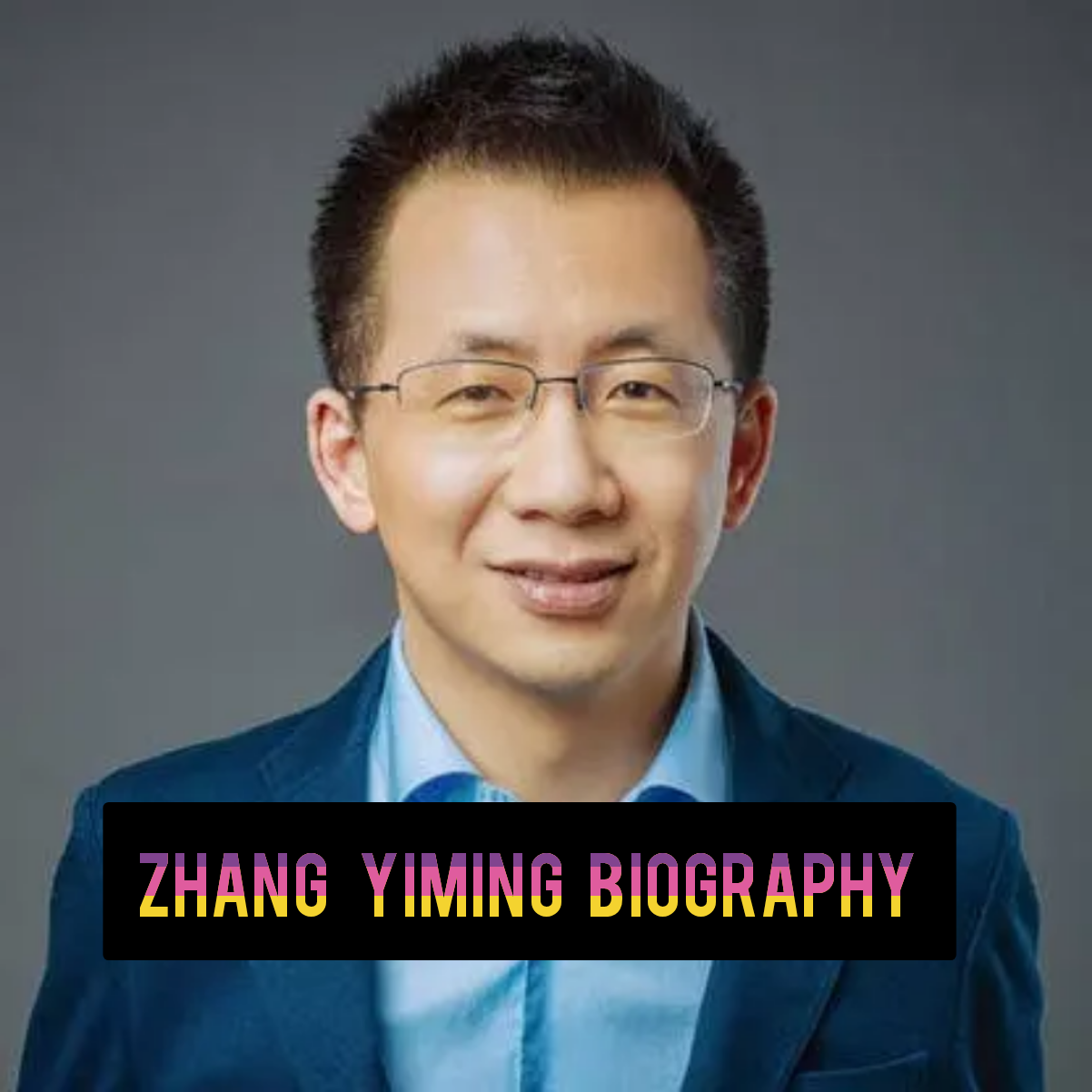
Zhang Yiming Biography
Zhang Yiming is a Chinese internet entrepreneur whose quiet determination and focus on algorithms reshaped how billions of people discover and share information online. As the founder of ByteDance he created platforms that include the news aggregator Toutiao and the short video apps Douyin and TikTok. These products turned personalized content recommendation into a global force and made him one of the wealthiest individuals in the world. His journey from a modest background in southern China to the creation of a technology empire valued in the hundreds of billions of dollars offers a clear example of how technical insight and persistent experimentation can change everyday digital life.
An interesting fact that draws many readers in is that Zhang once chose his university by applying a set of personal rules. He wanted a school far from home that had snow because he had never seen it before that was near the sea for seafood and that offered a better gender balance than typical engineering programs. Nankai University in Tianjin met every condition. That same methodical approach later guided the design of recommendation systems that power some of the most used apps on the planet.
Zhang Yiming Early Life
Zhang Yiming was born on 1 April 1983 in the Longyan area of Fujian province in southeastern China. Some records place his birth specifically in Yongding District. He was the only child of parents who worked as civil servants. His father later operated an electronics processing factory while his mother worked as a nurse. The household was ordinary rather than privileged and the family encouraged curiosity about technology and business. Conversations at home often turned to friends who had encountered new products or innovations overseas. This early exposure helped Zhang develop an interest in how ideas and tools could create practical results.
Growing up in Fujian he showed a practical bent toward machines and information. In middle school he read newspapers from cover to cover. He preferred activities that produced visible change quickly and found traditional chemistry experiments less appealing because the outcomes felt slow and detached. Computers offered faster feedback and a sense of ownership over the results. These preferences pointed him toward software rather than pure hardware or laboratory science.
In 2001 Zhang enrolled at Nankai University in Tianjin. He began in microelectronics engineering but soon transferred to software engineering after discovering greater interest in coding and systems. He graduated in 2005 with a Bachelor of Engineering degree in computer engineering. During his university years he repaired computers for classmates as a side activity and spent time on campus online forums discussing web development. He also met the woman who would become his wife. The combination of technical training and early hands on problem solving prepared him for the rapid cycles of startup work that followed.
Zhang Yiming Personal Life
Zhang Yiming is married. He met his wife while studying at Nankai University. Public details about their family life remain limited because he has consistently preferred privacy. Reliable information about children or daily home routines is scarce and he rarely discusses personal matters in interviews or on social platforms. This discretion extends to his living arrangements. In later years he has been associated with residence in Singapore while maintaining Chinese citizenship.
He is known for a measured and analytical approach to decisions that extends beyond business. Reading is a long standing interest. He has spoken about learning from biographies because individual life stories reveal common patterns of handling difficulty. He values systems that produce clear feedback and has applied that preference to both product design and personal choices. Colleagues and early teammates have described him as reserved in conversation yet decisive once data and reasoning align. These traits appear in accounts of his university years and early career and continue to shape how he is perceived as a leader who prefers substance over visibility.
Zhang Yiming Rise to Prominence
After graduating in 2005 Zhang entered the technology sector at a moment when China’s internet industry was expanding quickly. In February 2006 he joined the travel website Kuxun as its fifth employee and first engineer. Within a year he rose to technical director and managed teams responsible for backend systems and product features. The experience taught him both engineering discipline and the practical realities of sales and user needs.
In 2008 he moved to Microsoft but found the corporate environment restrictive and left after a short period. He then joined the microblogging startup Fanfou founded by Wang Xing. The service gained early attention yet ultimately closed under regulatory pressure. In 2009 when Expedia prepared to acquire Kuxun Zhang took over the company’s real estate search business and launched 99fang.com. This was his first independent company and gave him direct experience building algorithmic search and recommendation tools.
The decisive step came in March 2012. At age twenty nine Zhang founded ByteDance in a four bedroom apartment in Beijing’s Zhongguancun district together with university friend Liang Rubo and a small team. The core idea was to use machine learning to deliver personalized content rather than rely on human editors or social connections. The first major product was Toutiao a news aggregator that learned user preferences and fed relevant articles automatically. Early growth was rapid because the algorithm improved with every interaction. In 2016 the company launched Douyin a short video app for the Chinese market. The following year the international version TikTok appeared and quickly gained users among younger audiences worldwide. In 2018 ByteDance acquired Musical.ly for about eight hundred million dollars and merged it into TikTok further accelerating global reach.
By late 2018 ByteDance apps together served more than one billion monthly users and the company was valued at around seventy five billion dollars making it the world’s most valuable private startup at the time. Zhang’s focus on recommendation technology rather than traditional social graphs set ByteDance apart from earlier platforms and established the foundation for its later expansion into e commerce education gaming and artificial intelligence.
Zhang Yiming Major Achievements
Under Zhang’s leadership ByteDance became one of the most influential technology companies of its generation. Toutiao demonstrated that algorithms could outperform editorial curation for mass news consumption. Douyin and TikTok turned short form video into a dominant form of entertainment and communication used by hundreds of millions of people across continents. The platforms enabled new forms of commerce education and creative expression while generating substantial advertising and transaction revenue.
Zhang received early recognition. Forbes included him on its China 30 Under 30 list in 2013. Fortune placed him on its 40 Under 40 list in 2018. Time magazine named him one of the 100 Most Influential People of 2019. His equity stake in ByteDance estimated around twenty to twenty one percent combined with super voting shares that give him majority control of voting rights has produced extraordinary personal wealth. By 2024 he ranked as China’s richest person. In September 2026 estimates placed his net worth near one hundred five billion dollars making him Asia’s richest individual and the first Chinese centibillionaire according to major wealth indexes.
Beyond products Zhang’s approach influenced how technology companies design content systems. The emphasis on machine learning that continuously adapts to user behavior became a model studied and adopted across the industry. ByteDance’s later investments in artificial intelligence including conversational tools further extended the company’s reach. Zhang has also supported educational causes including donations connected to his alma mater though he maintains a lower public philanthropic profile than some peers.
Zhang Yiming Challenges and Setbacks
Zhang’s path included repeated tests. Early startups such as Fanfou closed under external pressure teaching him the importance of regulatory awareness. At Microsoft he experienced the limits of large corporate structures and chose to leave rather than remain constrained. Building 99fang.com required navigating the competitive real estate search market before the larger opportunity at ByteDance became clear.
Inside China ByteDance faced content regulation. In 2018 authorities shut down the humorous video app Neihan Duanzi. Zhang issued a public apology stating that the product had failed to align sufficiently with official values and committed the company to stronger compliance measures. The episode required rapid organizational changes including increased content moderation staffing.
Internationally TikTok encountered sustained scrutiny especially in the United States. Concerns over data security Chinese ownership and potential influence led to multiple attempts to force a sale or ban the app. Zhang stepped down as chief executive in 2021 and later as chairman completing a leadership transition that placed Liang Rubo in day to day control. Despite these pressures Zhang retained majority voting rights and continued to shape long term strategy. The company adapted by negotiating structural changes for the United States business while expanding artificial intelligence capabilities and other product lines. Each setback reinforced the need for technical excellence careful governance and the ability to adjust without abandoning core principles of algorithmic personalization.
Zhang Yiming Legacy and Current Status
Zhang Yiming remains founder and a controlling shareholder of ByteDance even after stepping back from executive titles. The company continues to operate major platforms that reach more than one billion users and generate annual revenue measured in the tens of billions of dollars. Its work in short video artificial intelligence and related fields keeps it at the center of global technology competition. Zhang’s influence is visible in the widespread adoption of recommendation systems that prioritize individual preference over traditional gatekeepers.
He maintains a low public profile. He rarely appears at industry events or on social media and focuses on longer term questions of technology direction. Recent company activity includes progress in artificial intelligence tools that have gained large user bases inside China and continued navigation of international regulatory environments. His net worth fluctuates with company valuation yet consistently ranks among the highest in Asia reflecting the enduring commercial strength of the platforms he launched.
The broader legacy is the demonstration that a company founded on machine learning and user behavior data could grow from a Beijing apartment into a global media and technology force. Zhang showed that careful observation of how people interact with information combined with rigorous engineering can create products that scale across cultures and languages.
Conclusion
Zhang Yiming’s career illustrates the power of quiet persistence and systematic thinking. From a student who repaired computers and chose a university by practical criteria he built systems that now shape daily experience for vast numbers of people. The central lesson is that attention to how technology actually serves users when paired with the willingness to restart after setbacks can produce results far larger than any single individual anticipates. His story continues to encourage those who prefer substance and steady improvement over noise and short term attention.
FAQs
Who is Zhang Yiming?
Zhang Yiming is a Chinese internet entrepreneur best known as the founder of ByteDance the company behind Toutiao Douyin and TikTok. He is one of the wealthiest people in the world and retains significant voting control of the company.
When and where was Zhang Yiming born?
Zhang Yiming was born on 1 April 1983 in the Longyan area of Fujian province China.
What is Zhang Yiming’s educational background?
He graduated from Nankai University in 2005 with a Bachelor of Engineering degree after studying microelectronics and then software engineering.
Is Zhang Yiming married?
Yes he is married. He met his wife while attending Nankai University. He keeps details of his family life private.
What companies has Zhang Yiming founded or worked for?
He worked at Kuxun Microsoft and Fanfou before founding 99fang.com and then ByteDance in 2012. ByteDance remains his primary achievement.
What are the main products associated with Zhang Yiming?
The main products are the news app Toutiao and the short video platforms Douyin in China and TikTok internationally.
What awards has Zhang Yiming received?
He appeared on the Forbes China 30 Under 30 list in 2013 the Fortune 40 Under 40 list in 2018 and the Time 100 list of most influential people in 2019.
What challenges has Zhang Yiming faced?
He dealt with early startup failures regulatory actions against content apps in China and prolonged international scrutiny of TikTok especially regarding data security and ownership in the United States.
What is Zhang Yiming’s current role?
He stepped down as chief executive in 2021 and later as chairman but remains founder and holds majority voting rights in ByteDance while focusing on longer term strategy.
What is Zhang Yiming’s estimated net worth?
As of late 2026 estimates from major wealth indexes place his net worth around one hundred five billion dollars making him one of the richest individuals in Asia.