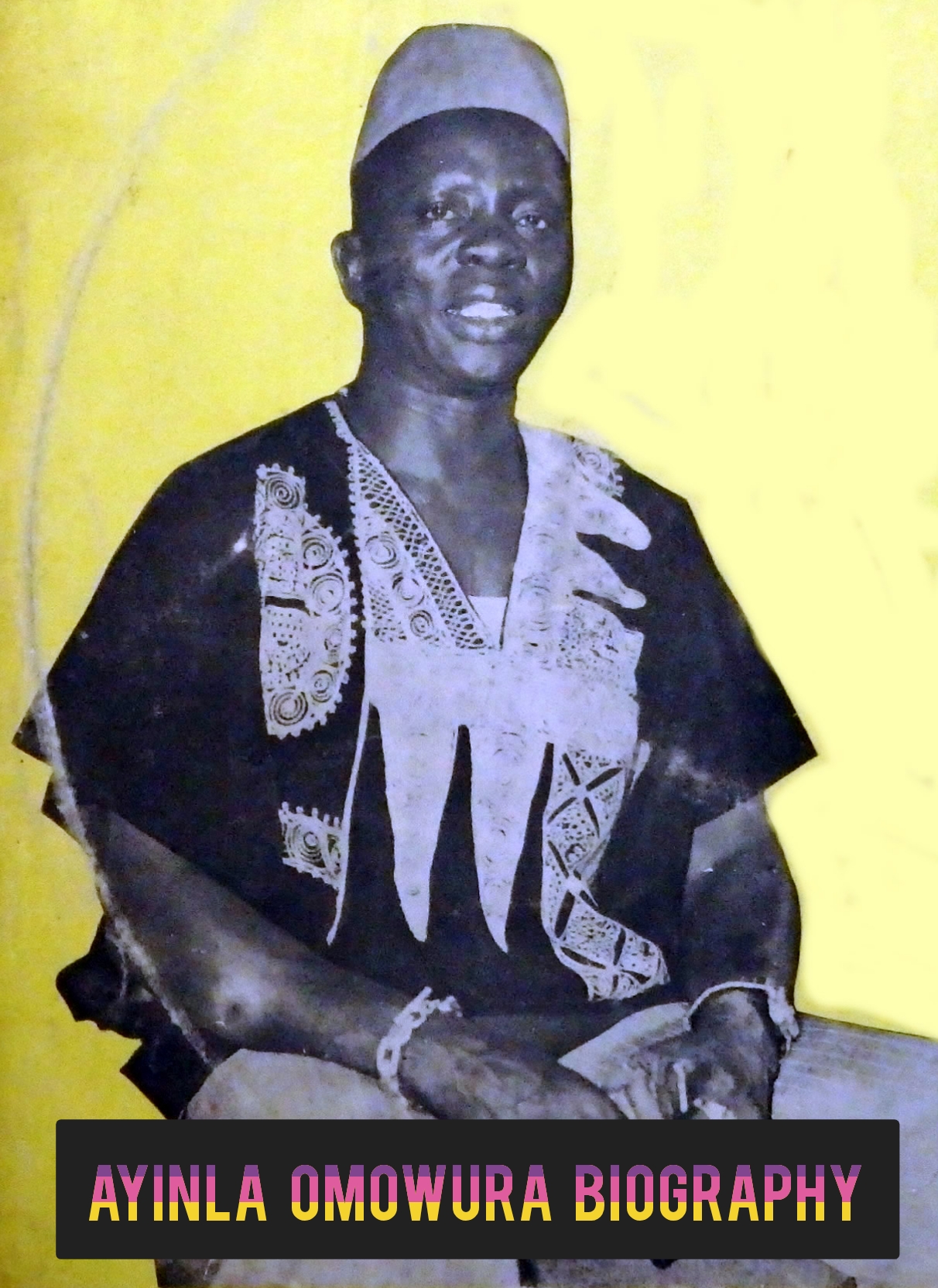
Ayinla Omowura Biography
Ayinla Omowura was one of the most powerful voices in Apala music, a Yoruba genre rooted in Islamic rhythm and oral poetry. Born in Abeokuta, he rose from ordinary street jobs to become a recording star whose songs spoke directly to the working class. His fierce delivery, rich use of proverbs and fearless commentary made him a household name across southwestern Nigeria in the 1970s.
This biography tells the full story of his life from a blacksmith’s home in Itoko through his discovery as a singer, his years of success with EMI Records, the personal complexities that shaped him, and the sudden end that cut short a brilliant career. It is written in clear language so that every reader can understand the man behind the legendary voice.
Ayinla Omowura Intro
Few Nigerian musicians of the 1970s commanded a room the way Ayinla Omowura did. When he stepped onto a stage or into a recording studio, the air seemed to tighten. His voice was deep, urgent and full of fire. He sang Apala in the Olalomi style, filling every line with Yoruba proverbs, sharp social observation and open boasts of his own greatness. Fans called him Egunmogaji, Anigilaje and Hadji Costly because of the expensive lace and gold he wore. Yet the same man who dressed like a king had once worked as a bus park boy and a butcher.
What still draws people to him more than forty years after his death is the sense that he spoke for ordinary people. Drivers, traders and artisans heard their own lives in his songs. He could praise the government one day and demand fairness the next. He could turn a simple event into a memorable story. That combination of street wisdom, musical power and larger than life personality made Ayinla Omowura unforgettable.
Ayinla Omowura Early Life
Ayinla Omowura was born Waidi Ayinla Yusuf Gbogbolowo in 1933 in Itoko, a quarter of Abeokuta in present day Ogun State, Nigeria. His father, Yusuff Gbogbolowo, was a blacksmith who also played sakara music in his spare time. His mother, Wuramotu Morenike, sometimes sang traditional ege songs with other women. Music therefore lived inside the family even before the boy who would become famous ever thought of a career.
He received no formal Western education. Like many children of his background he learned the Quran and the basic practices of Islam. His real schooling came from the streets and the workshops of Abeokuta. He began by helping his father at the smithy, then drifted through a series of casual jobs. He worked as a driver, a butcher, a carpenter and a bus park attendant. The restless energy that later appeared in his music already showed itself in these early years. He was known for a quick temper and a refusal to stay in one place for long.
The turning point came when Adewole Alao Oniluola, a skilled drummer, noticed the young man’s voice and presence. Oniluola took him into the Olalomi style of Apala and later became his lead drummer. Under that guidance Ayinla learned the structure of the music, the call and response patterns, and the art of fitting dense Yoruba poetry to a steady rhythmic pulse. He adopted the name Ayinla Omowura, drawing on his mother’s name, and began to perform in local gatherings. The foundation of his future success was laid in those apprenticeship years.
Ayinla Omowura Personal Life
Ayinla Omowura married several wives. Public records and family accounts mention Afusatu of the Ile Eleni clan and Tawakalitu Owonikoko among others. Estimates of the number of wives range from six to eight. He fathered a number of children. One of the best known is his daughter Kuburat, whom he often praised in songs and referred to with the affectionate name Baba Kubure. Other children include Halimat, who later became a musician herself, and sons such as Akeem and Shamsudeen. One child, Babatunde Kabiru, was born after the musician’s death.
He was a man of strong appetites and contradictions. He performed the Hajj in 1975 and thereafter used the title Alhaji. At the same time he took part in traditional festivals dedicated to the Yoruba deity Ogun and was widely believed to rely on charms and spiritual protection. He smoked heavily, preferred certain bars, and was known for relationships with women who ran beer parlours. His love of fine clothes earned him the nickname Hadji Costly. He appeared in high quality Swiss lace agbadas and gold jewellery that announced his success to the world.
Those who knew him speak of a man who could be generous and protective toward his children yet difficult in daily life. He marked some of his children with tribal scars as a way of claiming them. Toward the end of his life he showed a growing interest in their education, perhaps regretting his own lack of schooling. His household was large and sometimes turbulent, reflecting the intensity that also drove his music.
Ayinla Omowura Rise to Prominence
Ayinla Omowura’s professional breakthrough came in 1970 when he signed with EMI Nigeria. That year he released the single Ajat Of’ Oju D’ejo. The record sold strongly and was followed by further extended play discs. His first full album appeared soon afterward and sold more than fifty thousand copies on the day of release, an impressive figure for the time. From that moment his name became known far beyond Abeokuta.
He recorded steadily through the 1970s. Albums addressed public events such as the national population census, the Lagos rent edict and the Udoji salary awards. In Owo Udoji he praised the increase in public sector pay while calling for the same benefit to reach private workers. In other songs he spoke about morality, the dangers of bleaching, the behaviour of women and the struggles of ordinary people. The language was dense with proverb and metaphor, yet the message remained clear to his audience.
Live performances confirmed his status. He drew large crowds in Abeokuta, Ibadan and other Yoruba towns. His band, built around the skilled drumming of Adewole Oniluola, produced a driving Apala sound that filled halls and open spaces. Rivalries with other musicians, including periods of tension with the senior Apala star Haruna Ishola and later with rising Fuji artists, kept his name in the public conversation. By the middle of the decade he was one of the dominant voices in Yoruba popular music.
Ayinla Omowura Major Achievements
In a recording career that lasted only about ten years Ayinla Omowura released twenty two albums on the EMI label. Two of them appeared after his death. Every release sold strongly. On the day of his death the company still recorded tens of thousands of sales for his existing records. That commercial power showed how deeply his music had entered the daily life of his listeners.
His greatest achievement was the way he made Apala speak for the working class. Drivers, traders, artisans and market people found their concerns reflected in his songs. He could explain a government policy, scold social behaviour, celebrate success or warn against pride, all within the same rhythmic framework. The poetry of his lyrics, rich in Yoruba idiom, raised the artistic level of the genre while remaining accessible.
He helped keep Apala alive and visible at a time when other styles were competing for attention. Younger musicians later drew on his approach. Artists such as Terry Apala have openly acknowledged the influence of his style. The 2021 biographical film Ayinla, directed by Tunde Kelani, introduced his story to a new generation and confirmed his place in the cultural memory of southwestern Nigeria.
Even the nicknames he carried, Egunmogaji, Anigilaje and Hadji Costly, became part of the legend. They told the public that this was a man who refused to be ordinary. In the history of Apala music only Haruna Ishola stands beside him as a defining figure of the classic era.
Ayinla Omowura Challenges Setbacks
Ayinla Omowura’s early life offered few advantages. Without formal education he had to rely on talent, memory and street intelligence. The series of casual jobs he held before music brought little security. Once he became successful, his own temperament created new difficulties. He was quick to anger and often involved in disputes. Feuds with other musicians sometimes turned personal and public.
His lifestyle carried risks. Heavy smoking, drinking in bars and a restless personal life made him vulnerable. The same intensity that gave power to his music also made ordinary disagreements dangerous. On 6 May 1980 that danger became fatal. In a bar in Ago Ika, Abeokuta, an argument with his manager, Fatai Bayewumi, ended when Bayewumi struck him on the head with a beer mug. Ayinla suffered a cerebral haemorrhage and died the same day. He was forty seven years old.
Bayewumi was later tried, convicted of murder and sentenced to death. The sudden loss shocked fans across the region. Sales of Ayinla’s records surged as people sought to hold on to his voice. Yet the career that had seemed unstoppable was over. The man who had once declared that death would not take him until he was old and ready was gone at the height of his powers.
Ayinla Omowura Legacy Current Status
Ayinla Omowura died in 1980, but his music has never disappeared. Classic albums continue to be played at social gatherings, in taxis and on radio programmes that celebrate Yoruba culture. The biographical film released in 2021 brought his story to cinema audiences and sparked fresh discussion of his life and art. His children, including the musician Halimat, have kept the family name visible in the entertainment world.
Apala itself declined in mainstream popularity after the deaths of Ayinla and Haruna Ishola, giving way in many places to Fuji. Yet the foundation they built remains. Contemporary artists who return to slower, proverb rich Yoruba styles still find a model in Ayinla’s work. Scholars and cultural commentators treat his recordings as valuable records of the social life of the 1970s.
In Abeokuta and across Egbaland his name still carries weight. Fans remember the voice, the lace, the gold and the fearless commentary. The legend of the man who rose from the smithy and the bus park to become the voice of the people continues to inspire. His music remains a living link to a time when Apala spoke with unmatched power.
Conclusion
Ayinla Omowura lived at full speed. From the blacksmith’s workshop to the recording studio and the crowded stage, he poured everything into his art. He gave Apala a fierce new energy and made it the soundtrack of ordinary lives. His early death was a loss that still feels sharp, yet the songs he left behind continue to speak. In the rise and fall of his voice, in the proverbs that fill his lines, listeners still hear the spirit of a man who refused to be silent. That spirit is his true and lasting gift.
FAQs
Who was Ayinla Omowura?
Ayinla Omowura was a Nigerian Apala musician from Abeokuta who became one of the leading voices of the genre in the 1970s. He was known for his powerful singing, rich Yoruba poetry and songs that spoke to the working class.
When and where was Ayinla Omowura born?
He was born in 1933 in Itoko, Abeokuta, Ogun State, Nigeria. His full birth name was Waidi Ayinla Yusuf Gbogbolowo.
What style of music did Ayinla Omowura perform?
He performed Apala music, specifically the Olalomi variant. The style combines Islamic influenced rhythm, talking drums and dense poetic lyrics in the Yoruba language.
How many albums did Ayinla Omowura release?
He recorded twenty two albums for EMI Nigeria. Two of them were released after his death.
How did Ayinla Omowura die?
He died on 6 May 1980 after being struck on the head with a beer mug during an argument with his manager in a bar in Ago Ika, Abeokuta. The cause of death was cerebral haemorrhage. He was forty seven years old.
Was Ayinla Omowura married and did he have children?
Yes. He had several wives and fathered a number of children. One of his daughters, Halimat, later became a musician. He often praised his daughter Kuburat in his songs.
Why is Ayinla Omowura still remembered today?
His music continues to be played and admired for its poetic power and social relevance. A major biographical film in 2021 renewed public interest, and younger artists still draw influence from his style.
What does the name Omowura mean?
Omowura means “child of Wura.” It refers to his mother, Wuramotu Morenike, and became the stage name by which the world knew him.