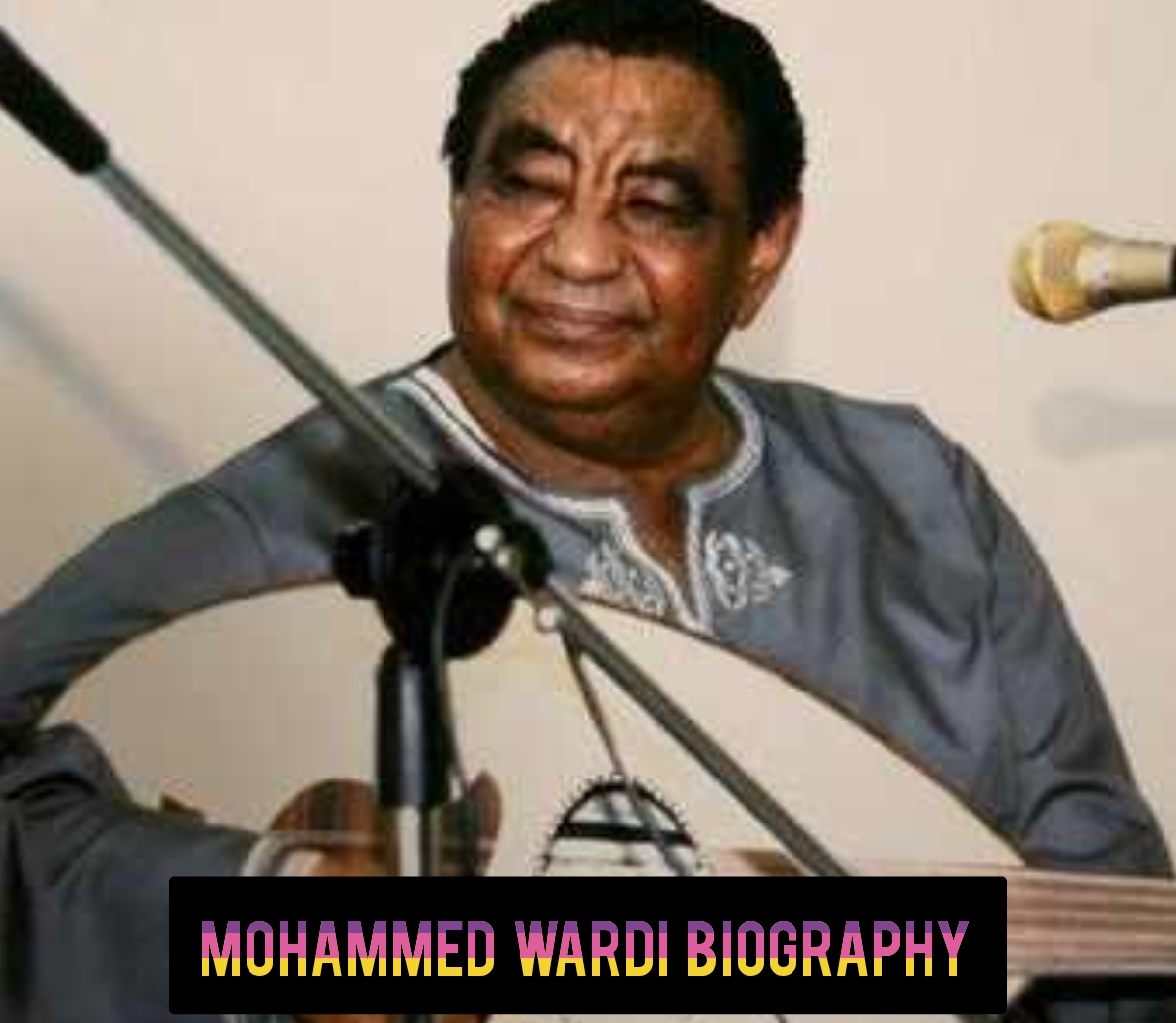
Mohammed Wardi Biography
Mohammed Wardi was known as the Golden Throat and the Last King of Nubia, the Sudanese singer and songwriter captured the soul of his people through songs of love, heritage, freedom, and resistance. His powerful voice and poetic lyrics made him a cultural icon whose music crossed borders and generations.
This biography explores the life of a Nubian artist who rose from an orphaned childhood by the Nile to become a symbol of Sudanese identity and conscience. Through more than three hundred songs and decades of political courage, Mohammed Wardi gave voice to the hopes and struggles of a nation.
Mohammed Wardi Early Life
Mohammed Osman Hassan Salih Wardi was born on 19 July 1932 in the small Nubian village of Sawarda near Wadi Halfa in northern Sudan. The region, rich in ancient history and Nile culture, shaped his identity from the start. His mother, Batool Badri, died when he was still an infant. His father, Osman Hassan Wardi, passed away when Mohammed was nine years old. Orphaned early, he was raised by relatives in a community where poetry, music, and storytelling formed part of daily life.
The Nubian environment filled with traditional songs, the sounds of the tanbur, and the rhythms of the river awakened his artistic gifts. He began singing as a young child. Music ran in the family. Relatives on his mother’s side were known for their singing, and his sister Fathiya later showed talent on the oud. Mohammed developed a deep love for poetry and literature alongside music.
He received his early education in local schools in Sawarda before moving to Shendi in central Sudan to continue his studies. He trained as a teacher at the Institute of Education in Shendi and returned to work as a secondary school teacher in Wadi Halfa and other northern towns. Teaching gave him stability, yet the call of music grew stronger. In 1953 he traveled to Khartoum for the first time as a teachers’ representative at an educational conference. The vibrant cultural life of the capital convinced him that his true path lay in professional singing. He soon moved to Khartoum and began performing while still teaching, until he resigned from education in the late 1950s to devote himself fully to music.
Mohammed Wardi Personal Life
Mohammed Wardi kept much of his private life away from public attention, preferring to let his songs speak for him. He was a family man who valued close relationships and the cultural traditions of his Nubian roots. He raised children who later spoke of him with deep affection and respect. His son has described him as a calm and thoughtful presence, a storyteller who could hold listeners with tales in both Nubian and Arabic.
He remained deeply attached to Nubian language and heritage throughout his life. Even while living in exile or performing across Africa and the Arab world, he returned again and again to the themes of the Nile, the palm trees, and the ancient civilization of his people. Friends and family noted his love of conversation, poetry, and quiet reflection. He enjoyed the company of writers and fellow artists. His home in earlier years often served as a gathering place for progressive thinkers and musicians.
Wardi faced health challenges in later life, including kidney failure. In a remarkable gesture of public affection, a devoted fan donated a kidney for a transplant in the early 2000s. The operation brought temporary relief, yet complications continued. Despite illness he maintained dignity and continued to receive visitors and well-wishers. Those close to him remembered a man of principle who disliked giving direct advice yet lived according to strong values of unity, justice, and cultural pride. One of the few pieces of guidance he offered his family was a simple verse about sticks that stay together being hard to break, a call for solidarity.
Mohammed Wardi Rise to Prominence
In 1957 Omdurman Radio selected Mohammed Wardi to record and perform on national broadcasts. He entered an arena that already included established voices such as Abdelaziz Mohamed Daoud, Hassan Atia, and others. In his first year he recorded seventeen songs. A committee of senior artists soon recognized his exceptional talent and elevated him to the rank of professional singer. His clear, soaring voice and emotional delivery immediately set him apart.
Collaboration with the poet Ismail Hassan produced more than twenty three songs and helped define his early style. Wardi sang in both Arabic and his native Nubian language. He played traditional instruments including the Nubian tanbur and kissar while also working with modern ensembles. His repertoire mixed romantic ballads, celebrations of Nubian folklore, and songs of national feeling. By the early 1960s he had become one of Sudan’s leading performers.
The political climate of the time sharpened his voice. Sudan had gained independence in 1956, yet military rule and social injustice soon followed. Wardi’s songs began to address freedom, justice, and the dignity of ordinary people. His music provided the emotional soundtrack for the popular uprising of October 1964 that overthrew the military government of Ibrahim Abboud. The public embraced him as the singer of the people. From that point his fame spread beyond Sudan into the Horn of Africa and across the Arabic speaking world.
Mohammed Wardi Major Achievements
Mohammed Wardi’s career lasted more than sixty years and produced over three hundred songs. He created a distinctive Sudanese sound that blended Nubian melodies and rhythms with Arabic poetic traditions and contemporary arrangements. His ability to sing with equal power in Arabic and Nubian helped preserve and elevate Nubian cultural heritage at a time when many minority languages faced pressure.
His political and patriotic songs became anthems of resistance and hope. Tracks associated with the 1964 and 1985 uprisings entered the collective memory of Sudanese people. Songs such as those calling for the return of the keys of the country later found new life during the 2018–2019 revolution. He performed for ordinary citizens, students, workers, and refugees. One of his most memorable appearances took place in 1990 at the Itang refugee camp in Ethiopia, where he sang for an estimated two hundred fifty thousand displaced Sudanese from a simple wooden platform.
In 1994, while living in exile, he received recognition as the best singer in Africa. In 2005 the University of Khartoum awarded him an honorary doctorate for his long career and his research into Nubian heritage. He also received the Pablo Neruda Medal for his commitment to human rights and social justice. These honors confirmed what audiences had long known: Wardi was not only a great entertainer but a moral and cultural force.
His influence extended far beyond Sudan. Fans in Ethiopia, Eritrea, Somalia, Cameroon, and other African countries embraced his music even when they did not fully understand the lyrics. His voice became a symbol of African artistic excellence and political courage.
Mohammed Wardi Challenges and Setbacks
Wardi’s commitment to justice brought repeated conflict with successive Sudanese regimes. As a member of the Sudanese Communist Party and a consistent critic of authoritarianism, he faced censorship, bans from radio and television, and multiple periods of imprisonment. One of his longest detentions followed the events of 1971. The authorities viewed his songs as dangerous because they stirred public emotion and named the suffering of ordinary people.
The military coup of 1989 and the rise of an Islamist government created an especially hostile climate. Wardi’s leftist politics and independent spirit made him a target. Feeling increasing pressure, and affected by the execution of a relative, he chose voluntary exile. He spent roughly thirteen years outside Sudan, living mainly in Cairo and also spending time in the United States. During exile he continued to record and perform, sending songs of longing, resistance, and hope back to his homeland. The pain of separation appeared in works that spoke of the migratory bird and the dream of return.
Health problems added to the difficulties of later years. Kidney failure required a transplant and ongoing medical care. Yet neither imprisonment, exile, nor illness silenced him. He returned to Sudan in the early 2000s and continued to be received as a national treasure. His ability to transform personal and political hardship into lasting art remains one of the most admirable aspects of his life.
Mohammed Wardi Legacy and Current Status
Mohammed Wardi died on 18 February 2012 in a Khartoum hospital at the age of seventy nine. The cause was acute kidney failure. His funeral drew tens of thousands of mourners and was broadcast live on national television. People from all walks of life, including political figures who had once opposed him, came to pay respects. He was buried in Farouk Cemetery in Khartoum.
His legacy continues to grow. Younger generations discover his music through recordings, social media, and the continued performance of his songs at celebrations, protests, and cultural events. The 2018–2019 Sudanese revolution revived several of his resistance anthems, proving that his words still speak to the desire for freedom and dignity. Scholars and musicians study his fusion of Nubian and Arabic traditions as a model of cultural preservation and innovation.
Wardi is remembered as more than a singer. He is regarded as a poet of the people, a guardian of Nubian heritage, and a voice of Sudanese conscience. His honorary doctorate, continental awards, and the enduring popularity of his catalog confirm his place among the great African artists of the twentieth century. In homes across Sudan and the diaspora, his voice still rises from radios and speakers, carrying the beauty of the Nile and the unbreakable spirit of a people.
FAQs
Who was Mohammed Wardi?
Mohammed Wardi was a Nubian Sudanese singer, songwriter, and poet widely regarded as one of the greatest African musicians of the twentieth century. Born in 1932 near Wadi Halfa, he became a cultural icon of Sudan through songs of love, heritage, and political resistance.
What languages did Mohammed Wardi sing in?
He sang in both Arabic and his native Nubian language. This bilingual approach helped him reach wide audiences while preserving and promoting Nubian cultural heritage.
How many songs did Mohammed Wardi record?
He recorded more than three hundred songs over a career that lasted more than sixty years. His work includes romantic ballads, Nubian folklore, patriotic anthems, and songs of social and political protest.
Why was Mohammed Wardi forced into exile?
After the 1989 military coup that brought an Islamist government to power, Wardi faced increasing pressure because of his leftist politics and history of critical songs. He chose voluntary exile and spent about thirteen years mainly in Egypt and the United States before returning to Sudan.
What awards did Mohammed Wardi receive?
In 1994 he was recognized as the best singer in Africa. In 2005 the University of Khartoum awarded him an honorary doctorate for his artistic career and research into Nubian heritage. He also received the Pablo Neruda Medal for his human rights activism.
When and where did Mohammed Wardi die?
Mohammed Wardi died on 18 February 2012 in Khartoum, Sudan, at the age of seventy nine. The cause was kidney failure. His funeral was attended by tens of thousands and broadcast nationally.
Conclusion
Mohammed Wardi’s life teaches that art and courage can shape the spirit of a nation. From an orphaned childhood in a Nubian village he rose to become the voice of Sudanese aspiration and resistance. He sang of love and the beauty of the Nile, yet he never turned away from the hard truths of injustice and dictatorship. Imprisonment and exile could not silence him. Illness could not erase the power of his song.
His music continues to move people because it carries both beauty and moral force. In every generation that rediscovers his work, the Golden Throat still calls for dignity, unity, and freedom. Mohammed Wardi showed that a single human voice, raised with honesty and skill, can outlast regimes and inspire the long struggle for a better country. That is a legacy that will endure as long as people listen.