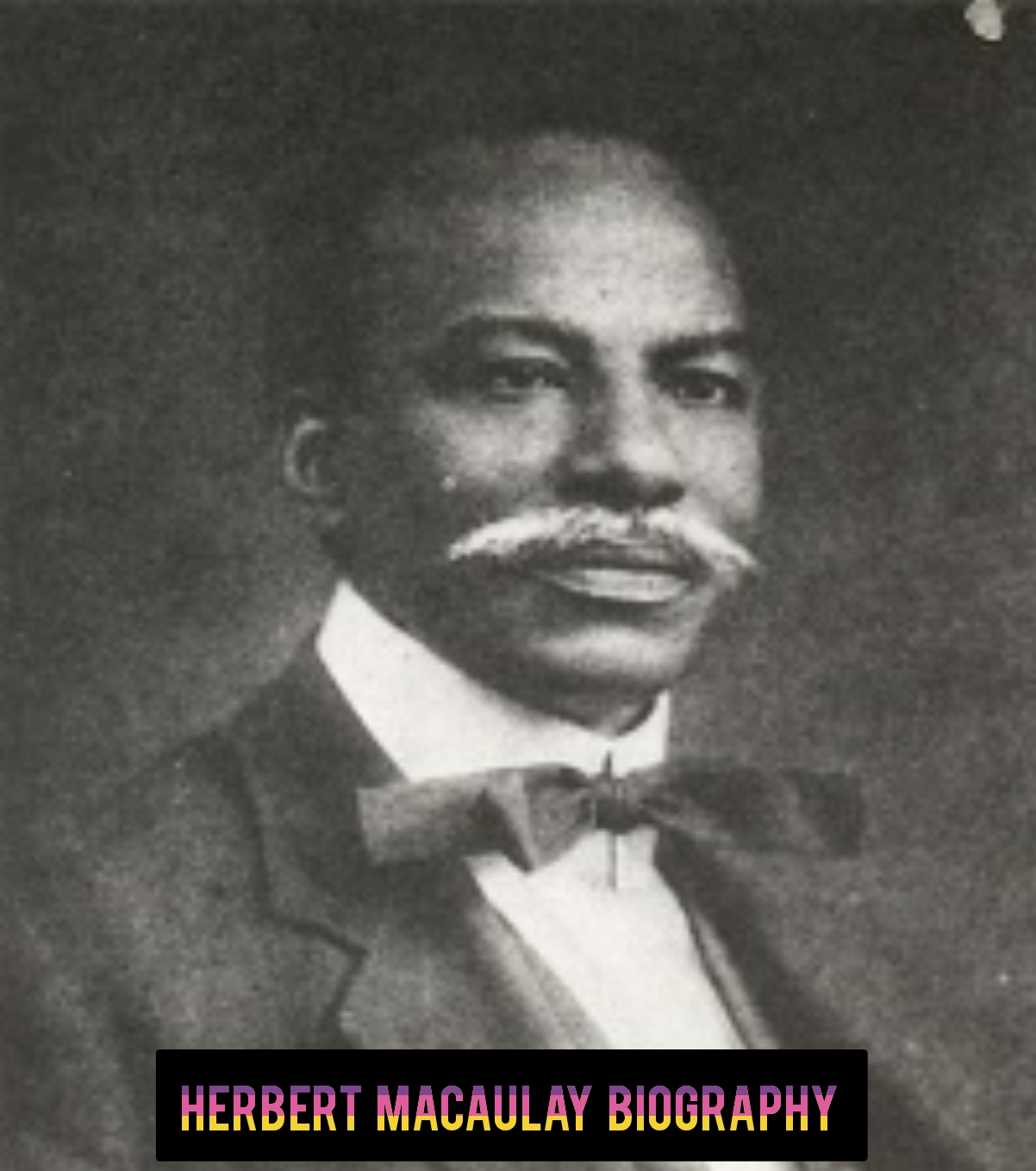
Herbert Macaulay Biography
Herbert Macaulay was an engineer, surveyor, architect, journalist, musician and political organiser, he spent decades challenging colonial rule and organising the people of Lagos and later the wider country. Many regard him as the father of Nigerian nationalism. His life combined professional skill with fearless public advocacy and left a mark that still shapes how Nigerians remember the struggle for self rule. This biography presents his story in clear and simple language.
An interesting fact that continues to capture attention is that the same man whose face once appeared on the Nigerian one naira note and coin was also the first Nigerian to qualify as a civil engineer, the founder of Nigeria’s first political party, and a skilled violinist who found comfort in music amid the pressures of political struggle. His many talents made him a remarkable and complex personality.
Herbert Macaulay Early Life
Herbert Macaulay was born on 14 November 1864 on Broad Street in Lagos. His full name was Olayinka Herbert Samuel Heelas Badmus Macaulay. He came from a distinguished family that linked missionary education, African Christian leadership and Yoruba heritage. His father was the Reverend Thomas Babington Macaulay, a respected educator who founded and served as the first principal of the Church Missionary Society Grammar School in Lagos, the first secondary school in Nigeria. His mother was Abigail Crowther, the daughter of Bishop Samuel Ajayi Crowther, the first African bishop of the Anglican Church. Through his mother he was connected to the lineage of King Abiodun of the old Oyo Empire.
The household combined firm Christian discipline with a strong sense of African dignity. Young Herbert grew up speaking Yoruba at home while receiving a formal education that included English, Latin and other subjects taught in mission schools. He began primary schooling around 1869 and later attended St Paul’s Breadfruit School and CMS Faji School. From 1877 to 1880 he studied at CMS Grammar School. His father died in 1878 while Herbert was still a student there. The loss placed greater responsibility on the family yet did not interrupt his education.
After secondary school he joined the Lagos Public Works Department as a clerk in 1881. His talent for mathematics and design was noticed. In 1890 the colonial government awarded him a scholarship to study in England. He spent three years in Plymouth studying civil engineering, surveying and architecture. He also studied music and obtained a certificate in violin from the Trinity College of Music in London. On 5 December 1893 he qualified as a civil engineer, becoming the first Nigerian to achieve that professional standing. He was admitted as a member of the Institution of Civil Engineers and associated with other professional bodies. He returned to Lagos in 1893 well prepared for a technical career.
Herbert Macaulay Personal Life
In December 1898 Herbert Macaulay married Caroline Pratt, the daughter of an African superintendent of police. The marriage was short. Caroline died in August 1899 during childbirth. The union produced no surviving children. Deeply affected, Macaulay is said to have vowed never to remarry. He kept certain personal habits, including the wearing of a distinctive bow tie and moustache, as outward signs of his lasting remembrance of her.
He later had children with other partners. Reports indicate he fathered a number of children, among them Oliver Ogedengbe Macaulay, Sarah Abigail Idowu Macaulay Adadevoh, Frank Montague Macaulay, and others. One of his descendants, Babatunde Kwaku Adadevoh, later became a noted medical figure. Family life for Macaulay was complex, yet he maintained connections with his children and took interest in their progress.
Outside politics and professional work he found pleasure in music. He played the violin with skill and used music as a source of relaxation during difficult periods. He was also known as a lively social figure in Lagos, sometimes called the Wizard of Kirsten Hall because of his ability to gather information and use it effectively in public debates. He was among the first Nigerians to own a motor car, a sign of his progressive outlook and relative prosperity. He lived most of his adult life in Lagos and remained closely attached to the city and its people.
Herbert Macaulay Rise to Prominence
Upon his return from England in 1893 Herbert Macaulay was appointed Surveyor of Crown Lands for the Colony of Lagos. The post was one of the highest technical positions open to an African at the time. He held it until 1898. Growing resentment at racial discrimination in the colonial civil service led him to resign. He then established a private practice as a surveyor and civil engineer. The decision freed him to speak more openly about public issues.
His rise as a public figure came through a series of legal and political campaigns that defended African land rights and challenged colonial policies. He advised and supported chiefs and communities in important court cases. One notable success involved the return of land that the colonial government had taken. Victories of this kind increased his popularity among ordinary Lagosians, especially market women and the wider public who saw him as a defender of their interests.
In 1923 the colonial administration introduced limited elective seats on the Lagos Legislative Council. Macaulay organised the Nigerian National Democratic Party, the first modern political party in Nigeria and in British West Africa. The party contested and won the available seats. Its platform called for greater self government for Lagos, the Africanisation of the civil service, better education, and fair treatment for private African enterprise. The NNDP became the main vehicle for organised nationalist activity in Lagos for many years.
Herbert Macaulay Major Achievements
Herbert Macaulay’s greatest achievement was the creation of organised political opposition to colonial rule. By founding the Nigerian National Democratic Party in 1923 he gave Nigerians a structured way to contest elections and to press for reform. The party dominated Lagos politics for a long period and trained a generation of activists in the methods of modern political organisation.
He used the press effectively. Through newspapers and pamphlets he criticised colonial policies, exposed injustices and kept public attention on issues of land, taxation and representation. His writings and speeches reached both the educated elite and the wider population. He supported the cause of the Eleko of Lagos in a long dispute with the colonial government, an episode that further strengthened his standing among traditional authorities and ordinary people.
In 1944, at an advanced age, he helped bring together various groups to form the National Council of Nigeria and the Cameroons. He became its first president while Nnamdi Azikiwe served as secretary general. The NCNC was the first truly national political organisation in the country and later played a central role in the final stages of the independence movement. Although Macaulay did not live to see independence in 1960, the structures he helped create continued after his death.
As an engineer and surveyor he contributed to the technical development of Lagos. His private practice handled important surveying and construction work. His professional qualifications set a standard for later generations of Nigerian engineers and surveyors. His combination of technical skill, journalistic energy and political organising made him a unique figure in the early nationalist movement.
Herbert Macaulay Challenges and Setbacks
Herbert Macaulay faced repeated conflict with the colonial authorities. His sharp criticisms and successful legal challenges made him a target. He was imprisoned twice on charges that included sedition and related offences. These periods of imprisonment tested his resolve yet also increased his popularity among those who saw him as a victim of unjust colonial power.
He also experienced tension with some members of the Lagos elite who preferred more cautious approaches to the colonial government. Political rivalries and personal disagreements sometimes divided the educated community. Macaulay’s combative style and use of the press to attack opponents created lasting enmities. At the same time his willingness to engage ordinary people, including market women and less privileged groups, gave him a broad base of support that many of his critics lacked.
The limited nature of colonial constitutional reforms restricted what any political party could achieve. The NNDP operated within a system that reserved real power for the governor and officials. Macaulay worked patiently within those limits while continuing to demand more. In his final years he fell ill during a political tour in the north. He was brought back to Lagos and died on 7 May 1946. His last reported words urged the national movement to continue and asked his son Oged to keep the flag flying.
Herbert Macaulay Legacy and Current Status
Herbert Macaulay died in Lagos on 7 May 1946 at the age of eighty one. He was buried at Ikoyi Cemetery after a large public funeral that drew people from many parts of the country. His image later appeared on the Nigerian one naira note and coin, a recognition of his place in national memory.
He is remembered as the father of Nigerian nationalism and as the founder of the country’s first political party. The Nigerian National Democratic Party and the later National Council of Nigeria and the Cameroons provided organisational models for the independence movement. Streets, institutions and public references continue to honour his name. Historians study his career as an example of early organised resistance to colonial rule and as a bridge between the educated elite and popular politics in Lagos.
Although some of the details of his private life remain complex, his public contribution is clear. He showed that professional skill, courage and persistent organisation could challenge an empire and inspire a people. Later leaders built upon the foundations he laid. His life remains a reference point for discussions of nationalism, public service and the responsibilities of the educated class in times of political change.
Conclusion
The life of Herbert Macaulay teaches that lasting change often begins with individuals who refuse to accept injustice as permanent. Trained as an engineer, he applied the same precision and determination to the political construction of a free nation. He combined technical ability, cultural confidence and a readiness to speak for ordinary people. Although he did not live to see independence, the parties he founded and the example he set helped make that independence possible. His story continues to encourage those who believe that skill, courage and organised effort can shape the future of a country.
FAQs
Who was Herbert Macaulay?
Herbert Macaulay was a Nigerian nationalist, engineer, surveyor, architect, journalist and musician who is widely regarded as the father of Nigerian nationalism. He founded Nigeria’s first political party and later helped form the National Council of Nigeria and the Cameroons.
When and where was Herbert Macaulay born?
He was born on 14 November 1864 on Broad Street in Lagos to the Reverend Thomas Babington Macaulay and Abigail Crowther.
What was Herbert Macaulay’s professional training?
He studied civil engineering, surveying and architecture in Plymouth, England, and became the first Nigerian to qualify as a civil engineer in 1893. He also studied music and played the violin.
What political party did Herbert Macaulay found?
In 1923 he founded the Nigerian National Democratic Party, the first modern political party in Nigeria. In 1944 he became the first president of the National Council of Nigeria and the Cameroons.
When did Herbert Macaulay die?
He died on 7 May 1946 in Lagos at the age of eighty one after falling ill during a political tour.
Why is Herbert Macaulay called the father of Nigerian nationalism?
He organised the first structured political opposition to colonial rule, founded the first political party, used the press to mobilise public opinion, and helped create the first national political organisation that later contributed to the independence movement.
What is the lasting legacy of Herbert Macaulay?
His lasting legacy includes the political parties he helped create, the example of courageous public advocacy, the professional standard he set as an engineer, and the enduring recognition of his role in the early struggle for Nigerian self government.