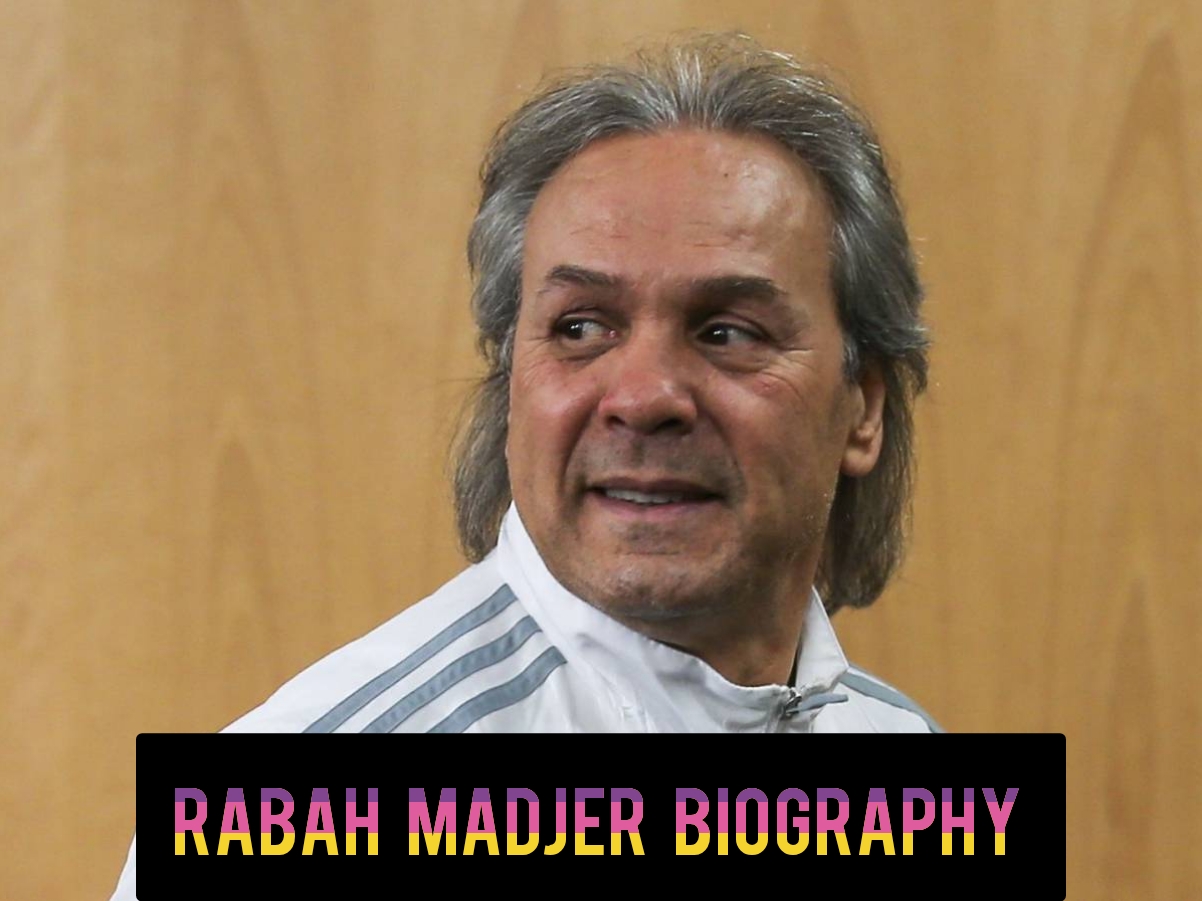
Rabah Madjer Biography
Rabah Madjer remains one of the most elegant and influential footballers Algeria has ever produced. A skilful striker with exceptional vision and technique he helped place African football on the world map through memorable performances at club and international level. His name is forever linked to one of the most famous goals in European Cup history and to Algeria’s golden generation of the nineteen eighties. This biography explores the full journey of a player who combined artistry with determination and later continued to serve the game as a coach and ambassador.
An interesting fact that still captures the imagination of football fans is the back heeled goal Madjer scored in the 1987 European Cup final. With Porto trailing Bayern Munich he produced an audacious finish that equalised the score and inspired his team to victory. The gesture was so distinctive that in French speaking football circles a well executed back heel is still called a Madjer.
Rabah Madjer Early Life
Rabah Mustapha Madjer was born on 15 December 1958 in the Hussein Dey district of Algiers Algeria. He came from a modest family of Kabyle origin with roots near Tigzirt and Dellys. His father worked as a florist and the household was large and hard working. From a very young age Madjer was drawn to football. He and his brother Mohamed spent hours playing on rough local pitches. At first Madjer stood in goal while his brother attacked but he soon switched positions and discovered his natural talent as a forward.
His childhood idol was Johan Cruyff whose creativity and intelligence on the ball inspired the young Algerian. At the age of twelve Madjer joined the youth ranks of Onalait Hussein Dey the feeder club for Nasr Athletic Hussein Dey. Coaches quickly recognised his speed technical quality and sharp football brain. He progressed through the age groups faster than most of his peers. By sixteen he was already training with the senior team of NA Hussein Dey and making his professional debut. Education took second place to football as the family recognised that the game offered a path out of limited circumstances. Madjer remained loyal to his local club for many years despite interest from bigger Algerian sides.
Rabah Madjer Personal Life
Rabah Madjer has kept much of his private life away from constant public attention. He was married to Assia and the couple have two sons Mohamed and Lotfi. Both sons followed their father into football. Lotfi has played at professional level and represented Qatar at youth level after opportunities with Algerian youth teams did not fully develop. Madjer has spoken with quiet pride about his children’s progress while emphasising that their choices belong to them.
He maintains a strong connection to Algeria and returns regularly even though he has spent long periods living and working in Qatar. Faith and family have remained important anchors throughout his life. Those who know him describe a thoughtful man who values loyalty and reflection. After retirement he continued to follow the game closely and used his experience to support younger players. A lesser known aspect of his character is the deep respect he holds for the generation of Algerian players who shared the nineteen eighties with him. He often speaks of collective achievement rather than individual glory.
Rabah Madjer Rise to Prominence
Madjer’s professional career began in earnest with NA Hussein Dey. He helped the club reach strong domestic positions and win the Algerian Cup in 1979. The team also reached the final of the African Cup Winners Cup in 1978. These performances earned him a place in the Algeria national team. He made his senior international debut in the late nineteen seventies and quickly became a regular.
The 1982 World Cup in Spain marked a historic breakthrough for Algerian football. Madjer scored the opening goal in a famous two one victory over West Germany the first time an African side had beaten a European team at a World Cup finals. Although Algeria were later eliminated in controversial circumstances the tournament announced Madjer and his teammates as a force on the world stage.
In 1983 he moved to Europe joining Racing Club de Paris in France. After a productive period and a short loan at Tours he transferred to FC Porto in 1985. The move to Portugal transformed his career. Under coach Artur Jorge he became a central figure in a team that challenged for major honours. The 1986 to 1987 season brought the ultimate prize. In the European Cup final against Bayern Munich Madjer scored the equalising goal with a back heel and then provided the assist for the winning goal. Porto claimed the trophy for the first time and Madjer’s name entered football folklore.
Rabah Madjer Major Achievements
With Porto Madjer won three Portuguese league titles two Portuguese Cups and three Super Cups. The 1987 European Cup victory was followed by the European Super Cup and the Intercontinental Cup the same year. He scored the decisive goal in the Intercontinental Cup final and was named man of the match. In 1987 he was voted African Footballer of the Year the highest individual honour available to him at the time.
For Algeria he earned eighty seven caps and scored twenty eight goals becoming one of the country’s most capped and highest scoring players of his era. He played in the 1982 and 1986 World Cups. The highlight of his international career came in 1990 when he captained Algeria to victory in the Africa Cup of Nations on home soil. He scored important goals during the tournament and was named in the team of the competition. The triumph remains the only senior continental title Algeria has won.
Madjer’s technical contribution also left a permanent mark. The back heel goal in Vienna was so distinctive that the move itself became known as a Madjer. Beyond statistics he helped prove that African players could decide the biggest matches in European club football and carry their national teams to historic successes.
Rabah Madjer Challenges and Setbacks
Madjer faced several obstacles during his career. Leaving Algeria for Europe required adjustment to new cultures languages and styles of play. A serious thigh muscle injury discovered during medical examinations prevented a planned move to Inter Milan in 1988. The injury limited his options and forced him to rebuild fitness carefully. He returned to Porto and continued to perform at a high level yet the physical demands gradually took their toll.
At international level the controversial exit from the 1982 World Cup after the West Germany Austria match left a sense of injustice that Algerian players and fans never fully forgot. Later coaching spells with the national team brought mixed results and periods of public criticism. Madjer faced pressure and eventual dismissals yet he maintained dignity and continued to contribute to the game. He overcame these difficulties through professionalism patience and a lasting belief in the value of hard work.
Rabah Madjer Legacy and Current Status
Rabah Madjer is remembered as one of the greatest African footballers of the twentieth century and the finest Algerian player of his generation. His European Cup success with Porto his World Cup goal against West Germany and the 1990 Africa Cup of Nations triumph form the core of a remarkable legacy. The technical gesture that carries his name ensures that every new generation of fans still hears about him.
After retiring as a player he moved into coaching. He managed the Algeria national team on several occasions and worked with clubs in Qatar. He later became a respected television analyst working with major sports channels. In 2011 he was appointed a UNESCO Goodwill Ambassador. Today he lives mainly in Qatar while remaining closely connected to Algerian football. He continues to comment on the game and offers measured support to the national team. His presence at major tournaments and his thoughtful interviews keep his influence alive.
Conclusion
Rabah Madjer showed that beauty and effectiveness can exist together on a football pitch. From the streets of Hussein Dey to the grand stages of Europe and Africa he combined skill courage and intelligence. His famous back heel remains a symbol of creativity under pressure while his leadership in 1990 brought lasting joy to an entire nation. The story of Rabah Madjer continues to remind players and fans that true greatness combines technical excellence with quiet determination and service to the game.
FAQs
What is Rabah Madjer’s full name and date of birth?
Rabah Mustapha Madjer was born on 15 December 1958 in Hussein Dey Algeria.
What is Rabah Madjer most famous for?
He is best remembered for the back heeled equaliser he scored for Porto against Bayern Munich in the 1987 European Cup final a goal so distinctive that the move is still called a Madjer.
Which major trophies did Rabah Madjer win with Porto?
He won the European Cup in 1987 the Intercontinental Cup the European Super Cup three Portuguese league titles and multiple domestic cups.
What did Rabah Madjer achieve with the Algeria national team?
He played in two World Cups scored against West Germany in 1982 and captained Algeria to victory in the 1990 Africa Cup of Nations on home soil.
Did Rabah Madjer win the African Footballer of the Year award?
Yes he was named African Footballer of the Year in 1987 after his outstanding season with Porto.
What has Rabah Madjer done since retiring as a player?
He has worked as a coach including several spells with the Algeria national team served as a television analyst and was appointed a UNESCO Goodwill Ambassador.
Why is Rabah Madjer considered one of Africa’s greatest players?
His combination of technical brilliance major European success and leadership of Algeria’s most successful senior generation secured his place among the continent’s finest footballers.