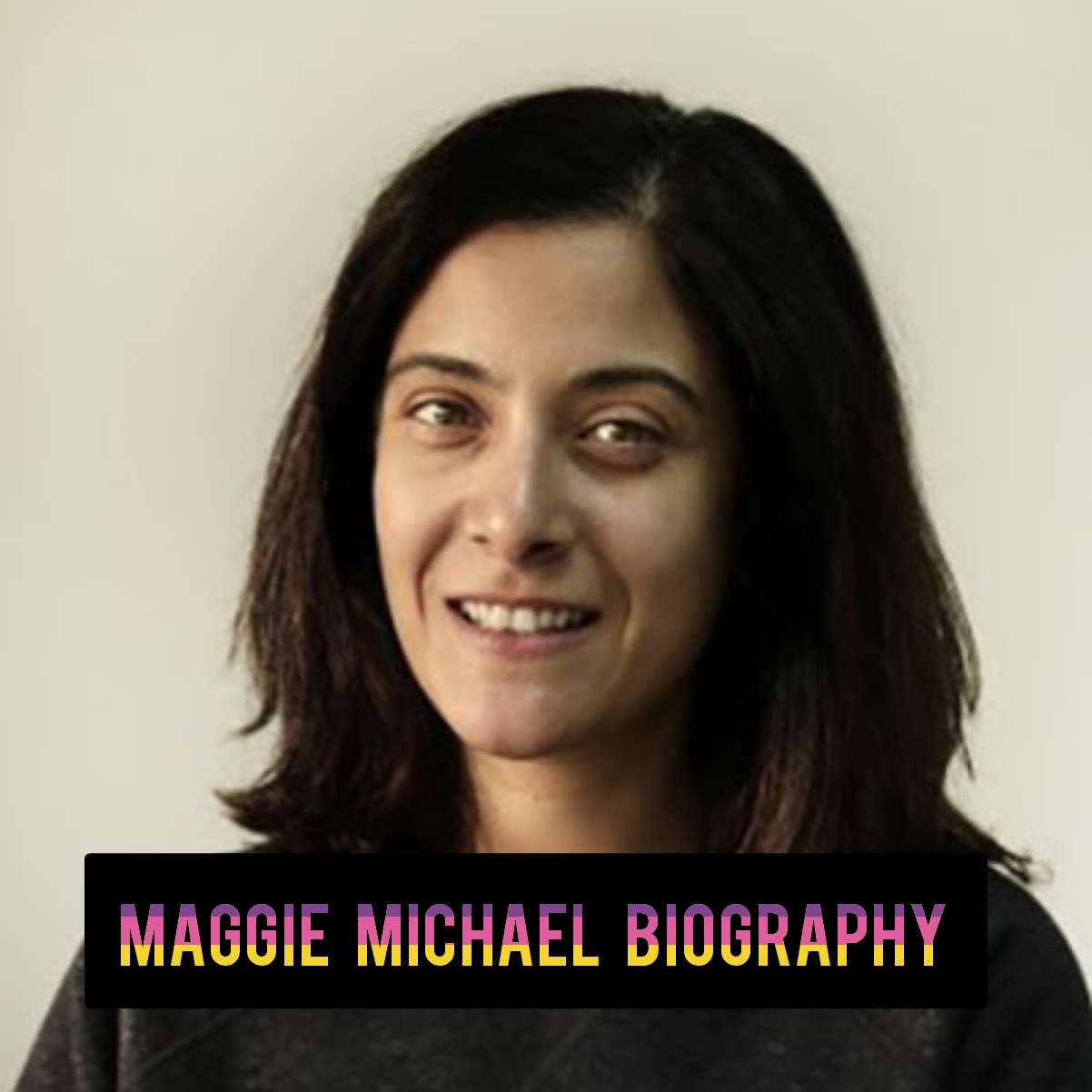
Maggie Michael Biography
Maggie Michael stands as one of Washington D.C.’s most compelling abstract painters, a figure whose vibrant, layered canvases have redefined contemporary approaches to form, color, and emotion. Born in the American Midwest and shaped by years of rigorous study and studio practice, she has built a career marked by innovation, institutional recognition, and a deep engagement with the physical properties of paint itself. Her work bridges historical traditions of Abstract Expressionism and Pop Art with a distinctly personal, often bodily sensibility, earning her a place in major museum collections and the admiration of critics who praise her ability to make abstraction feel urgent and new.
What draws many viewers into her paintings is the way they seem to breathe. Pools of latex settle into glossy skins that fold, bubble, and tear like living tissue, while sprays of enamel and ink suggest wind, breath, or sudden bursts of energy. This interplay of control and chance has become her signature, inviting audiences to experience both the stillness of contemplation and the restless motion of creation.
Maggie Michael Early Life
Maggie Michael was born in 1974 in Milwaukee, Wisconsin. Growing up in the city, she discovered art early through quiet hours spent in the public library, wandering the shelves of art books and absorbing images from distant eras and cultures. Those childhood explorations planted a lasting fascination with visual language. Italian Renaissance masters such as Duccio, Fra Angelico, Leonardo da Vinci, and Tintoretto left strong impressions, as did the expressive power of female artists including Louise Bourgeois and Eva Hesse. Chinese landscape painting and Japanese ukiyo-e prints later entered her visual vocabulary, adding notions of floating worlds, rivers, and mountains that still surface in her compositions.
By her junior year of high school, Michael had decided she would become a painter. She pursued that path with focus, earning a Bachelor of Fine Arts with honors from the University of Wisconsin-Milwaukee in 1996. Seeking broader horizons, she moved west and completed a Master of Arts at San Francisco State University in 2000. The final stage of her formal training brought her to Washington D.C., where she received her Master of Fine Arts from American University in 2002. These years of study refined her technical skills while encouraging experimentation. The shift from oils to water-based latex paints, prompted by practical needs during pregnancy, proved especially formative. What began as a necessary compromise opened new possibilities for texture and process that would define her mature work.
Maggie Michael Personal Life
Michael is married to the sculptor Dan Steinhilber. The couple has long shared the Washington D.C. art community, appearing together in exhibitions and supporting each other’s practices. Their partnership is often described as complementary: her paintings lean toward the sculptural through thick applications of paint, while his sculptures carry a painterly sense of humor and material playfulness. They have a son, and family life has shaped her studio habits in tangible ways. The decision to switch from oil paints with their strong fumes to safer latex house paints came directly from pregnancy, a change she initially resisted but soon embraced for the creative freedom it offered.
Beyond the studio, Michael maintains a grounded routine that includes time spent sourcing materials from ordinary places. She has spoken of the pleasure found in mistint piles at home-improvement stores, where discarded cans of house paint find new purpose on her canvases. Residencies in places as varied as New Orleans, Krakow, Banff, and rural Michigan have provided periods of focused work and reflection away from daily demands. She has also lived and worked part-time in West Virginia, seeking quieter surroundings that feed her practice. These details remain private in the best sense: they surface only when they illuminate the work, never as spectacle.
Lesser-known aspects of her approach include a fondness for working with canvases laid on the floor so she can move around them, viewing the surface from every angle. Spray paint, for her, carries the sensation of air and breath. Titles of her pieces often hold multiple meanings, inviting viewers to discover their own connections. Throughout, she has balanced the intensity of art-making with teaching roles at the Corcoran College of Art and Design and American University, passing on both technique and an attitude of openness toward materials.
Maggie Michael Rise to Prominence
Michael’s professional ascent began almost immediately after graduate school. Within months of receiving her MFA in 2002, she mounted her first solo exhibition, “Clones,” at G Fine Art in Washington D.C. The show introduced a series made without brushes. She poured latex paint onto Plexiglas panels and tilted them until the liquid formed near-identical, amorphous shapes. Critics responded with enthusiasm. The works felt both controlled and organic, a quiet rebuttal to the aggressive gestures of mid-century Abstract Expressionism. Joe Shannon writing in Art in America called the installation perfect and riveting.
That early success opened doors. In 2004 she received the Joan Mitchell Foundation Painters and Sculptors Grant, a major recognition that provided both financial support and validation. The same year brought a Young Artist Grant from the D.C. Commission on the Arts and Humanities. These awards coincided with growing institutional interest. Her paintings entered the collections of the Hirshhorn Museum and Sculpture Garden and the Smithsonian American Art Museum. A residency as Artist at Work at the Hirshhorn in 2006 and 2007 further cemented her presence in the city’s cultural landscape.
Key turning points continued through the decade. Solo shows at G Fine Art, Rule Gallery in Denver, and other venues expanded her audience. A 2008 Smithsonian Artist Research Fellowship allowed her to study Asian art collections, enriching her visual references. By the time of her 2016 survey exhibition “A Phrase Hung in Midair as if Frozen” at the American University Museum, Michael had established herself as a leading voice in Mid-Atlantic abstraction. The Phillips Collection’s 2019 “One on One” pairing of her work with Arthur Dove marked another high point, placing her contemporary practice in direct conversation with an early American modernist.
Maggie Michael Major Achievements
Over more than two decades, Michael has assembled an impressive record of exhibitions, awards, and permanent placements. Her paintings reside in the Hirshhorn Museum and Sculpture Garden, the Smithsonian American Art Museum, the National Museum of Women in the Arts, The Phillips Collection, the Washingtonia Collection, the U.S. Embassies in Barbados and Romania (including a large-scale mural in Bucharest), the Watkins Collection at American University, the Wilson Building in Washington, the University of Maryland, and the Federal Reserve Board.
Major solo exhibitions include “Understory” at Union Market District in 2024, her first large solo presentation in several years; “Root Chords, Earth to Sky” at Luis De Jesus Los Angeles in 2025; the Phillips Collection dialogue with Dove; and earlier shows at G Fine Art that traced the evolution from poured latex to complex mixed-media surfaces incorporating acrylic, oil, enamel, charcoal, and spray paint. Group exhibitions have placed her work in contexts ranging from “Fields and Formations: A Survey of Mid-Atlantic Abstraction” at the Delaware Contemporary and American University Museum to international venues in Poland, Belgium, Germany, and Romania.
Awards and residencies form a continuous thread. Beyond the Joan Mitchell Foundation grant and repeated D.C. Commission fellowships spanning many years, she has been an Artist Honoree at the Hirshhorn, received the Trawick Prize, and completed residencies at the Joan Mitchell Center in New Orleans, Pines of Arcadia in Michigan, Camelot in Krakow, and the Banff Centre for the Arts. Teaching appointments and lectures at universities and museums have extended her influence into education. Critics consistently note her ability to keep abstraction vital. A 2024 Washington Post review described her as possibly D.C.’s most vital, volatile painter, praising the way recent works build from early pours into ecstatic, expansive fields.
Her contribution to the field lies in demonstrating that abstraction need not be pure or pure-formal. By allowing paint to behave like skin or weather while retaining compositional rigor, she has expanded the emotional range available to non-representational painting. The work speaks to existential, linguistic, and political dualities without becoming didactic, offering instead a generous space for viewers’ own associations.
Maggie Michael Challenges and Setbacks
No sustained artistic career unfolds without obstacles. For Michael, one early and practical challenge was the forced transition from oil to latex paints. The health concerns of pregnancy required abandoning materials she loved for their richness and names that evoked tradition. She has described the change as initially appalling. Yet the limitation became generative. Working with inexpensive house paints purchased by the gallon and rescued from mistint bins taught her to accept chance and to value materials that carry ordinary histories. The resulting surfaces gained a bodily, almost skin-like quality that critics still highlight as distinctive.
Building a career in Washington D.C., a city often overshadowed by New York in the national art conversation, presented another quiet hurdle. Michael responded by cultivating deep local roots while seeking opportunities elsewhere. Residencies and exhibitions outside the capital broadened her network and kept the work from becoming provincial. The demands of balancing studio practice with teaching and family life required constant negotiation of time and energy. She has spoken of periods when a single painting became an escape and a spiritual anchor, suggesting that the work itself has served as a steadying force during demanding seasons.
Market fluctuations and the closure of long-time galleries such as G Fine Art tested continuity. Michael continued producing and showing, finding new venues and maintaining relationships with institutions that hold her work. The physical labor of large-scale painting, moving around floor-based canvases, and handling heavy materials also carries its own demands. Through each of these pressures she has maintained a practice grounded in daily engagement with materials, allowing process to absorb and transform difficulty into new visual possibilities.
Maggie Michael Legacy and Current Status
Maggie Michael continues to live and work in Washington D.C. and West Virginia, maintaining an active studio practice that evolves while remaining recognizably her own. Recent years have brought renewed visibility. The 2024 “Understory” exhibition at Union Market drew strong critical attention and introduced newer bodies of work to a wide public. The 2025 solo show at Luis De Jesus Los Angeles marked her West Coast debut and further expanded her reach. A residency at the Joan Mitchell Center in 2024 fed into these projects, demonstrating the ongoing value of dedicated time away from routine.
Her influence appears in the continued relevance of abstraction in the Mid-Atlantic region and beyond. Younger artists encounter her work in museum collections and through her past teaching. The paintings themselves keep generating conversation about what paint can do when allowed both freedom and structure. Institutional holdings ensure that future audiences will encounter the glossy pours, the sharp edges, the spray-paint atmospheres, and the layered histories embedded in each surface.
Michael remains committed to the studio. She describes painting as an untethering of past, present, and future, a motion toward stillness that holds density and airiness at once. Abstraction, for her, is a siren for expansive thinking, offering clarity alongside strangeness and multiple forms of beauty. That outlook continues to guide new series and exhibitions, confirming that her contribution is not fixed in earlier achievements but still unfolding.
Conclusion
Maggie Michael’s career illustrates how a painter can remain faithful to the physical act of making while continually expanding the language of abstraction. From the library shelves of Milwaukee to museum walls across the United States and abroad, her path shows the power of curiosity, adaptability, and sustained attention to materials. The canvases she produces invite viewers to feel as much as to see, reminding us that art can hold contradiction, resolve tension, and open space for personal meaning. In a cultural moment that often prizes the immediate and the literal, her work stands as a quiet argument for the enduring value of the non-representational, the layered, and the deeply felt.
FAQs
Who is Maggie Michael?
Maggie Michael is an American abstract painter born in Milwaukee, Wisconsin, in 1974. She lives and works primarily in Washington D.C. and is known for mixed-media paintings that combine poured latex, spray paint, enamel, ink, and other materials.
What is Maggie Michael known for?
She is recognized for revitalizing abstract painting through a balance of control and chance. Her surfaces often resemble skin or landscape elements, and her work appears in major collections including the Hirshhorn Museum and Sculpture Garden and the Smithsonian American Art Museum.
Where did Maggie Michael study?
She earned a BFA with honors from the University of Wisconsin-Milwaukee in 1996, an MA from San Francisco State University in 2000, and an MFA from American University in 2002.
Is Maggie Michael married?
Yes, she is married to the sculptor Dan Steinhilber. The couple has a son and has long been part of the Washington D.C. art community.
What awards has Maggie Michael received?
Notable recognitions include the Joan Mitchell Foundation Painters and Sculptors Grant in 2004, multiple Artist Fellowship Grants from the D.C. Commission on the Arts and Humanities, the Trawick Prize, and selection as an Artist Honoree by the Hirshhorn Museum and Sculpture Garden.
Where can I see Maggie Michael’s work?
Her paintings are held in permanent collections at the Hirshhorn, Smithsonian American Art Museum, National Museum of Women in the Arts, The Phillips Collection, and several U.S. embassies. Recent solo exhibitions have taken place at Union Market District in Washington D.C. and Luis De Jesus Los Angeles.
How has Maggie Michael’s style evolved?
Early work featured poured latex “Clones” made without brushes. Later paintings incorporate a wider range of media, more gestural marks, and complex layering while retaining the interest in paint’s physical behavior and dualities of control and fluidity.