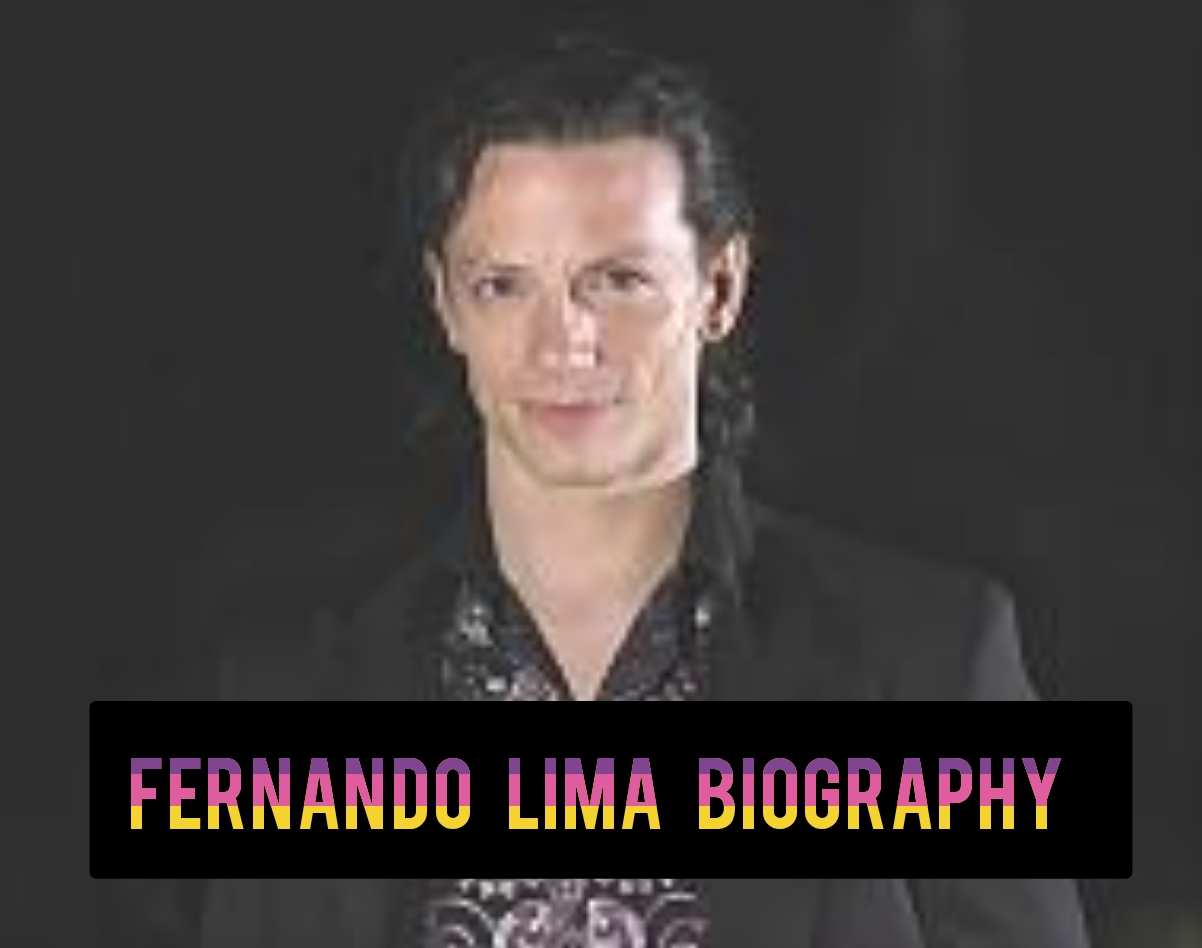
Fernando Lima Biography
Fernando Lima stands as a distinctive figure in the world of classical crossover music. Born with a rare and pure countertenor voice, he has brought the high male vocal range into popular Spanish language songs and international stages. His path from a musical childhood in Argentina to performances alongside global stars shows how dedication to classical training can open doors in unexpected places. This biography explores the life and work of a singer whose ethereal tone has touched listeners across continents.
Fernando Lima An Interesting Fact That Draws the Reader In
Few voices in modern music can match the ethereal quality of a well trained countertenor. Fernando Lima possesses exactly that gift. When he joined English soprano Sarah Brightman for the song Pasión, the result was a duet that felt both ancient and new at the same time. The track became the theme for a popular Mexican telenovela and introduced millions of viewers to the pure high male voice that Lima had spent years refining in conservatories and choirs. That single collaboration remains one of the clearest examples of how classical technique can find a home in popular culture without losing its integrity.
Fernando Lima Early Life
Mario Fernando Lima was born on May 7, 1975, in Buenos Aires, Argentina. His early years unfolded in a household filled with music. His mother worked as a singer, singing teacher, pianist, and choral director. Performance, teaching, and ensemble singing formed a natural part of daily life rather than separate activities. This environment shaped his understanding of music as something shared and practical from the very beginning.
At the age of ten, Lima moved with his family to Madrid, Spain. The change of country marked the start of formal musical education. He completed a degree in voice and saxophone at the Conservatorio de Música de San Lorenzo de El Escorial. The dual training in singing and an instrument gave him a broad foundation. He learned breath control, phrasing, notation, and ensemble responsibility from both vocal and instrumental perspectives.
A scholarship named after the pianist Paloma O’Shea allowed him to join the graduate program at the Escuela Superior de Música Reina Sofía in Madrid. The school is known for high standards and close work with accomplished teachers. Lima continued to develop his countertenor technique during this period. Countertenors sing in a range traditionally associated with female voices, using a carefully controlled head voice and falsetto that requires discipline and consistent care.
When he was twenty one, Lima moved to London, England. He pursued advanced studies in Baroque and Renaissance music and opera at Trinity College of Music. He also joined the Monteverdi Choir, one of the most respected ensembles for early music. The experience placed him among singers who valued historical performance practice and precise ensemble work. These years in London strengthened both his technical skill and his understanding of the repertoire that would later inform his crossover recordings.
Fernando Lima Personal Life
Public information about Fernando Lima’s personal relationships and family life remains limited, which reflects a preference for privacy. He has spoken about the practical demands of maintaining a countertenor voice. The high register is more delicate than a typical tenor or baritone instrument. Reliable singing depends on adequate sleep, careful pacing, and a disciplined daily routine. Lima has described this care as a matter of professional responsibility rather than mystery.
Beyond singing, he has shown interest in other creative forms. He has written stories for children and adults, poetry, and plays. He has also worked as a puppeteer and made puppets and marionettes. These activities connect narrative, character, and physical craft. They reveal a theatrical sensibility that appears in the visual and staged quality of some of his concerts.
Teaching has remained an important part of his life. In Madrid he taught singing, musical language, and solfège. He also worked as a specialist teacher with pupils who had cerebral palsy, Down syndrome, spina bifida, autism, and other physical or cognitive differences. The work required adapting musical material to different bodies and ways of learning. Later in Mexico he taught singing to popular artists and on a television music competition. These experiences kept pedagogy close to his professional identity even as performance opportunities grew.
At one point Lima lived in Mexico for nearly eleven years. More recently, sources place him in Hamilton, Ontario, Canada, where he has been preparing further recording projects. His life has involved movement across countries, languages, and musical communities, yet the core disciplines of practice and teaching have remained constant.
Fernando Lima Rise to Prominence
After completing his studies, Lima built experience through practical work. In Mexico he sang backing vocals for established artists including OV7, Alejandra Guzmán, and the impressionist Gilberto Gless. He served as a singing teacher to the singer Fey. These roles exposed him to studio techniques, amplified concerts, and the fast preparation schedules of commercial entertainment. They also placed him inside the Latin American music industry at a working level before he stepped forward as a featured artist.
The decisive moment arrived in 2007. Lima signed with EMI Classics and EMI Latin. That same year he recorded the song Pasión, a duet with Sarah Brightman composed by Jorge Avendaño Lührs. The track appeared on Brightman’s album Symphony and became the theme song for the Mexican telenovela of the same name. The scoring set Lima’s countertenor against Brightman’s soprano in a production designed for concert halls, television, and the classical crossover market. The collaboration gave listeners a clear and memorable vocal contrast.
Lima’s own debut album, also titled Pasión, was released in early 2008. Recording sessions took place at Abbey Road Studios in London and at studios in New York. The album runs more than an hour and moves through original songs, traditional material, and classical adaptations. Tracks include Azul, El Condor Pasa, an arrangement connected to Joaquín Rodrigo’s Concierto de Aranjuez, Manuel de Falla’s Nana, a vocalise based on Gabriel Fauré’s Pavane, and an adaptation of Francisco Tárrega’s Recuerdos de la Alhambra. Collaborators included arranger and multi instrumentalist Rob Mathes, the Crouch End Festival Chorus, and a range of instrumentalists and programmers. The result sits firmly in the classical crossover tradition while keeping the countertenor voice at the center.
Live performances extended the reach of the recording. Lima appeared with Sarah Brightman in the concert film Symphony Live in Vienna, recorded at St. Stephen’s Cathedral in January 2008. He later presented his own programs, including a 2009 recital at Toluca Cathedral with the State of Mexico Philharmonic Orchestra and Canadian soprano Sarena Paton. These concerts moved him from guest artist within another singer’s production toward responsibility for his own repertory, partners, and staging.
Fernando Lima Major Achievements
The album Pasión stands as the central recorded achievement of Fernando Lima’s career. It introduced his voice to a wide audience and demonstrated that a countertenor could carry a full length classical crossover program in Spanish and related repertoire. The title track with Sarah Brightman remains the best known single point of recognition. Their second recorded duet, Ave María, further showed the compatibility of the two voices.
Touring brought the music to audiences in Mexico, Canada, the United States, Panama, Colombia, Venezuela, Belize, Chile, Argentina, Spain, Italy, France, Greece, Germany, the Netherlands, and Austria. The geographic range reflects both the international nature of the classical crossover market and Lima’s own willingness to travel.
Teaching and educational work form another lasting contribution. By working with students who had a range of physical and cognitive differences, and by coaching popular artists, Lima applied classical technique in practical and inclusive settings. His experience as a specialist teacher added depth to his understanding of how the voice can serve different needs.
The decision to record at Abbey Road and to work with established producers and arrangers placed his debut within a high production standard. The album’s mix of new compositions, traditional songs, and classical adaptations showed a coherent artistic vision rather than a random collection of tracks. Listeners familiar with artists such as Andrea Bocelli, Josh Groban, or Sarah Brightman found in Lima a related yet distinct voice defined by the countertenor register.
Fernando Lima Challenges and Setbacks
Building a career as a countertenor in the classical crossover field presents particular difficulties. The voice type is less common in popular markets than tenor or baritone. Audiences and industry professionals sometimes need time to understand its character. Lima has spoken about the physical care the voice requires. Sleep, restraint, and consistent daily practice are necessary to keep the high register reliable across travel and repeated performances.
Early professional years involved background work rather than immediate spotlight. Singing backing vocals and teaching on television provided income and experience but did not yet present him as a solo artist. Moving between countries and languages required constant adaptation. The shift from pure classical study to commercial recording and amplified concerts demanded new technical approaches while preserving the integrity of the trained voice.
The classical crossover market itself can be unpredictable. Success often depends on a single high visibility collaboration or television placement. After the strong introduction provided by the Brightman duet and the telenovela theme, sustaining momentum required continued touring, new partnerships, and careful management of vocal health. Lima’s later base in Canada and reports of work on a second album suggest a deliberate and measured approach rather than rapid commercial expansion.
Despite these realities, Lima maintained a clear artistic identity. He did not attempt to disguise the countertenor quality or reshape it into a more conventional pop tenor sound. The consistency of that choice helped define his contribution even when broader commercial visibility fluctuated.
Fernando Lima Legacy and Current Status
Fernando Lima’s recorded work remains available and continues to introduce new listeners to the countertenor voice in a crossover context. The album Pasión and the duets with Sarah Brightman form the most accessible entry points. His concerts in cathedrals and with orchestras demonstrated that the same voice could move between intimate and large scale settings.
The combination of conservatory training, early music experience, commercial studio work, and inclusive teaching creates a distinctive profile. Lima showed one path by which a classically trained high male voice could enter popular Spanish language music and international stages without abandoning its technical foundations.
Recent public information places him in Hamilton, Ontario, Canada, with ongoing interest in further recording. His earlier years in Mexico and extensive touring established a network of professional relationships that continue to support his work. Teaching and creative writing remain part of the broader picture of a life centered on music and narrative.
In the wider field of classical crossover, Lima occupies a specialized place. While many artists in the genre rely on tenor or soprano voices, his countertenor contributes a different color and historical resonance. That difference is both an artistic strength and a reason his career followed a more individual trajectory.
Conclusion
Fernando Lima’s journey illustrates the value of thorough preparation meeting timely opportunity. From a musical home in Buenos Aires through rigorous study in Madrid and London, through years of practical work in Mexico, to a defining collaboration with Sarah Brightman, his path shows patience and consistency. The pure high voice he cultivated continues to offer listeners a distinctive experience within classical crossover music. His story reminds us that rare gifts, when developed with care and shared with openness, can find their audience across borders and genres.
FAQs
Who is Fernando Lima?
Fernando Lima is an Argentine classical singer and countertenor known for his work in classical crossover music. He rose to wider attention through the 2007 duet Pasión with Sarah Brightman and his debut album of the same name.
When and where was Fernando Lima born?
He was born on May 7, 1975, in Buenos Aires, Argentina. His full birth name is Mario Fernando Lima.
What is a countertenor?
A countertenor is a male singer who performs in a high range traditionally associated with female voices, using a refined head voice and falsetto technique. Lima’s training prepared him specifically for this voice type.
What is Fernando Lima’s most famous song?
The duet Pasión with Sarah Brightman is his best known recording. It served as the theme song for a Mexican telenovela and appears on both his debut album and Brightman’s Symphony project.
Where did Fernando Lima study music?
He studied voice and saxophone in Madrid at the Conservatorio de Música de San Lorenzo de El Escorial and continued at the Reina Sofía School of Music. He later pursued advanced studies in Baroque and Renaissance music at Trinity College of Music in London and sang with the Monteverdi Choir.
Has Fernando Lima released other albums besides Pasión?
His debut album Pasión was released in 2008. Public sources indicate he has worked on further recording projects while based in Canada, though detailed information about subsequent full albums remains limited in major reference sources.
Does Fernando Lima still perform?
Available information places him in Hamilton, Ontario, Canada, with ongoing creative work. Specific recent concert schedules are not widely documented in major public sources.
What other activities has Fernando Lima pursued?
In addition to singing, he has taught voice to a wide range of students, including those with physical and cognitive differences. He has also written stories, poetry, and plays, and has worked as a puppeteer.