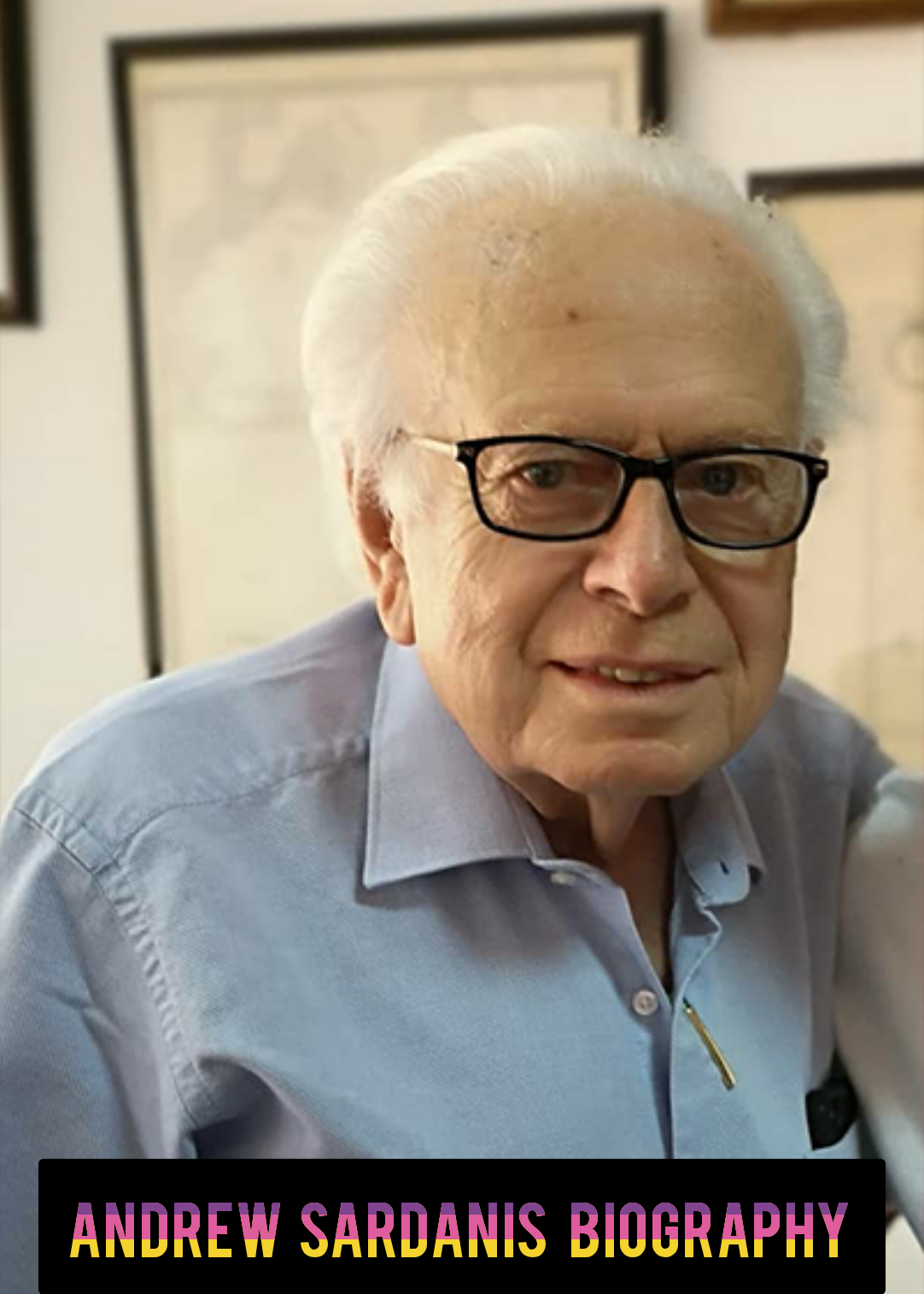
Andrew Sardanis Biography
Andrew Sardanis was a Cypriot born Zambian businessman, public servant, independence supporter and author whose life became deeply intertwined with the history of modern Zambia. Arriving as a young immigrant in colonial Northern Rhodesia, he built businesses, supported the struggle for African majority rule, helped shape the new nation’s economic institutions after independence, and later created private enterprises that stretched across the continent. His story combines personal enterprise with public service and a lasting commitment to the country he made his home. This biography presents his journey in clear and simple English.
An interesting fact that continues to draw attention is that a young man who left Cyprus at the age of nineteen and began by working in a transport business on the Copperbelt later became one of the key architects of Zambia’s early industrial policy, negotiated major mining takeovers, built a private banking network that once ranked among the largest on the continent, and still found time to write three detailed books about the country’s political and economic experience.
Andrew Sardanis Early Life
Andrew Sotiris Sardanis was born on 13 March 1931 in British Cyprus into a Greek Cypriot family. His father worked as a schoolteacher, and the household provided a modest but disciplined educational environment. Cyprus at that time remained under British colonial rule, and the tensions of colonial life left a lasting impression on the young Sardanis. He received his primary and secondary education within the colonial school system on the island.
In October 1950, at the age of nineteen, he migrated to Northern Rhodesia, the territory that later became Zambia. He was part of a wave of post war immigrants drawn by opportunities in the copper mining region. He settled first in Chingola on the Copperbelt and began working for his brother in law in a transport company that carried goods between the mining towns and the more remote North Western Province. The work was practical and demanding. It taught him the realities of moving goods across long distances, dealing with customers of different backgrounds, and operating in a racially segregated colonial economy.
Within a few years he moved from employment into independent business. In his mid twenties he owned and operated North Western Trading. By 1957 he had established Mwaiseni stores. These shops stood out because he trained and advanced Zambians, treated African employees as partners and shareholders, and created places where ordinary Zambians could trade freely. At a time when most white settlers kept their distance from African political aspirations, Sardanis took a different path. His own experience of colonial rule in Cyprus made him sympathetic to the cause of African self government.
Andrew Sardanis Personal Life
Andrew Sardanis made Zambia his permanent home and raised his family there. He developed deep personal ties with many of the country’s early leaders, including Kenneth Kaunda, who often stayed with the Sardanis family in Chingola during the years of political struggle. He remained close to the land and the people. Later in life he created the Chaminuka estate near Lusaka, a wildlife preservation area and lodge that became both a personal project and a showcase of African nature and culture. The estate provided a home for many families and offered visitors an intimate experience of the Zambian landscape.
He was known for personal approachability despite his success. Friends and younger colleagues remembered him as someone willing to listen, share experience and offer practical help. He wrote three books that recorded his observations of Zambian and African affairs with a mixture of insider knowledge and critical reflection. These writings reveal a man who continued to think carefully about the country long after he left formal government service. He received Zambia’s highest civil decoration, the Order of the Eagle of Zambia, from President Edgar Lungu in 2019 in recognition of his lifelong contribution.
Andrew Sardanis Rise to Prominence
Sardanis’s rise began with his decision to support the African independence movement at a time when few white residents did so openly. He joined the United National Independence Party and stood as a UNIP candidate for Kabompo in the 1962 elections. Although the seat was difficult to win, his participation marked him as a committed ally of the nationalist cause. He formed close working relationships with the leaders who would soon take power.
After Zambia gained independence in 1964, President Kenneth Kaunda appointed him in 1965 as Chairman and Managing Director of the Industrial Development Corporation, known as INDECO. The organisation had been a relatively small lending body. Under Sardanis it expanded rapidly into a major holding company that invested in textiles, fertilisers, explosives, copper fabrication, cement, sugar, airlines, hotels and other industries. He also served as Permanent Secretary in key ministries, including Commerce and Industry and later State Participation. Between 1968 and 1971 he supervised the implementation of the Mulungushi Reforms, which increased state participation in the economy.
His most prominent role came with the negotiation of the 51 per cent takeover of the copper mining industry in 1969. The mining companies were consolidated under a new structure, the Zambia Industrial and Mining Corporation, or ZIMCO. Sardanis became its first Chairman and Chief Executive. By 1971 ZIMCO’s annual sales and assets placed it among the largest industrial groups on the continent. These positions made him one of the most influential economic figures in the new nation.
Andrew Sardanis Major Achievements
The transformation of INDECO stands as one of Andrew Sardanis’s central achievements. In a few short years the corporation moved from a modest institution into a diversified industrial group that employed thousands and operated in many sectors of the economy. Projects such as the Zambia Tanzania road, the Tazama oil pipeline, the Indeni oil refinery and investments in manufacturing helped reduce the new country’s dependence on external supply routes and built local capacity.
His leadership in the mining nationalisation process gave the Zambian state a majority stake in its most important industry. The creation of ZIMCO provided a single structure for managing these large assets. Although later economic difficulties affected many state enterprises, the early period of expansion reflected a determined effort to place the commanding heights of the economy under national control and to accelerate industrial development.
After leaving government in 1971 he built a private conglomerate under the name Sardanis Associates, later known as ITM International. The group operated on principles of indigenisation and localisation similar to those he had applied in public service. In 1984 he formed Meridien International Bank. Through acquisitions the bank expanded across Africa and at its height controlled a substantial network of institutions with assets measured in billions of dollars and a large workforce. He also developed the Chaminuka wildlife estate and lodge, combining conservation with tourism and employment.
As an author he produced three substantial books: Africa Another Side of the Coin, A Venture in Africa, and Zambia The First 50 Years. These works offer detailed insider accounts of the final colonial years, the early independence period and the longer trajectory of Zambian development. They remain valuable sources for anyone seeking to understand the country’s modern history from a participant’s perspective.
Andrew Sardanis Challenges and Setbacks
Operating as a white supporter of African nationalism in colonial Northern Rhodesia brought social and political pressure. Many fellow settlers viewed his stance with suspicion or hostility. Building businesses that treated African employees as partners required persistence in a segregated environment. The early trading and transport operations faced the ordinary difficulties of long distances, limited infrastructure and fluctuating markets.
In government he worked under intense pressure to deliver rapid results. Expanding INDECO, negotiating with powerful international mining companies and implementing far reaching reforms demanded long hours, careful judgement and the ability to manage both political expectations and commercial realities. State led industrialisation proved complex, and later years brought economic difficulties that affected many of the institutions created in the first decade of independence.
His private banking venture, Meridien, eventually encountered serious problems and was liquidated. The collapse of a large financial institution brought public scrutiny and personal disappointment. He faced these setbacks with the same practical approach that had marked his earlier career, continuing to write, manage other interests and remain engaged with Zambian affairs. Throughout his life he adapted to changing political and economic conditions without abandoning his commitment to the country.
Andrew Sardanis Legacy and Current Status
Andrew Sardanis died on 28 February 2021 at CFB Hospital in Lusaka at the age of eighty nine. Tributes from political leaders, business colleagues and ordinary citizens recognised the unusual breadth of his contribution. He had arrived as a young immigrant, become a citizen in spirit and in practice, and spent seven decades working in and for Zambia.
His legacy rests in several areas. He helped create the early institutional framework for industrial development and state participation in the economy. He demonstrated that a person of European origin could identify fully with African aspirations and work inside the new nation as a partner rather than an outsider. His private businesses, especially the Mwaiseni stores and later the wider ITM group, showed practical models of localisation. The Chaminuka estate continues as a place where visitors encounter Zambian wildlife and culture. His three books preserve a detailed personal record of critical decades in the nation’s history.
In 2019 the award of the Order of the Eagle of Zambia confirmed official recognition of his lifelong service. He is remembered as a businessman who built, a public servant who organised, a writer who recorded, and a citizen who chose Zambia as his permanent home.
Conclusion
The life of Andrew Sardanis shows that belonging is created by commitment rather than by place of birth. A young man from Cyprus chose to stand with the people of Northern Rhodesia in their struggle for independence, helped build the economic institutions of the new Zambia, and continued to work, write and invest in the country for the rest of his life. His example encourages the belief that skill, courage and steady effort can turn an immigrant into a builder of nations and that personal enterprise and public service can strengthen each other when guided by a sense of shared purpose.
FAQs
Who was Andrew Sardanis?
Andrew Sardanis was a Cypriot born Zambian businessman, public servant, independence supporter and author who played important roles in Zambia’s early industrial development and later built private enterprises across Africa.
When and where was Andrew Sardanis born?
He was born on 13 March 1931 in British Cyprus into a Greek Cypriot family.
When did Andrew Sardanis come to Zambia?
He arrived in Northern Rhodesia, later Zambia, in October 1950 at the age of nineteen.
What government positions did Andrew Sardanis hold?
He served as Chairman and Managing Director of the Industrial Development Corporation, Permanent Secretary in key economic ministries, and first Chairman and Chief Executive of the Zambia Industrial and Mining Corporation.
What businesses did Andrew Sardanis create?
He established Mwaiseni stores, later founded the private group that became ITM International, and created Meridien Bank, which expanded into a major African banking network. He also developed the Chaminuka wildlife estate and lodge.
When did Andrew Sardanis die?
He died on 28 February 2021 in Lusaka at the age of eighty nine.
What books did Andrew Sardanis write?
He wrote Africa Another Side of the Coin, A Venture in Africa, and Zambia The First 50 Years, which provide detailed accounts of Zambia’s late colonial and post independence history.
What is the lasting legacy of Andrew Sardanis?
His lasting legacy includes his contribution to Zambia’s early industrial institutions, his example of full identification with the country’s independence and development, his private business initiatives, the Chaminuka estate, and the historical record preserved in his books.