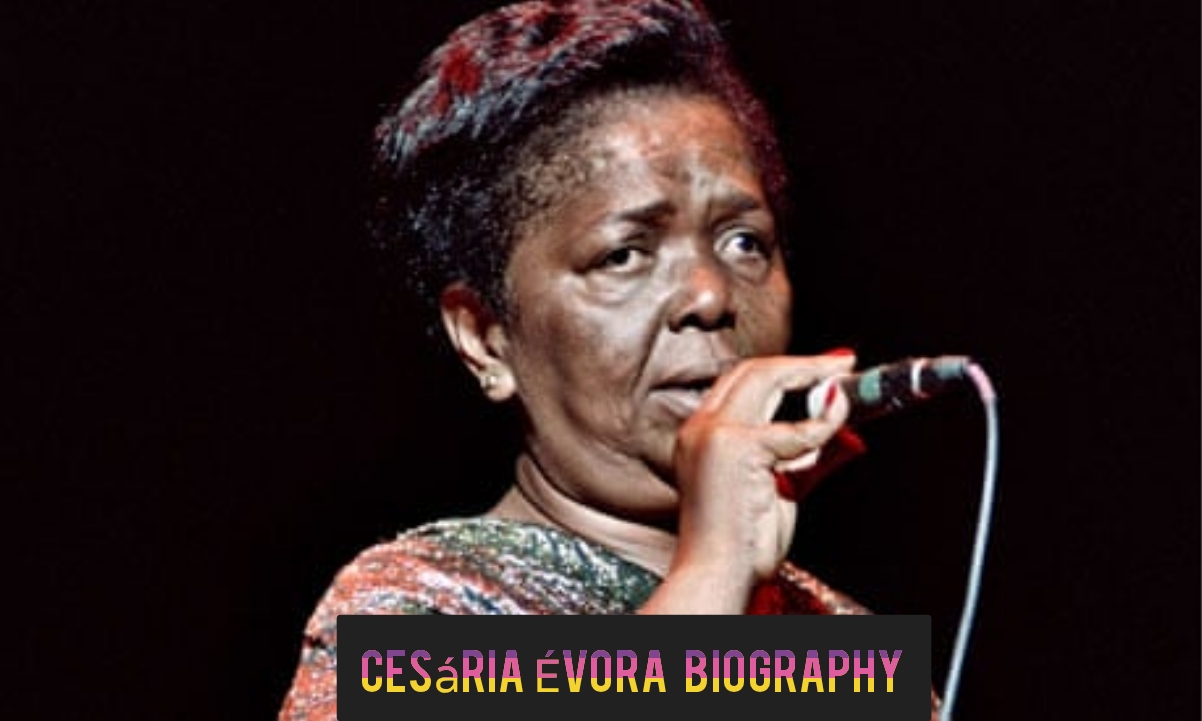
Cesària Évora Biography
Cesária Évora was one of the most distinctive and beloved voices in world music. Known as the Barefoot Diva and the Queen of Morna, she brought the soulful, melancholic songs of Cape Verde to audiences across the globe. Her rich, emotional singing, often performed without shoes, carried themes of love, longing, homesickness, and the history of her island nation. Late in life she achieved international fame and became a cultural ambassador for Cape Verde.
This biography explores the full arc of Cesária Évora’s life, from a childhood of poverty on the island of São Vicente to her late blooming career that made her a global star. It covers her personal relationships, the long years of struggle before recognition, the awards and impact of her music, the health challenges she faced, and the enduring legacy she left behind. Her story is one of resilience, authenticity, and the quiet power of a voice that never lost its connection to home.
Cesária Évora Intro
An interesting fact that draws readers in is that Cesária Évora did not become an international star until she was in her fifties. For decades she sang in the bars of Mindelo, raised children largely on her own, and even stopped performing for years because the work did not pay enough to support her family. Then, through a combination of chance meetings and persistent support from Cape Verdean producers, her music reached Europe and the world. Albums such as Miss Perfumado turned her into a sensation in France and beyond, proving that a powerful voice and deep cultural roots can find their audience at any age.
Cesária Évora’s late success was remarkable not only for its timing but for its authenticity. She performed barefoot, smoked and drank between songs on stage, and remained deeply connected to Mindelo even as she filled concert halls around the world. Her music introduced millions to morna, the traditional Cape Verdean style that expresses saudade, a profound sense of longing and nostalgia. In doing so she placed a small Atlantic archipelago firmly on the map of world music.
Cesária Évora Early Life
Cesária Évora was born on 27 August 1941 in Mindelo, on the island of São Vicente in what was then Portuguese Cape Verde. She was one of seven children in a modest family. Her father, Justino da Cruz Évora, was a part time musician who played the violin and other instruments. He died when Cesária was only seven years old, leaving her mother, Joana, a cook and domestic worker, to raise the children alone. The family struggled with poverty. At around the age of ten Cesária was placed in an orphanage run by nuns because her mother could not provide for all the children. She stayed there for several years before returning to live with relatives.
Mindelo was a lively port town with a strong musical tradition. Cesária grew up in an environment where singers, composers, and musicians gathered. Her uncle B. Leza was a respected composer of mornas. The house at 35 Rua de Moeda in Mindelo became a meeting place for local artists, and it was there that Cesária absorbed the songs and styles that would later define her career. She began singing as a child and by her mid teens was performing in bars and taverns that catered to sailors and local residents. At sixteen she was encouraged by a guitarist named Eduardo to sing more publicly. She performed morna and coladeira, the two main popular styles of Cape Verde, accompanied by guitar, cavaquinho, or piano.
Formal education was limited. Cesária left the orphanage as a young teenager and soon focused on singing as a way to earn a living. In the 1960s she performed on local radio and for Portuguese cruise ships that docked in Mindelo. Early recordings were made and circulated among Cape Verdean communities in Europe, particularly in the Netherlands and Portugal, but they did not bring lasting financial security. The poverty of the islands, the limited opportunities under colonial rule, and the demands of raising a family shaped her early adult years. By the mid 1970s, after Cape Verde gained independence in 1975, she stopped singing regularly because the income was not enough to support her children. She lived with her mother and struggled with personal difficulties, including periods of depression and heavy drinking.
Cesária Évora Personal Life
Cesária Évora married and divorced three times. She raised three children largely on her own, though one died in infancy. Two children survived to adulthood, and she later became a grandmother. She spoke of her deep attachment to her mother and her children, saying that after her third divorce she considered herself married to her family rather than to any man. She lived simply even after fame arrived, preferring her home in Mindelo and the company of friends and relatives. Her house was known for its open doors, and she continued to receive visitors, smoke, and share stories until near the end of her life.
She was famous for performing barefoot, a habit that earned her the nickname Barefoot Diva. On stage she often smoked and drank during intermissions, presenting herself without pretension. She enjoyed the company of musicians and the relaxed atmosphere of Mindelo’s bars. Lesser known aspects of her character include a strong sense of independence and a refusal to change her lifestyle for the sake of image. She declined some high profile invitations, including a request from Madonna to perform at a wedding, preferring to stay true to her own path. She remained close to Cape Verdean culture and language, singing primarily in Cape Verdean Creole and keeping her home base on São Vicente even when international success made other places more convenient for medical care or business.
Her personal life reflected both hardship and warmth. The early loss of her father, the years of poverty, and the challenges of single motherhood left their mark. Yet she also found support in the musical community of Mindelo and later in the professional relationships that sustained her career. Producer José da Silva became a close collaborator and friend, treating her as part of his family during the years they worked together. Cesária valued freedom and authenticity above formal conventions, and that spirit shaped both her private life and her public presence.
Cesária Évora Rise to Prominence
For many years Cesária Évora was a local star in Mindelo but unknown beyond Cape Verde and its diaspora communities. In the 1960s she sang on radio and for visiting ships, and some recordings reached Europe, yet commercial success remained elusive. After independence in 1975 she largely withdrew from performing. The turning point came in 1985 when Cape Verdean singer Bana, who was based in Lisbon, invited her to Portugal to perform for the local Cape Verdean community and a women’s association. It was her first significant trip outside the islands. Her performances in Lisbon were well received, and she began recording cassettes that circulated among immigrants.
In Lisbon she met José da Silva, a young Cape Verdean musician living in Paris who worked for the French railways. Deeply moved by her voice, he invited her to France to record. In 1988 she released her first major album, La Diva aux Pieds Nus, under the Lusafrica label that da Silva established. The album brought attention in France and introduced her to a wider European audience. Follow up records such as Distino di Belita and Mar Azul built on that foundation. The real breakthrough arrived in 1992 with Miss Perfumado. The album sold hundreds of thousands of copies in France alone and included the enduring song Sodade. Suddenly Cesária Évora, then in her early fifties, was an international star. Tours across Europe, North America, and other regions followed, and she became the leading ambassador of Cape Verdean music on the world stage.
Cesária Évora Major Achievements
Cesária Évora released a series of acclaimed albums that brought morna and coladeira to global listeners. Miss Perfumado established her reputation. Later works such as Cesária, Cabo Verde, Café Atlantico, São Vicente di Longe, Voz d’Amor, Rogamar, and Nha Sentimento continued to expand her audience. She sold millions of records overall and performed hundreds of concerts, including more than one hundred in a single year at the height of her career. Her voice appeared on film soundtracks, most notably with the song Ausência in Emir Kusturica’s Underground.
She received major recognition. In 1997 she won multiple KORA All African Music Awards, including Best Artist of West Africa and awards for her album Cabo Verde. She earned six Grammy nominations and won the Grammy Award for Best Contemporary World Music Album in 2004 for Voz d’Amor. In France she received Victoires de la Musique awards. The French government honored her with the Légion d’Honneur. Cape Verde declared her a cultural ambassador and granted her a diplomatic passport. In 2004 she also became an ambassador for the World Food Programme.
Her greatest achievement was placing Cape Verdean music on the world map. Before her success, few outside the islands and the diaspora knew the sound of morna. Through her recordings and tours she introduced millions to the poetry and emotion of Cape Verdean song. She influenced diaspora musicians and even reached mainstream artists. Her barefoot performances and unpretentious stage presence became part of her legend, showing that authenticity could captivate audiences as effectively as polished production.
Cesária Évora Challenges and Setbacks
Poverty and family hardship defined her early years. The death of her father, time spent in an orphanage, and the struggle to raise children with limited resources forced her to stop singing for a decade. Alcohol and depression were part of the difficult period after independence. Even after she returned to music, commercial success came slowly. Early recordings in Europe did not lead to sustained income, and she remained largely unknown outside Cape Verdean circles until her late forties.
Health problems became serious in later years. She suffered a stroke while touring in Australia in 2008. Heart problems required surgery after a concert in Paris in 2010. Respiratory illness and hypertension continued to weaken her. She retired from performing in September 2011. Despite medical advice, she chose to return to Mindelo rather than remain in France where more advanced care was available. She died there on 17 December 2011 at the age of seventy from respiratory failure and hypertension. Reports noted that even in her final days she continued to receive friends, smoke, and share moments of music and conversation.
Throughout these challenges she maintained a quiet determination. When singing no longer supported her family she stopped without bitterness. When opportunity returned she accepted it on her own terms. When illness came she continued to perform as long as her strength allowed. Her ability to endure long years of obscurity and personal difficulty made her eventual success all the more meaningful to fans who recognized the depth of experience in her voice.
Cesária Évora Legacy and Current Status
Cesária Évora died in her hometown of Mindelo, the place that had shaped her from the beginning. Her passing was mourned across Cape Verde and by admirers worldwide. She is remembered as the artist who gave the world the sound of morna and who represented her small nation with dignity and warmth. Her house in Mindelo has become a site of remembrance, and her recordings continue to introduce new listeners to Cape Verdean music.
Her influence remains strong among Cape Verdean artists and in the broader world music community. Younger musicians cite her as an inspiration for staying true to local traditions while reaching international audiences. Songs such as Sodade have become anthems of longing and identity for the Cape Verdean diaspora. Tribute concerts, reissues, and documentary projects keep her memory alive. Cape Verdeans often say that she put their country on the map, and they remain determined to preserve her name and music for future generations.
More than a decade after her death, Cesária Évora is still regarded as the greatest ambassador of Cape Verdean culture. Her barefoot performances, her Creole lyrics, and her ability to convey deep emotion with simple accompaniment continue to move listeners. She showed that a voice rooted in a small place can speak to the whole world.
Conclusion
Cesária Évora’s life teaches that recognition can arrive late and still be profound. From the bars of Mindelo to the great concert halls of Europe and America, she carried the music of her islands with honesty and grace. Her story reminds us that authentic expression, even when it comes from hardship and long waiting, has the power to connect people across oceans and generations. In the quiet strength of her voice, the spirit of Cape Verde continues to be heard.
FAQs
Who was Cesária Évora?
Cesária Évora was a Cape Verdean singer known as the Barefoot Diva and the Queen of Morna. She brought the traditional music of Cape Verde, especially morna, to international audiences and became one of the most celebrated world music artists of her time.
When and where was Cesária Évora born?
She was born on 27 August 1941 in Mindelo, on the island of São Vicente in Cape Verde.
What is morna?
Morna is a traditional Cape Verdean musical style that expresses themes of love, longing, nostalgia, and the history of the islands. Cesária Évora was its most famous modern interpreter.
How did Cesária Évora become famous?
After decades of singing in local bars and a period of retirement, she was invited to Portugal in 1985. Producer José da Silva brought her to Paris, where she recorded albums that led to the breakthrough success of Miss Perfumado in 1992.
What awards did Cesária Évora win?
She won a Grammy Award for Best Contemporary World Music Album in 2004 for Voz d’Amor, multiple KORA All African Music Awards, Victoires de la Musique in France, and the French Légion d’Honneur. She also received several Grammy nominations.
When did Cesária Évora die?
She died on 17 December 2011 in Mindelo, Cape Verde, at the age of seventy, from respiratory failure and hypertension.