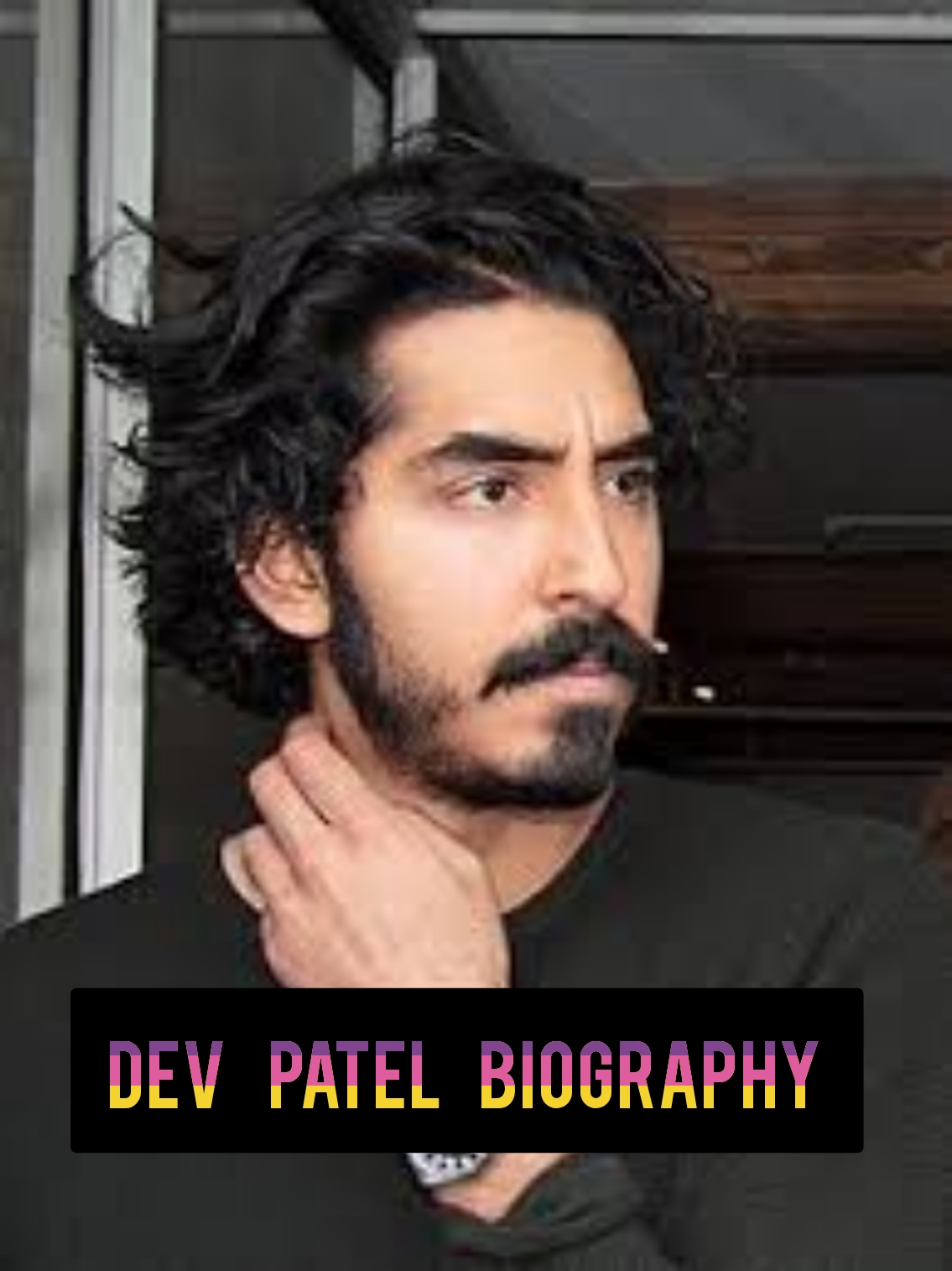
Dev Patel Biography
Dev Patel stands as one of the most compelling and versatile performers of his generation. A British actor of Indian descent, he first captured global attention as a teenager and has since built a career defined by emotional depth, physical commitment, and a growing voice behind the camera. From the streets of Mumbai in an Oscar winning film to the fierce action of his own directorial debut, Patel has consistently chosen roles that challenge both himself and the industry’s expectations of what a leading man can be. His journey reflects talent, persistence, and a quiet determination to expand the stories told on screen.
Dev Patel An Interesting Fact That Draws the Reader In
Long before he became an international star, Dev Patel earned a black belt in taekwondo and competed at the world championships in Dublin, where he took home a bronze medal. That same discipline and physical focus later fueled the intense fight sequences he performed and directed in his own film. The boy who once channeled restless energy into martial arts training would one day use those skills to create a powerful story of revenge and resilience for the big screen.
Dev Patel Early Life
Dev Patel was born on 23 April 1990 in the London borough of Harrow. His parents, Anita and Raju Patel, were of Gujarati Indian heritage. Both had been born in Nairobi, Kenya, part of the large Indian community there, and each immigrated separately to the United Kingdom as teenagers. They met in London, married, and settled in the Rayners Lane area of Harrow. Anita worked as a care worker while Raju built a career as an IT consultant. The family followed the Hindu faith, and young Dev learned some Gujarati, though English was the main language at home.
He has one older sister, about four years his senior, who later pursued a career in business marketing. The household was close knit and practical. His parents worked hard, sometimes holding more than one job, and the family lived in a modest semi detached house. Patel has spoken of feeling that central London seemed distant and inaccessible when he was growing up. Money was managed carefully, and outings to restaurants in the city were rare.
As a child Patel was highly energetic. Teachers often found him restless, and he later described himself as the class clown. His parents enrolled him in many extracurricular activities to channel that energy. He began taekwondo training at the Rayners Lane Academy around the year 2000 and progressed steadily, earning his black belt by the age of sixteen. He competed in national and international events and won a bronze medal at the Taekwondo World Championships held in Dublin.
Education took place at Longfield Primary School followed by Whitmore High School. At school he discovered a natural gift for performance. His first major stage role came at age eleven when he played Sir Andrew Aguecheek in a production of Shakespeare’s Twelfth Night and received a best actor award. Later, for his GCSE drama examination, he created and performed a piece portraying a child caught in the Beslan school siege. The examiner was moved to tears, and Patel received the highest grade of A star. His drama teacher remembered him as a gifted student with an innate ability to communicate a wide range of characters. He completed his A level studies in physical education, biology, history, and drama in 2007, balancing schoolwork with the early stages of his professional career.
Dev Patel Personal Life
Patel has kept much of his private life out of the public eye, preferring quiet relationships and family connections over constant media attention. He dated his Slumdog Millionaire co star Freida Pinto from 2009 until the end of 2014. The relationship lasted nearly six years and remained amicable after their separation. Patel has spoken with respect about Pinto, describing her as generous and patient and noting that she had a lasting positive influence on his life and motivation.
In 2017 his relationship with Australian actress Tilda Cobham Hervey became known. The two met while filming Hotel Mumbai in Adelaide. Cobham Hervey showed him around her hometown, and a genuine connection developed. They have kept their partnership largely private, though they have appeared together at public events, including the Los Angeles premiere of Monkey Man in 2024. In 2022 the couple moved to Adelaide, Cobham Hervey’s home city. Patel has described the balance between ambition and personal wellbeing as an ongoing effort, valuing the steady presence of those closest to him.
He remains close to his parents and sister. His mother has often accompanied him to major events, including the Academy Awards. Family meals of dal and roti still ground him when he returns home. Outside of work Patel enjoys table tennis, which he plays with friends and colleagues on set. He has spoken of a love for animals and has cared for rescue dogs. He also plays drums, guitar, and piano, though he has joked that he is completely tone deaf when it comes to singing. Meditation and yoga help him stay centered amid a demanding schedule. He follows Arsenal Football Club and has mentioned a fondness for chess. Travel and exploring different cuisines are other interests that bring him pleasure.
Patel stands six feet two inches tall and has maintained a disciplined approach to physical training throughout his career. He has no children. Despite global recognition he has often returned to the same family home in Harrow, a place that continues to keep him grounded.
Dev Patel Rise to Prominence
Patel’s entry into professional acting happened almost by chance. In 2006 his mother noticed a newspaper advertisement for open auditions for a new British teen drama called Skins. She insisted he attend, even though he had a science exam the next day and was reluctant. He won the role of Anwar Kharral, a British Pakistani teenager navigating friendship, faith, and the chaos of adolescence. The series aired on E4 beginning in 2007 and quickly gained a strong following for its raw and honest portrayal of young people. Patel appeared in the first two seasons, completing eighteen episodes while still finishing school. The experience taught him the demands of filming schedules and the intensity of working with a young ensemble cast that included future stars such as Nicholas Hoult and Kaya Scodelario.
The real turning point arrived soon afterward. Director Danny Boyle was searching for a young actor of South Asian heritage to play the lead in an ambitious film about a Mumbai teenager competing on a game show. Boyle’s daughter had watched Skins and suggested Patel. He attended five rounds of auditions before landing the part of Jamal Malik in what became Slumdog Millionaire. At seventeen he traveled to India, worked in a call centre for a day, and washed dishes in a hotel to prepare for the role. The film mixed English and Hindi, featured non professional child actors alongside established performers, and told a story of poverty, resilience, and hope.
Released in 2008, the film became a worldwide phenomenon. It earned more than three hundred and seventy five million dollars at the box office against a modest budget and swept the major awards. Patel’s performance as the determined young man who refuses to give up brought him sudden and intense fame. He received a British Independent Film Award for Most Promising Newcomer, a National Board of Review Award for Breakthrough Performance, and a Critics Choice Award for Best Young Performer. He was also nominated for a BAFTA Award for Best Actor in a Leading Role and shared a Screen Actors Guild Award for Outstanding Cast. At an age when most of his peers were still deciding on university or first jobs, Patel found himself walking red carpets and speaking to international media.
The success of Slumdog Millionaire opened doors but also created pressure. Some expected him to continue only in similar roles. Instead he chose a range of projects that tested different aspects of his ability. He appeared in the television series The Newsroom as Neal Sampat, working under Aaron Sorkin’s rapid dialogue style. He starred in The Best Exotic Marigold Hotel opposite Judi Dench, Maggie Smith, and Bill Nighy, bringing warmth and humor to the role of a young hotel manager. These early choices showed an actor determined to grow rather than simply repeat past success.
Dev Patel Major Achievements
Over the following years Patel built a body of work marked by careful selection and strong critical response. In 2016 he delivered one of his most acclaimed performances as the adult Saroo Brierley in Lion. The true story followed an Indian boy who became lost, was adopted by an Australian family, and years later used technology to search for his birth mother. Patel spent months preparing, developing a new physique, growing a beard, and mastering an Australian accent. The film earned him the BAFTA Award for Best Actor in a Supporting Role and an Academy Award nomination in the same category. He became only the third actor of Indian descent to receive an Oscar nomination for acting. The performance also brought nominations for a Golden Globe and a Screen Actors Guild Award.
Other notable roles expanded his range. He portrayed the mathematical genius Srinivasa Ramanujan in The Man Who Knew Infinity opposite Jeremy Irons. He played the lead in The Personal History of David Copperfield, becoming the first actor of color cast as the classic Dickens character in a major screen adaptation, and earned a Golden Globe nomination. In The Green Knight he took on the legendary figure of Gawain in a visually striking medieval fantasy. He also appeared in Hotel Mumbai, a tense dramatization of the 2008 terror attacks, and in the science fiction film Chappie.
In 2024 Patel stepped fully into a new role as filmmaker. He wrote, directed, produced, and starred in Monkey Man, an action thriller inspired in part by the Hindu figure of Hanuman. The project had faced years of development difficulties and studio hesitation. When Netflix acquired the finished film and planned a streaming release, filmmaker Jordan Peele saw a test screening and felt it deserved a theatrical run. Peele’s company acquired the rights, and Universal Pictures released the film in cinemas. Monkey Man premiered at the South by Southwest festival, where it won the Headliners Audience Award. It received strong reviews for its visceral action, emotional core, and Patel’s dual achievement as performer and director. He earned a BAFTA nomination for Outstanding Debut by a British Writer, Director or Producer and recognition from several critics groups as a breakthrough filmmaker.
Beyond individual awards, Patel’s career has contributed to broader change. His early success with Slumdog Millionaire demonstrated that stories centered on South Asian characters could reach massive global audiences and win the highest honors. Later choices, such as playing classic British literary roles, challenged traditional casting assumptions. In 2024 Time magazine included him on its list of the one hundred most influential people in the world, recognizing both his artistic achievements and his impact on representation.
Dev Patel Challenges and Setbacks
Success arrived so quickly that it brought its own difficulties. After Slumdog Millionaire, Patel found that many of the scripts offered to him felt limited or repetitive. He has spoken of feeling as if he were in a gold plated cage, celebrated yet restricted by the industry’s narrow view of what roles suited him. One major project, The Last Airbender, proved especially disappointing. The large budget fantasy film received poor reviews and performed weakly at the box office. Patel later reflected that he had accepted the role at a time when he had little power to choose carefully, and the experience taught him to trust his own judgment more strongly.
School life also became complicated. While filming Skins he faced hostility from some teachers who disapproved of the show’s content and from certain classmates who objected to a Hindu actor playing a Muslim character. The tension contributed to his decision to leave formal education earlier than planned. Balancing the sudden demands of fame with ordinary teenage life required constant adjustment.
Typecasting remained a persistent obstacle. Even as he sought diverse parts, some observers continued to view him primarily through the lens of his breakthrough role. Preparing for Lion demanded intense physical and emotional work over many months, a process that tested his endurance. The long development of Monkey Man presented another set of hurdles. Financing proved difficult, studios hesitated, and the finished film nearly went straight to streaming before finding a theatrical path. Patel has described the years of waiting and rejection as painful yet ultimately formative. Each setback reinforced his determination to create work on his own terms and to tell stories that reflected the complexity of identity and ambition.
Dev Patel Legacy and Current Status
Today Dev Patel continues to expand his creative reach. Following Monkey Man he has directed and starred in The Peasant, a period action thriller set in the fourteenth century and filmed across several states in India. The project marks A24’s first production shot in the country and reunites him with collaborators from earlier work. He has also appeared in the folk horror film Rabbit Trap and has projects in development that include producing and acting roles. In recent years he has settled more of his life in Australia while remaining connected to his roots in London and to the wider South Asian diaspora.
His influence extends beyond individual films. Younger actors of South Asian heritage have cited his career as proof that international success is possible without abandoning cultural identity. His willingness to move from acting into writing and directing has inspired others to seek greater control over the stories they tell. Philanthropic efforts, including support for causes related to homeless children in India, reflect a sense of responsibility that accompanies his public profile.
Patel remains active and selective. He continues to choose projects that demand physical preparation, emotional honesty, and creative risk. Whether performing in front of the camera or shaping a film from behind it, he approaches the work with the same focused energy that once carried him through taekwondo competitions and school plays. At an age when many careers settle into predictable patterns, his still appears to be gathering new momentum.
Conclusion
Dev Patel’s story is one of steady transformation. From a restless boy in suburban London to an award winning actor and filmmaker, he has met sudden fame, industry limitations, and personal challenges with quiet resolve. The same discipline that earned him a martial arts medal later shaped the intense performances and ambitious projects that define his later work. His career reminds audiences that talent combined with persistence can open doors that once seemed firmly closed, and that the most lasting impact often comes from those who refuse to accept the limits others place upon them.
FAQs
When was Dev Patel born?
Dev Patel was born on 23 April 1990 in Harrow, London, England.
What was Dev Patel’s first major role?
His first professional role was Anwar Kharral in the British television series Skins, which began airing in 2007. His international breakthrough came the following year as Jamal Malik in Slumdog Millionaire.
Has Dev Patel won any major awards?
Yes. He won the BAFTA Award for Best Actor in a Supporting Role for Lion and has received an Academy Award nomination, Golden Globe nominations, and numerous other honors including Critics Choice and Screen Actors Guild recognition.
Who is Dev Patel currently dating?
He has been in a relationship with Australian actress Tilda Cobham Hervey since 2017. The couple met while working on the film Hotel Mumbai.
What is Dev Patel’s most recent major project?
In 2024 he made his feature directorial debut with Monkey Man, which he also co wrote, produced, and starred in. He has since directed and starred in the period action film The Peasant, which wrapped production in 2026.