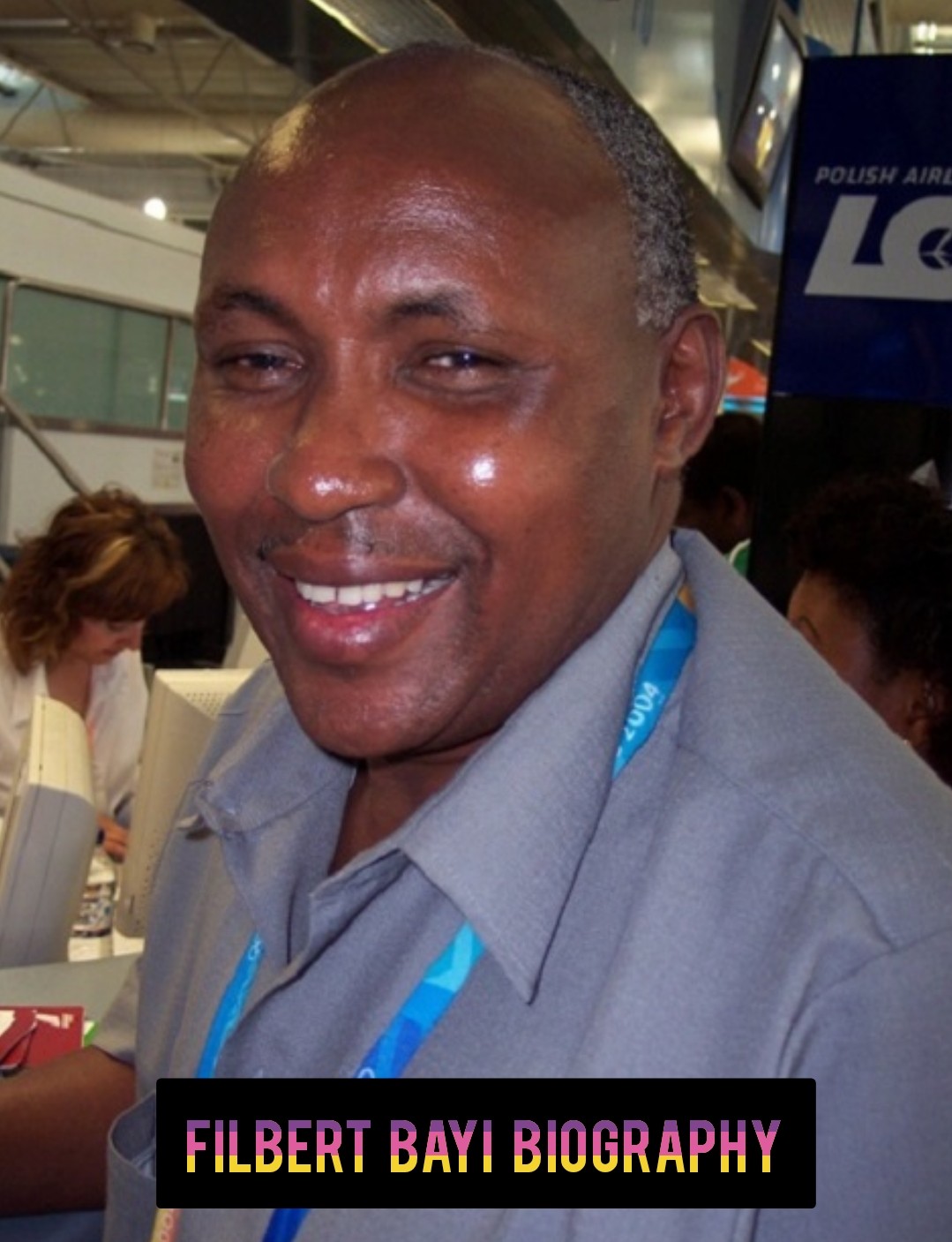
Filbert Bayi Sanka Biography
Filbert Bayi Sanka stands as one of the most remarkable figures in the history of middle distance running. Born in the highlands of Tanzania, he transformed the way athletes approached races over 1500 metres and the mile. Through bold front running tactics, he set world records that stood for years and inspired generations of East African runners. Beyond the track, he dedicated his life to education and youth development in his homeland, building schools and a foundation that continue to shape young lives. His story blends athletic brilliance with quiet determination, family commitment, and a lasting desire to give back to the community that raised him.
What makes Filbert Bayi truly unforgettable is the way he approached the 1500 metres final at the 1974 Commonwealth Games in Christchurch, New Zealand. At just twenty years old and largely unknown on the global stage, he charged to the front from the starting gun and never looked back. He led by a wide margin through the middle of the race while the rest of the field, including strong contenders from New Zealand and Kenya, stretched out behind him in single file. When he crossed the finish line in a new world record time, the crowd rose to its feet in astonishment. That single performance changed how middle distance races were run. Runners no longer waited for a slow early pace and a late sprint. Bayi showed that leading from the front with courage and confidence could produce greatness.
Filbert Bayi Early Life
Filbert Bayi Sanka was born on June 23, 1953, in the small village of Karatu in the Arusha Region of what was then Tanganyika Territory, later to become Tanzania. The area sits in the shadow of Mount Kilimanjaro and near the vast plains of the Serengeti. His father, a cattle herder named Bayi Sanka Irafay, fell seriously ill while traveling for business and died before Filbert was born. His mother, Magdalena Qwaray, was still pregnant when she learned of her husband’s condition. Determined to reach him, she walked dozens of kilometres through bushland with relatives, facing the real dangers of hyenas and wild animals along the way. She arrived too late, and Filbert entered the world without a father.
Raised by his mother in a modest household of the Iraqw people, Filbert grew up with the daily responsibilities of rural life. He herded goats and cattle across the highlands, a task that demanded constant movement over rough ground at altitude. These early years built a natural base of endurance. He also chased rabbits for exercise and played simple games with other children in the village. School stood several kilometres from home. Every day Filbert ran roughly eight miles in total, covering the distance to school in the morning, returning home for lunch, and then running back for afternoon classes. This routine, performed at high altitude without the luxury of transport, developed his lung capacity and stamina long before any formal training began.
Education was limited by the resources available in rural Tanzania during the late 1950s and 1960s. Filbert attended local primary schools and showed both academic promise and athletic ability. He competed in regional championships as a boy and began to stand out in distance events. Progress was interrupted when he contracted tuberculosis in his mid teens. The illness slowed him for a period, yet he recovered and continued to push forward. At the age of seventeen in 1970, he joined the Tanzanian army. The military offered structure, discipline, and the chance to train more systematically. He entered an air transport mechanics program and rose through the ranks over the years, eventually retiring as a major in 2001 after more than three decades of service. The army also gave him time and space to develop as a runner, and it was during this period that serious coaching and competition opportunities opened up.
Filbert Bayi Personal Life
Filbert Bayi married Anna in 1977. Their wedding took place after a period of preparation that temporarily interrupted his training, as he later recalled in interviews. The couple built a strong partnership that extended far beyond the home. Anna supported his athletic career and later worked alongside him to create educational opportunities for Tanzanian children. Together they had four children. Family remained central to Filbert’s life even as international travel and competition took him around the world. He often spoke of keeping his watch set to Tanzanian time while abroad so he could stay connected in spirit to what his family was doing at home.
In later years Filbert became a grandfather and eventually a great grandfather. He has spoken warmly about the joy of these roles. Anna passed away around 2021, a loss he described as irreplaceable. Their daughter Harriette continued the family work by taking on administrative responsibilities at the schools they founded. Filbert has remained close to his mother, who continued to live in Karatu near the landscapes of his childhood. He values the quiet strength of his Iraqw heritage and the values of hard work and community that shaped him.
Beyond family, Filbert’s interests have centred on education, youth development, and the ongoing promotion of athletics in Tanzania. He has stayed involved in coaching and sports administration long after his competitive days ended. His autobiography, published in 2022 under the title Catch Me If You Can, reflects on the values of sacrifice, commitment, and confidence that guided both his racing and his later work. He approaches life with the same forward momentum he once showed on the track, preferring action and service over rest.
Filbert Bayi Rise to Prominence
Filbert Bayi’s path to international recognition began in the early 1970s while he was still serving in the army. He made his Olympic debut at the 1972 Munich Games, competing in both the 1500 metres and the 3000 metres steeplechase. Although he did not advance beyond the heats, the experience of competing on the world stage proved valuable. The following year he claimed gold in the 1500 metres at the All Africa Games in Lagos, Nigeria, defeating the legendary Kenyan runner Kipchoge Keino. That victory announced his arrival as a serious contender.
The decisive breakthrough came at the 1974 Commonwealth Games in Christchurch. Filbert entered the 1500 metres final as a relative outsider. Instead of following the conventional strategy of conserving energy for a final sprint, he set a blistering early pace. By the 800 metre mark he held a substantial lead. The rest of the field, which included John Walker of New Zealand, Ben Jipcho of Kenya, Rod Dixon, and others, was forced to chase. Filbert maintained his rhythm and crossed the line in 3:32.16, a new world record. Walker also broke the previous mark, and several other runners recorded times among the fastest ever at that point. The race is still regarded as one of the greatest 1500 metres performances in history. Roger Bannister later called it the finest race he had ever seen.
In 1975 Filbert continued his rise by breaking the world mile record in Kingston, Jamaica, with a time of 3:51.0. Once again he led from the front. Although John Walker soon lowered the mark further, Filbert had confirmed that his front running style could rewrite the record books. These performances made him a household name in athletics circles and the first Black athlete to hold both the 1500 metres and mile world records. He became a symbol of East African excellence and a source of national pride for Tanzania.
Filbert Bayi Major Achievements
Filbert Bayi’s career is defined by a series of landmark results that reshaped middle distance running. His 1974 Commonwealth Games gold and world record in the 1500 metres remain the centrepiece. That mark stood as the Commonwealth Games record for forty eight years until it was finally broken in 2022. He successfully defended his All Africa Games 1500 metres title in 1978 in Algiers. At the 1978 Commonwealth Games in Edmonton he took silver in the same event after another strong front running effort.
At the 1980 Olympic Games in Moscow, Filbert delivered Tanzania’s first ever Olympic medal. Competing in the 3000 metres steeplechase, an event he had not specialised in for long, he led much of the race before settling for silver behind Bronisław Malinowski of Poland in a time of 8:12.48, a national record. His teammate Suleiman Nyambui also won silver in the 5000 metres at those Games, marking a historic moment for Tanzanian sport.
Filbert set personal bests that still stand as national records in several events. These include 1:45.32 for 800 metres, 3:32.16 for 1500 metres, 3:51.0 for the mile, 7:39.27 for 3000 metres, and 8:12.48 for the steeplechase. He competed successfully indoors as well, adapting his tactics to shorter tracks. Throughout the 1970s he raced against the best in the world, including Walker, Keino, and others, and consistently forced them to respond to his aggressive pacing. His willingness to take risks and lead from the front influenced a generation of runners who followed.
Beyond individual medals and records, Filbert’s greatest contribution may be the change he brought to race tactics. Before 1974, many middle distance finals unfolded at a measured pace until the final lap. His example encouraged more open and honest racing, with athletes willing to share the lead and test one another from the beginning. He also served later as Secretary General of the Tanzanian Olympic Committee and as a member of technical committees in international athletics, helping to shape the sport from administrative positions.
Filbert Bayi Challenges and Setbacks
Filbert Bayi’s path was never free of obstacles. The early loss of his father placed heavy responsibility on his mother and on him as the eldest son. Tuberculosis in his teens interrupted training and forced a period of recovery. Later he suffered repeated bouts of malaria, a common threat in parts of East Africa. One such illness struck shortly before the 1976 Olympic Games, leaving him weakened at a critical time.
Political realities also intervened. Tanzania joined the African boycott of the 1976 Montreal Olympics in protest against New Zealand’s sporting contacts with apartheid South Africa. The anticipated clash between Filbert and John Walker never took place on the Olympic stage. Although malaria might have limited his performance even without the boycott, the absence of that opportunity remained a significant disappointment. He also missed other competitions due to political complications in later years.
Injury and the physical demands of combining military service with elite training presented ongoing challenges. Yet Filbert adapted. He learned to manage his health, refined his training under various coaches and later as a largely self directed athlete, and shifted focus when necessary, as he did when moving toward the steeplechase for the 1980 Olympics. After retirement he faced the practical difficulties of building schools and a foundation with limited resources, starting in a garage with only seven students. Through persistence and partnership with his wife Anna, those efforts grew into lasting institutions.
Filbert Bayi Legacy and Current Status
Filbert Bayi’s influence extends well beyond his racing years. In the mid 1990s he and Anna began the Filbert Bayi Schools, first in a garage near their home and later expanding to campuses that now serve more than twelve hundred students from nursery through secondary levels. The schools emphasise both academic education and athletic development. The Filbert Bayi Foundation supports young sporting talent, educates communities about HIV and AIDS, and works to address poverty. These initiatives operate in areas outside Dar es Salaam and continue under family involvement, including the work of his daughter Harriette.
He has remained active in Tanzanian sports administration, serving as Secretary General of the National Olympic Committee and contributing to international technical bodies. His 2022 autobiography shared the full arc of his life with a wider audience and reinforced the values he holds dear. In recent years he has been recognised with inductions into halls of fame and has appeared at major events, including presenting medals at Commonwealth Games where his old record was finally surpassed. He continues to mentor and inspire, carrying the same forward looking energy that defined his racing.
Today Filbert Bayi lives as a respected elder statesman of Tanzanian athletics and education. He enjoys time with his extended family as a grandfather and great grandfather while keeping a watchful eye on the schools and foundation that bear his name. His story remains a source of national pride and an example of how athletic achievement can open doors to broader service.
Conclusion
Filbert Bayi’s life demonstrates that true greatness combines courage on the track with lasting commitment off it. From the highland paths of Karatu to the world record stage and then to classrooms filled with Tanzanian children, he has shown that leading from the front applies to far more than racing. His example encourages others to face challenges directly, to value education and community, and to turn personal success into shared opportunity. In a world that often celebrates only medals, Filbert Bayi reminds us that the most enduring victories are those that lift others as well.
FAQs
Who is Filbert Bayi?
Filbert Bayi is a former Tanzanian middle distance runner who set world records in the 1500 metres in 1974 and the mile in 1975. He won Olympic silver in the steeplechase in 1980 and later founded schools and a foundation dedicated to education and youth sports in Tanzania.
When and where was Filbert Bayi born?
Filbert Bayi was born on June 23, 1953, in the village of Karatu near Arusha in Tanzania.
What is Filbert Bayi most famous for?
He is best known for his front running victory and world record in the 1500 metres at the 1974 Commonwealth Games in Christchurch, a performance widely regarded as one of the greatest middle distance races ever run.
Did Filbert Bayi win an Olympic medal?
Yes. He won the silver medal in the 3000 metres steeplechase at the 1980 Moscow Olympics, becoming the first Tanzanian athlete to claim an Olympic medal.
What does Filbert Bayi do now?
He continues to oversee the Filbert Bayi Schools and Foundation, supports youth development in Tanzania, and remains involved in sports administration while enjoying family life as a grandfather and great grandfather.