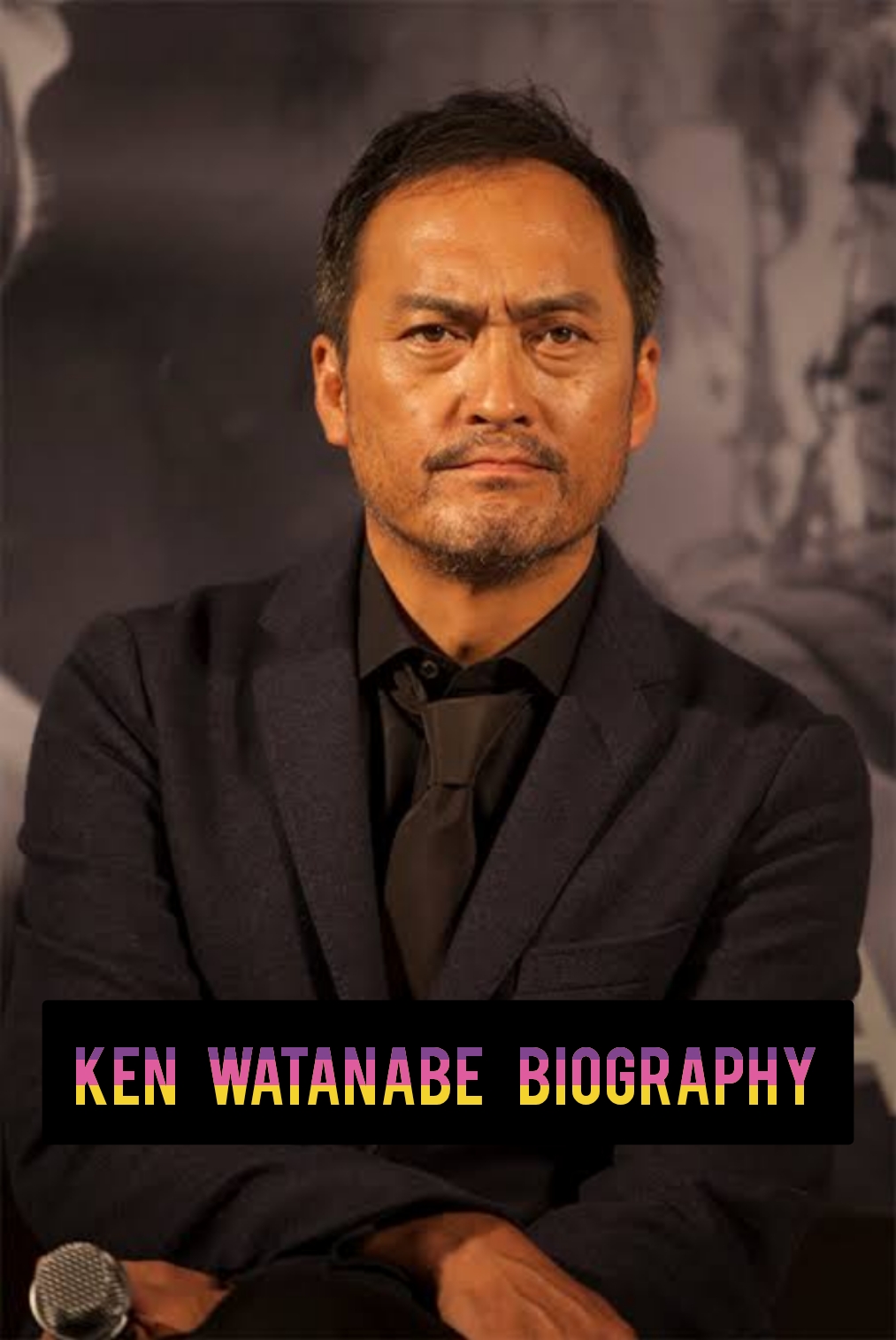
Ken Watanabe Biography
Ken Watanabe stands as one of the most respected actors of his generation, a performer whose quiet intensity and commanding presence have bridged Japanese cinema and Hollywood for more than four decades. From the snowy mountains of Niigata to the bright lights of Broadway and the soundstages of major American studios, his journey reflects both remarkable talent and an unyielding spirit. Audiences around the world know him as the noble samurai in The Last Samurai, the enigmatic businessman in Inception, and the determined general in Letters from Iwo Jima. Yet his story runs far deeper than any single role. It is a tale of artistic discovery, repeated battles with serious illness, personal reinvention, and a lasting commitment to his craft and his country.
Ken Watanabe Interesting Fact
Long before he became an international star, Ken Watanabe nearly chose an entirely different path. As a teenager he spent countless hours practicing the trumpet, dreaming of a life as a professional musician. Only a sudden family crisis forced him to set the instrument aside and search for another way to express himself. That unexpected turn led him to the stage, and eventually to a career that would redefine how the world sees Japanese actors.
Ken Watanabe Early Life
Ken Watanabe was born on October 21, 1959, in the mountain village of Koide in Niigata Prefecture, Japan. The area, now part of the city of Uonuma, is known for heavy snowfall, quiet rice fields, and a strong sense of community. His mother worked as a school teacher, while his father taught calligraphy, a traditional art that demands patience, precision, and quiet concentration. Both parents valued education and discipline, and these values shaped the young Ken from an early age.
Because of his parents’ teaching posts, the family moved several times during his childhood. He spent years in the villages of Irihirose and Sumon, and later in Takada, which is now part of Joetsu. These moves exposed him to different rural communities and taught him to adapt quickly. Life in the mountains was simple. Winters were long and cold, and outdoor activities such as skiing with his older brother became important parts of his early years.
At Niigata Prefectural Koide High School, Ken discovered a passion for music. He joined the school concert band and devoted himself to the trumpet. The instrument gave him a sense of purpose and a creative outlet. He practiced diligently and hoped one day to study music at a conservatory in Tokyo. That dream ended when he was about thirteen. His father fell seriously ill, and the family’s financial situation grew difficult. Music lessons became impossible to afford. Ken later recalled realizing he lacked the exceptional talent needed for a professional music career. The disappointment was real, yet it opened another door. He still wanted to create, so he began to consider acting.
After graduating from high school in 1978, Ken moved to Tokyo. He joined the En theater company as a trainee. The company, known for its rigorous training under the influential director Yukio Ninagawa, offered a demanding environment. Even as a student, Ken stood out. Ninagawa cast him in a leading role in the play Shitaya Mannencho Monogatari. Critics noticed the young actor’s natural presence and emotional depth. That early recognition confirmed that acting could become his true path.
Ken Watanabe Personal Life
Ken Watanabe has always preferred to keep his private world largely out of the spotlight, yet certain details of his family life are known. In 1983 he married Yumiko Watanabe. The couple had two children: a son named Dai, born in 1984, and a daughter named Anne, born in 1986. Both children later entered the entertainment industry. Dai became an actor, and Anne built a successful career as an actress, model, and singer. The marriage lasted more than two decades before ending in divorce in 2005 after a period of separation.
Later that same year, Ken married actress Kaho Minami. He legally adopted her son from a previous marriage, expanding his family. The couple remained together for thirteen years before divorcing in 2018. In June 2023 Ken announced a third marriage to a woman who prefers to remain private. Reports noted that they had known each other for nearly a decade before marrying.
Family remains important to him. He has spoken with quiet pride about becoming a grandfather. By his late forties he already had grandchildren, and the number has grown over the years. Despite the demands of an international career, he has stayed connected to his children and their families.
Outside of acting, Ken enjoys simple pleasures. He is a devoted fan of the Hanshin Tigers baseball team and the Kobe Steel rugby team. He has a well known love of noodles and has spoken warmly about everyday Japanese food. In the years after the 2011 Tohoku earthquake and tsunami, he opened a café called K-port in the hard hit city of Kesennuma. The café became a gathering place for locals and visitors, and Ken himself sometimes served customers. He closed the café in 2025, citing his age, yet the project reflected his desire to give something back to a community that had suffered great loss.
Ken Watanabe Rise to Prominence
Ken’s professional journey began on the stage in the late 1970s and early 1980s. After his early work with the En company, he moved into television and film. His first television appearance came in 1982. In 1984 he made his film debut in Setouchi Shonen Yakyu Dan, known in English as MacArthur’s Children. The following year he appeared in Juzo Itami’s memorable comedy Tampopo, a film that mixed food, humor, and human desire in unexpected ways.
The true turning point arrived in 1987. NHK cast him as the lead in the year long historical drama Dokuganryu Masamune. He played Date Masamune, the famous one eyed warlord known as the One Eyed Dragon. The series became one of the highest rated taiga dramas in Japanese television history. Overnight, Ken Watanabe became a household name across Japan. The role demanded physical presence, emotional range, and a deep understanding of samurai honor. He delivered all three.
Throughout the late 1980s and 1990s he continued to build a strong reputation in Japanese television and film. He took on both historical and contemporary roles, showing versatility that set him apart from many of his peers. Directors valued his ability to convey strength and vulnerability at the same time.
International recognition came later, but when it arrived it changed everything. In 2003 Edward Zwick cast him opposite Tom Cruise in The Last Samurai. Ken played Katsumoto, a proud samurai leader resisting the modernization of Japan. The performance was powerful and deeply human. It earned him an Academy Award nomination for Best Supporting Actor, the first time a Japanese actor had been nominated in that category. Golden Globe and Screen Actors Guild nominations followed. Suddenly Hollywood took notice.
Ken Watanabe Major Achievements
The success of The Last Samurai opened doors that few Japanese actors had walked through before. In 2005 Ken appeared in Memoirs of a Geisha as the Chairman and in Christopher Nolan’s Batman Begins as a key figure in the League of Shadows. The following year he starred as General Tadamichi Kuribayashi in Clint Eastwood’s Letters from Iwo Jima. The film presented the Battle of Iwo Jima from the Japanese perspective and earned widespread critical praise. Ken’s portrayal of the thoughtful, duty bound general remains one of his most respected performances.
In 2010 he reunited with Christopher Nolan for Inception, playing the wealthy and complex businessman Saito. The film became a global phenomenon, and Ken’s calm intensity stood out even among a star filled cast. He later brought dignity and quiet authority to the role of Dr. Ishiro Serizawa in the 2014 Godzilla reboot and its 2019 sequel. Other Hollywood credits include Transformers: Age of Extinction, Pokémon Detective Pikachu, and The Creator.
On stage, Ken achieved another milestone. In 2015 he starred as the King of Siam in the Broadway revival of The King and I. The performance earned him a Tony Award nomination, making him the first Japanese actor nominated in that category. He later repeated the role in London and received an Olivier Award nomination.
In Japanese cinema he has collected major honors. He won the Japan Academy Prize for Best Actor twice, first in 2007 for Memories of Tomorrow, in which he played a man facing early onset Alzheimer’s disease, and again in 2010 for The Unbroken. He has also received Blue Ribbon Awards and numerous other national prizes. More recently he appeared in Fukushima 50, earning another Japan Academy Award for supporting work, and in the 2025 film Kokuho, a major commercial and critical success centered on kabuki theater.
Beyond awards, his greatest achievement may be the way he has expanded opportunities for Asian actors in global cinema. By delivering performances of depth and humanity, he has helped challenge stereotypes and open paths for others.
Ken Watanabe Challenges Setbacks
Success did not come without severe trials. In 1989, while filming a major production, Ken collapsed and was diagnosed with acute myeloid leukemia. He was only twenty nine. The disease forced him to leave the film and undergo intensive chemotherapy. At the time the survival rate for the illness was low. He spent a year recovering, reading widely and reflecting on life. The cancer returned in 1994, requiring further treatment. During one of the blood transfusions he received, he contracted hepatitis C, a condition he later disclosed in his 2006 autobiography.
These health battles could have ended his career. Instead they deepened his approach to acting. He has said that facing death made every experience more precious and gave him greater empathy for the characters he plays. After recovering he returned to work with renewed focus.
In 2016 routine medical checks revealed early stage stomach cancer. He underwent successful surgery and returned to acting once again. Each time illness interrupted his path, he responded with quiet determination rather than despair. The experiences also strengthened his desire to help others. After the 2011 earthquake and tsunami he traveled to affected areas, listened to survivors, and created the café project as a place of community and recovery.
Personal challenges accompanied the professional ones. Two marriages ended, and the public attention that came with fame required careful navigation. Through it all Ken maintained a measured public presence, choosing to focus on work and family rather than controversy.
Ken Watanabe Legacy Current Status
Today Ken Watanabe continues to work at a high level. Recent projects include the kabuki centered drama Kokuho, which became one of Japan’s highest grossing live action films, and upcoming period pieces that return him to the samurai themes that first made him famous. He has also taken on roles in international productions and served as an ambassador for events such as the World Baseball Classic coverage.
His influence reaches beyond individual performances. Younger Japanese actors look to his career as proof that talent and persistence can cross cultural boundaries. Directors in both Japan and Hollywood continue to seek him for roles that require quiet authority and emotional truth. He remains a bridge between Eastern and Western storytelling traditions.
In Japan he is widely regarded as a national treasure. Surveys of public popularity have repeatedly placed him near the top of lists of admired figures. Abroad he is recognized as one of the most accomplished Japanese actors of the modern era. His willingness to take on demanding stage work late in his career, his recovery from multiple health crises, and his steady commitment to meaningful projects all contribute to a legacy of resilience and artistic integrity.
Conclusion
Ken Watanabe’s life offers a powerful reminder that setbacks do not define a person. From a rural childhood and abandoned musical dreams to national stardom, Hollywood recognition, and repeated confrontations with serious illness, he has met each chapter with dignity and determination. His performances continue to move audiences because they carry the weight of real experience. In an industry that often celebrates flash, he has shown the lasting power of depth, discipline, and quiet strength. As he continues to work and inspire, his story stands as an example of what is possible when talent meets perseverance.
FAQs
When was Ken Watanabe born?
Ken Watanabe was born on October 21, 1959, in the mountain village of Koide in Niigata Prefecture, Japan.
What is Ken Watanabe best known for?
He is best known for his role as Lord Katsumoto in The Last Samurai, which earned him an Academy Award nomination, as well as performances in Inception, Letters from Iwo Jima, Batman Begins, and Godzilla.
Has Ken Watanabe won major awards?
Yes. He has won the Japan Academy Prize for Best Actor twice and has received nominations for the Academy Award, Golden Globe, Tony Award, and Olivier Award.
Did Ken Watanabe face serious health challenges?
Yes. He was diagnosed with acute myeloid leukemia in 1989 and again in 1994. He also contracted hepatitis C from a blood transfusion and later overcame early stage stomach cancer in 2016.
Is Ken Watanabe still acting?
Yes. He continues to appear in major Japanese and international films and remains an active and respected figure in the entertainment industry.