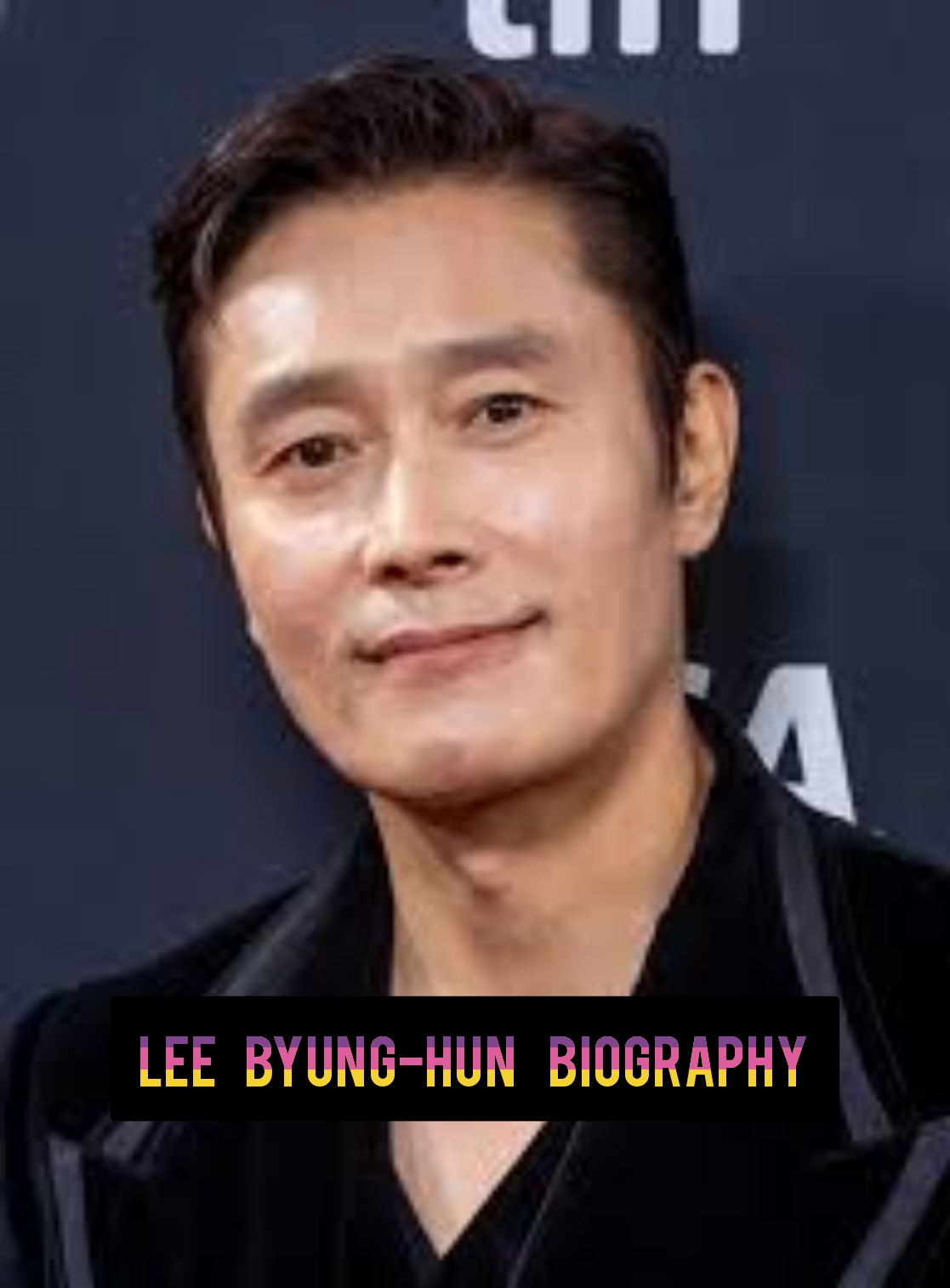
Lee Byung-hun Biography
Lee Byung-hun stands as a well known South Korea’s most accomplished and internationally recognized actors. His career spans more than three decades and bridges the worlds of Korean cinema and Hollywood. Known for intense performances that move easily between quiet emotion and raw physical power, he has earned respect from audiences and critics across continents. From early television roles to landmark Korean films and high-profile American productions, he has built a body of work that reflects both artistic range and lasting influence. This biography traces the path of a man who never planned to act yet became one of the defining faces of modern Korean entertainment.
An interesting fact that draws many readers in is that Lee Byung-hun never intended to become an actor at all. As a college freshman studying French literature, he accepted an audition flyer from a friend of his mother’s purely as a joke. That casual decision launched a career that would take him from Korean television sets to the Hollywood Walk of Fame and the global phenomenon of Squid Game.
Lee Byung-hun Early Life
Lee Byung-hun was born on July 12, 1970, in Seoul, South Korea. He grew up in a comfortable household thanks to his father, Lee Jong-kun, a successful businessman. His mother, Park Jae-soon, focused on raising the family. The home environment valued education and stability, giving young Byung-hun a secure foundation even as he displayed a mischievous streak common to many boys of his generation.
He has one younger sister, Lee Eun-hee, who later won the Miss Korea title in 1996 and pursued modeling and acting. The siblings shared a close bond, and Lee has spoken with quiet pride about her accomplishments. Family life centered on ordinary routines of school, sports, and time spent together. His father held a special love for Western films and often took his young son to the theater. Those early cinema visits planted a lasting affection for the art of storytelling on screen, even though the boy himself did not yet imagine a career in front of the camera.
Lee attended local schools in the Seoul area, including Jungdong High School. He then enrolled at Hanyang University, where he majored in French literature. At the time he pictured a more conventional path, perhaps teaching or working in a field connected to language and culture. During his university years a friend of his mother casually suggested he try an open audition held by the Korean Broadcasting System. He went along mainly for the experience. To his surprise he was accepted. That moment redirected his future.
After completing his bachelor’s degree he continued his studies at the Graduate School of Chung-Ang University, earning a master’s degree in theater and cinematography. The combination of literary training and formal study of performance gave him tools he would later use to build complex characters. His father’s sudden death around the year 2000 brought both personal grief and financial pressure, as Lee worked to settle remaining family obligations. Those early responsibilities shaped a sense of duty that has remained with him throughout his adult life.
Lee Byung-hun Personal Life
Lee Byung-hun married actress Lee Min-jung on August 10, 2013, at the Grand Hyatt Seoul. The couple had first dated briefly in 2006 before parting ways because of career demands. They reconnected years later and chose to build a life together. Their first child, a son named Lee Joon-hoo, was born on March 31, 2015. In December 2023 they welcomed a daughter. Lee has spoken warmly about fatherhood, describing the simple pleasure of being at home with his children and the way family life grounds him amid a demanding schedule.
He is known to practice taekwondo, a discipline that supports both physical fitness and mental focus. He also developed a serious interest in coffee and became a certified barista during a period when he stepped back from intensive filming. Friends and colleagues note his fluency in French, English, and Mandarin Chinese in addition to his native Korean. These language skills have helped him navigate international projects with greater ease.
Lee maintains a relatively private personal life. He prefers quiet time at home watching films and documentaries over constant public appearances. He has credited his wife with providing steady support during difficult periods, including the emotional aftermath of his father’s death and later personal challenges. The couple’s shared professional understanding allows them to balance demanding careers while protecting their family space.
Lee Byung-hun Rise to Prominence
Lee Byung-hun’s professional journey began in 1991 with a small role in the KBS television drama Asphalt My Hometown. Early television work brought him visibility, especially among younger viewers. Appearances in series such as Tomorrow Love and later All In helped establish him as a reliable leading man capable of both toughness and vulnerability.
His film career started more slowly. Early features in the mid-1990s received limited attention. The turning point arrived in 2000 with Park Chan-wook’s Joint Security Area. Lee portrayed a South Korean border soldier whose secret friendship with North Korean counterparts leads to tragedy. The film became the highest-grossing Korean movie of its time and earned Lee critical praise for the quiet intensity he brought to the role. That performance marked his true breakthrough and opened doors to more ambitious projects.
The early 2000s solidified his status. Melodramas such as Beautiful Days and the thoughtful Bungee Jumping of Their Own expanded his range. On television the 2003 series All In showcased his ability to carry a long-form narrative. By the middle of the decade he was working with directors who would become central to the Korean New Wave. Kim Jee-woon’s A Bittersweet Life in 2005 presented him as a stylish yet doomed enforcer, a performance that attracted international festival attention and ultimately interest from Hollywood agents.
His first major Hollywood role came in 2009 as Storm Shadow in G.I. Joe: The Rise of Cobra. The experience of working on a large-scale American production without many Korean predecessors to guide him felt isolating at times, yet he approached it with discipline. The sequel and subsequent roles in Red 2, Terminator Genisys, and The Magnificent Seven followed. Meanwhile he continued to deliver landmark Korean performances, including the dual role of king and commoner in Masquerade in 2012, which became one of the highest-grossing Korean films in history.
Lee Byung-hun Major Achievements
Lee Byung-hun’s achievements span awards, box-office records, and cultural milestones. He has collected Best Actor honors at the Grand Bell Awards, Blue Dragon Film Awards, and Baeksang Arts Awards, sometimes sweeping multiple major prizes in the same year for a single performance. Inside Men in 2015 brought him that rare triple crown of Korean acting awards. Masquerade earned him recognition at the Asia Pacific Screen Awards. His work in Mr. Sunshine earned a Grand Prize at the APAN Star Awards and further television honors.
He became the first South Korean actor to present an award at the Academy Awards. Together with veteran actor Ahn Sung-ki he left hand and foot prints at Grauman’s Chinese Theatre, another first for Korean performers. Gallup Korea named him Film Actor of the Year in 2012 and Television Actor of the Year in 2018. In 2025 he received the Bo-gwan Order of Cultural Merit from the South Korean government in recognition of his contributions to the nation’s cultural standing.
His role as the Front Man in Squid Game introduced him to a massive new global audience. The series became a worldwide streaming phenomenon, and Lee’s measured, enigmatic performance added depth to the story. More recently his leading turn in No Other Choice earned him a Golden Globe nomination for Best Actor in a Musical or Comedy, a historic recognition for a Korean performer in that category. He has also voiced a major character in the animated success KPop Demon Hunters, further extending his reach.
Beyond individual awards, Lee has influenced the industry by founding BH Entertainment, an agency that supports other Korean talent while maintaining high professional standards. His willingness to move between commercial blockbusters and more artistic projects has expanded the possibilities open to Korean actors on the world stage.
Lee Byung-hun Challenges Setbacks
Success did not arrive without difficulty. After his father’s death Lee faced the practical burden of settling debts. The emotional weight contributed to a period of depression and later episodes of panic that made public appearances, including award ceremonies, especially hard. He has spoken candidly about those struggles and the importance of support from those closest to him in recovering a sense of balance.
Early in his film career several projects failed commercially, creating uncertainty about whether he could sustain a long-term presence on the big screen. The decision to accept Hollywood roles brought its own pressures. Working in a different language and cultural environment without established Korean role models left him feeling adrift at times. He adapted through careful preparation and a willingness to learn on set.
In 2014 a personal scandal involving blackmail attempts by acquaintances tested both his marriage and public reputation. The episode generated intense media attention at a sensitive moment. Lee and his wife chose to weather the storm privately and ultimately emerged with their relationship intact. The experience reinforced his preference for protecting family life from unnecessary public scrutiny.
These setbacks never permanently derailed his career. Instead they deepened the emotional authenticity he brings to complex characters who often carry heavy burdens. Overcoming financial pressure, mental health challenges, and public controversy has given him a grounded perspective that audiences sense in his performances.
Lee Byung-hun Legacy Current Status
Lee Byung-hun continues to work at a high level well into his fifties. Recent projects include significant roles in Squid Game seasons, the critically noticed No Other Choice, and voice work that reaches younger viewers. He remains selective about scripts, favoring stories that offer genuine dramatic substance. His agency continues to develop new talent while he himself models a career defined by longevity and versatility.
His influence extends beyond individual performances. By succeeding in both Korean and American industries he helped open pathways for later Korean actors seeking international opportunities. The global success of Korean content in recent years owes something to pioneers who proved that Korean performers could hold their own on the largest stages. Lee’s combination of technical skill, emotional depth, and professional durability has set a standard many younger actors study.
He maintains a low public profile outside of work commitments, focusing on family and carefully chosen projects. Occasional appearances at major festivals and awards ceremonies remind audiences of his stature, yet he seems content to let the work speak for itself. As Korean cinema and television continue to command worldwide attention, Lee Byung-hun stands as both a bridge to earlier decades of growth and an active participant in the present moment.
Conclusion
Lee Byung-hun’s story demonstrates how an unplanned beginning can grow into a lasting body of work that touches audiences across cultures. From a casual audition accepted almost as a joke to iconic roles that define eras of Korean film and television, he has approached each chapter with seriousness and quiet determination. The challenges he faced along the way only sharpened his ability to portray human complexity on screen. Today he remains a respected figure whose career continues to evolve, offering a model of craft, resilience, and measured ambition. His journey reminds us that genuine achievement often grows from unexpected opportunities met with consistent effort.
FAQs
Who is Lee Byung-hun?
Lee Byung-hun is a South Korean actor celebrated for his versatile performances in film and television. He has starred in major Korean productions such as Joint Security Area, A Bittersweet Life, Masquerade, and Squid Game, as well as Hollywood films including the G.I. Joe series and The Magnificent Seven.
When and where was Lee Byung-hun born?
Lee Byung-hun was born on July 12, 1970, in Seoul, South Korea.
What is Lee Byung-hun’s educational background?
He earned a bachelor’s degree in French literature from Hanyang University and a master’s degree in theater and cinematography from the Graduate School of Chung-Ang University.
Is Lee Byung-hun married?
Yes. He married actress Lee Min-jung on August 10, 2013. The couple has two children, a son born in 2015 and a daughter born in 2023.
What are some of Lee Byung-hun’s most famous roles?
Notable roles include the border soldier in Joint Security Area, the enforcer in A Bittersweet Life, the dual characters in Masquerade, Storm Shadow in the G.I. Joe films, and the Front Man in Squid Game.
Has Lee Byung-hun received major awards?
Yes. He has won multiple Best Actor awards at the Grand Bell, Blue Dragon, and Baeksang ceremonies. He was named Gallup Korea’s Film Actor of the Year and Television Actor of the Year, and he received a Golden Globe nomination for No Other Choice. He also became the first South Korean actor to present an Oscar.
What languages does Lee Byung-hun speak?
In addition to Korean he is fluent in French, English, and Mandarin Chinese.
What hobbies does Lee Byung-hun enjoy?
He practices taekwondo and is a certified barista with a strong interest in coffee. He also values quiet time at home watching films and documentaries.