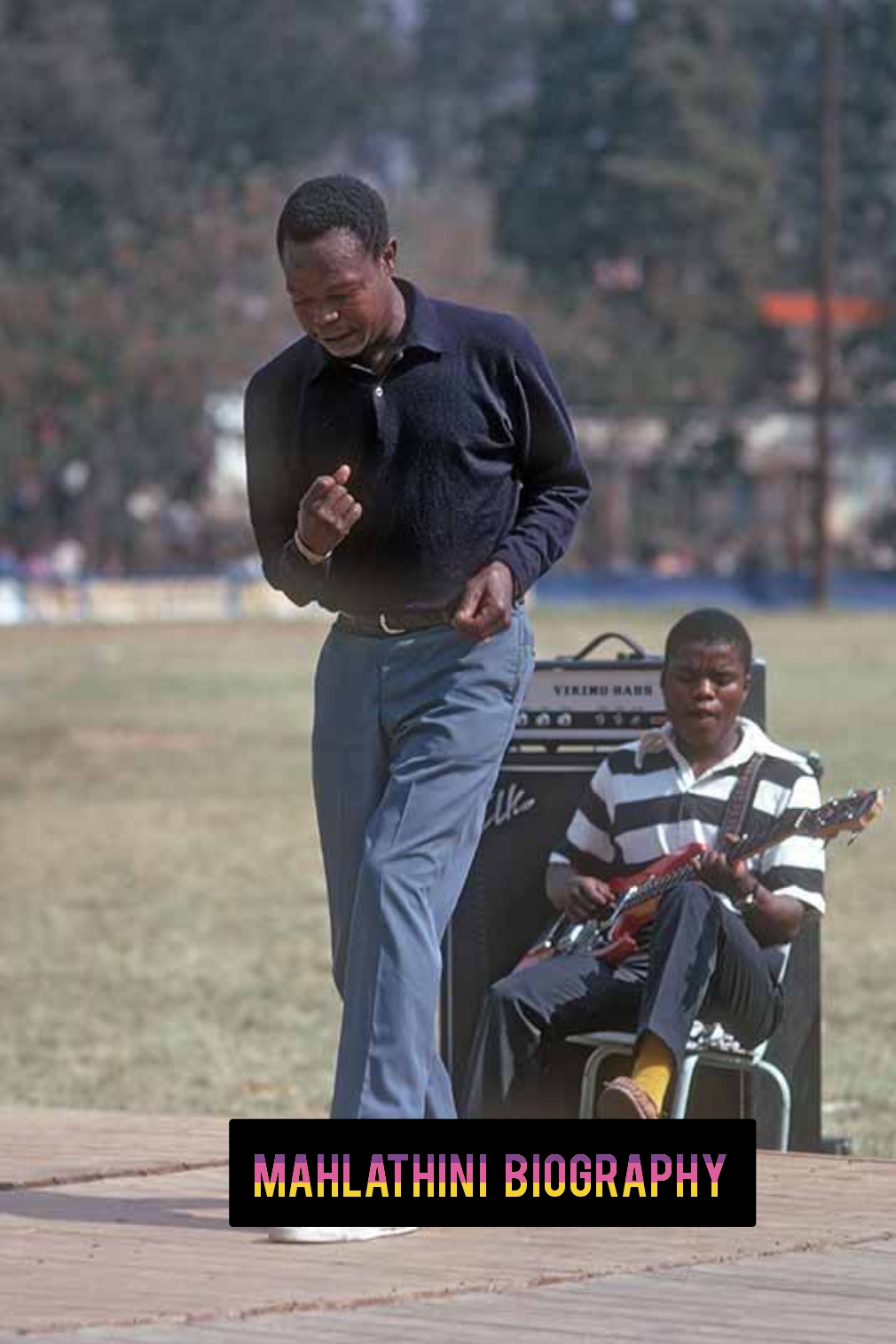
Mahlathini Biography
Simon Mahlathini Nkabinde stands as one of the defining voices of South African township music. Known across the nation and later the world as the Lion of Soweto, he developed a powerful deep bass style called groaning that became central to the energetic sound of mbaqanga. His performances with the Mahotella Queens and the Makgona Tsohle Band brought joy and cultural pride to audiences during the difficult years of apartheid and later carried that spirit onto international stages.
This biography explores the full path of his life from a modest childhood in the townships to national stardom and eventual global recognition. It covers the personal experiences that shaped him, the musical partnerships that defined an era, the obstacles he faced, and the lasting place he holds in South African cultural history.
Mahlathini Intro
Imagine a voice so deep and resonant that it seemed to rise from the earth itself, a sound that could fill a crowded township hall and make listeners feel the heartbeat of their community. That was the gift of Simon Mahlathini Nkabinde, the singer whose growling bass became the signature of mbaqanga music and earned him the lasting title of the Lion of Soweto. When he stepped onto the stage in traditional chief’s regalia, leopard skin across his chest and beads around his head, audiences knew they were about to experience something unforgettable. His music blended traditional Zulu and Swazi roots with the lively rhythms of urban life, creating a sound that was both ancient and modern, joyful and powerful.
Mahlathini Early Life
Simon Mahlathini Nkabinde was born on 30 November 1937 in Newcastle in what was then Natal, now KwaZulu Natal, South Africa. Some records place the year as 1938, but the November date remains consistent across reliable accounts. He came from a mixed Swazi and Zulu family background. His father taught him and his older brother Zeph to sing in the a cappella style common in their community. The family later moved to Alexandra Township near Johannesburg, a place known for producing many talented musicians and for the tough conditions of urban Black life under segregation laws.
Tragedy struck early. His parents died while he was still young, around 1952 according to some accounts, leaving the brothers without financial support. Simon was forced to leave school because the family could no longer afford fees or a uniform. He took on hard manual work to survive. He laboured in a soft drink factory, delivered milk as a dairy boy until a car accident broke his wrist, and later worked in a timber yard. Like every Black worker of that time he had to carry a pass book signed by an employer or risk arrest under the apartheid pass laws.
Music offered an escape and a sense of belonging. As a boy he led isicathamiya and mbube choirs at traditional Zulu wedding ceremonies. His voice was already distinctive. When it deepened dramatically in his teens his parents at first feared he had been bewitched and took him to a sangoma, a traditional healer. The healer simply explained that the change was natural growth. The deep growling quality that worried them would later become his greatest artistic strength. He joined his brother Zeph in the Alexandra Black Mambazo group, which also featured the influential groaner Aaron Big Voice Jack Lerole. That early experience in township choirs and kwela bands laid the foundation for everything that followed.
Mahlathini Personal Life
Details of Simon Mahlathini Nkabinde’s private life remain relatively private, as was common for many musicians of his generation who focused public attention on their art rather than personal matters. He came from a musical family and remained close to his brother Zeph, who had his own career in pennywhistle and kwela bands. The loss of his parents at a young age forced early independence and shaped a life of hard work mixed with artistic passion.
He lived most of his adult years in the Johannesburg area, including periods in the townships that had formed his musical identity. Reports from the 1970s mention times of personal difficulty including heavy drinking and periods when work was scarce, yet he continued to perform and write songs whenever opportunities arose. Later in life diabetes became a serious health challenge that limited his activity and eventually contributed to his death. Throughout these years he maintained a strong stage presence and a connection to traditional culture, often appearing in full Zulu inspired regalia that reflected pride in his heritage. He was known among colleagues as a dedicated performer who gave everything on stage even when personal circumstances were difficult. His life story shows a man who found purpose and dignity through music despite the hardships of poverty, early family loss, and the restrictions of apartheid society.
Mahlathini Rise to Prominence
Mahlathini’s professional path began in the mid 1950s when he started recording at EMI studios under the guidance of talent scout and producer Rupert Bopape. He sang with popular female groups of the time including the Dark City Sisters and the Flying Jazz Queens. His deep voice fitted perfectly with the emerging groaning style and he quickly became its leading exponent.
The real turning point came in 1964. Bopape moved to Gallo Record Company and established the Mavuthela Music division. He brought Mahlathini with him and paired the singer with a new studio creation that would become legendary. Female session singers were organised into the Mahotella Queens and an outstanding instrumental group known as the Makgona Tsohle Band provided the backing. Makgona Tsohle means jack of all trades, and the band lived up to the name by blending traditional rhythms with modern electric instruments. The combination of Mahlathini’s powerful bass, the Queens’ bright harmonies, and the band’s driving beat created the classic mbaqanga sound sometimes called mqashiyo or the indestructible beat.
Hits followed rapidly. Songs such as Thoko, Melodi, and many others poured out of the studios and dominated radio and dance halls across Southern Africa. The group became South Africa’s first true super group of the township era. They toured constantly, packing venues and creating a sense of celebration wherever they performed. For nearly a decade they defined popular Black music in the region. When the original partnership slowed in the early 1970s because of personal changes among the Queens and business disagreements, Mahlathini continued performing and recording under various names, keeping the style alive even as musical fashions shifted toward disco and soul.
Mahlathini Major Achievements
Mahlathini’s greatest achievement was helping to invent and popularise a musical style that gave voice to urban Black South African life. Mbaqanga mixed traditional Zulu and Sotho elements with jazz, marabi, and later electric guitar and bass. His groaning technique became the model for many later singers and influenced groups such as Ladysmith Black Mambazo. Joseph Shabalala of that famous choir has acknowledged the impact of the earlier township vocal styles that Mahlathini helped shape.
In the mid 1980s interest in South African music grew internationally after Paul Simon’s Graceland album featured Ladysmith Black Mambazo. Producer West Nkosi reunited Mahlathini with three of the original Mahotella Queens, Hilda Tloubatla, Nobesuthu Mbadu and Mildred Mangxola, and the Makgona Tsohle Band. Their album Thokozile introduced the classic sound to new audiences. International tours followed across Europe, North America, Japan and Australia.
A landmark moment came in 1988 when they performed at the Nelson Mandela 70th Birthday Tribute Concert at Wembley Stadium in London. The