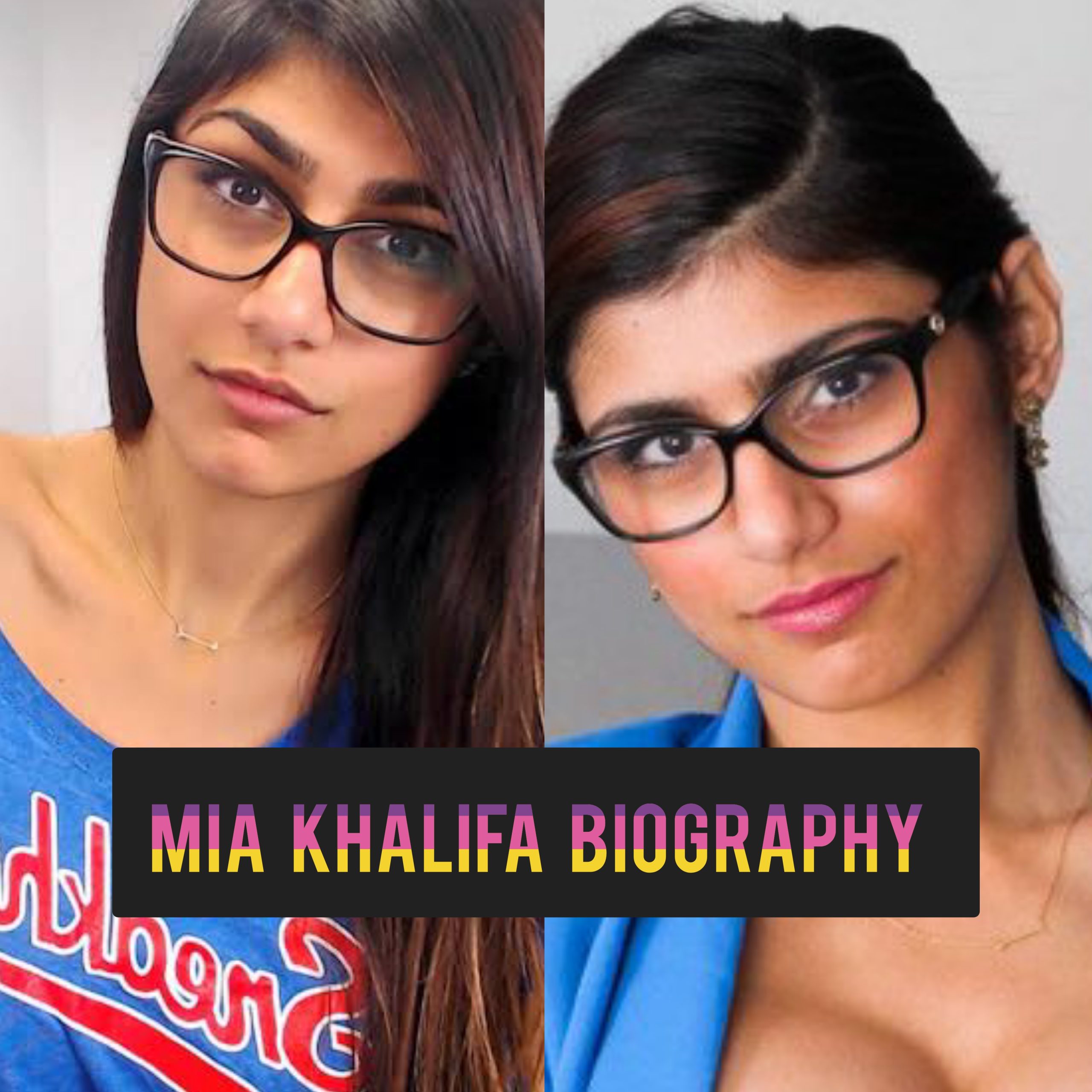
Mia Khalifa Biography
Mia Khalifa is known as one of the most recognizable figures to emerge from the digital age, a Lebanese American woman whose brief and highly publicized entry into adult entertainment at age twenty one transformed her into a global internet phenomenon almost overnight. What began as a short lived professional chapter quickly escalated into international controversy, death threats, family estrangement, and lasting online notoriety that she has spent more than a decade navigating and reshaping. Rather than remaining defined solely by that early period, she has built a multifaceted public presence as a social media personality, content creator, entrepreneur, sports commentator, and outspoken advocate on issues ranging from sex worker rights to humanitarian crises in her birth country.
Her story is less a simple tale of sudden fame and more a complex examination of how a single moment in the internet era can alter a life trajectory, the power of digital permanence, and the possibility of reclaiming narrative control. From a conservative Catholic upbringing in Beirut to life as a high school student in post September 11 Maryland, from university studies in history to becoming one of the most searched names online, and from intense public backlash to launching her own jewelry brand and amassing millions of followers, Mia Khalifa has repeatedly adapted. This biography explores the full arc of her life with clarity and balance, tracing the experiences that shaped her, the decisions that brought both opportunity and hardship, and the ongoing work of defining herself on her own terms.
Mia Khalifa Early Life
Sarah Joe Chamoun was born on February 10, 1993, in Beirut, Lebanon. She grew up in a traditional Lebanese Catholic household that she has described as very conservative. Her early years in Beirut included attendance at a French language private school where she also learned English. The family environment emphasized structure and cultural values rooted in their religious background, and Arabic, French, and English would later form part of her multilingual skills.
In the wake of the South Lebanon conflict, her family left Lebanon and moved to the United States in 2001. They settled in Montgomery County, Maryland. The timing of the relocation placed the family in America just as the September 11 attacks occurred. As a young girl of Middle Eastern appearance, Sarah faced bullying at school. She has spoken about being treated as the darkest and weirdest girl there, with the hostility intensifying after the attacks. The experience of otherness and exclusion during those formative years left a lasting mark on her sense of identity and belonging.
To help her adjust and build resilience, her family enrolled her for a period at Massanutten Military Academy in Woodstock, Virginia. The structured environment of the military academy offered discipline and a different social setting. She also played lacrosse during high school years in Maryland. These athletic pursuits provided an outlet and a way to engage with peers beyond the classroom.
After high school, she pursued higher education at the University of Texas at El Paso. She graduated with a Bachelor of Arts degree in history. During her university years she supported herself through various jobs, including bartending and modeling. She even worked as a briefcase girl on a Spanish language version of a game show similar to Deal or No Deal. The combination of academic focus on history and practical work experience reflected a young woman seeking both intellectual grounding and financial independence. By the time she completed her degree, she had already begun exploring modeling opportunities that would eventually lead her toward more explicit work.
The move from Lebanon to Maryland, the cultural adjustment, the post September 11 climate of suspicion toward people of Middle Eastern descent, and the structured yet isolating periods of schooling all contributed to a complex early foundation. She has reflected in later interviews on feelings of not fully fitting in and the pressure to assimilate. These experiences would later inform both her personal struggles and her public commentary on identity, belonging, and the treatment of Arab women in Western media.
Mia Khalifa Personal Life
Mia Khalifa has maintained a relatively private stance regarding her immediate family in later years, noting that they did not choose a life in the public eye and preferring to protect their privacy. Early reports indicated periods of estrangement following her entry into adult entertainment, with her parents publicly expressing disapproval at the time. Over the years she has spoken of radical empathy within the family that eventually allowed for some form of healing, though she continues to keep details limited out of respect.
In her personal relationships she married her high school boyfriend in February 2011 shortly after turning eighteen. The marriage lasted until they separated around 2014 and finalized the divorce in 2016. Later, in 2019, she became engaged to Swedish professional chef Robert Sandberg. They married in a private ceremony and later separated, with the relationship ending around 2020 or 2021. From 2021 into 2022 she was publicly linked to Puerto Rican singer and rapper Jhayco, also known as Jhay Cortez. As of recent years she has described herself as single and focused on personal growth and professional projects.
She has spoken openly about the importance of therapy in processing earlier experiences of low self esteem, body image concerns, and the aftermath of sudden fame. Interests outside of work include sports, particularly American football and lacrosse from her younger days, as well as fashion, jewelry design, and film. She has mentioned enjoying movies in the evening and maintaining a relatively structured personal routine. Multilingual abilities in English, Arabic, and French remain part of her background. She has also been open about past plastic surgery, framing it within broader conversations about beauty standards and personal choices rather than secrecy.
Lesser known aspects include her early interest in late night comedy shows as a way of understanding American culture and humor while growing up in Maryland. She has described studying programs such as The Daily Show and The Colbert Report to better navigate social interactions. These quieter details of curiosity, adaptation, and later self reflection paint a picture of someone continually working to understand both herself and the world around her. Throughout public discussions of relationships and personal matters she has emphasized autonomy, the value of learning from past partnerships, and the decision to keep certain family matters private.
Mia Khalifa Rise to Prominence
After graduating from university, Mia Khalifa moved to the Miami area. While living there and working in modeling and other jobs, she was approached on the street by someone involved in adult entertainment who offered a business card. She considered the opportunity for about two weeks before deciding to try it. She entered the adult film industry in October 2014 under the professional name Mia Khalifa, a combination drawn from the name of her dog and the rapper Wiz Khalifa.
Her time performing was remarkably short, lasting roughly three months and involving around twenty one scenes, both solo and with partners. What set her apart and propelled her into widespread attention was a particular scene produced for Bang Bros in which she wore a hijab. The video depicted a scenario that played on cultural and religious imagery. Within days of its release the scene circulated widely, drawing both massive viewership and intense criticism, especially from segments of the Arab and Muslim world. Lebanese media covered the story extensively, and some voices called for her to be stripped of citizenship or otherwise condemned.
The combination of cultural controversy and explicit content created a perfect storm of online attention. By early 2015 she had become the most searched performer on major adult video platforms. Pornhub and similar sites registered enormous spikes in searches for her name. The rapid rise brought financial offers and contracts, yet she has consistently stated that she earned only about twelve thousand dollars in total from her performing work, with no residual payments from the ongoing distribution of the videos. She has described feeling pressured into certain scenes and realizing quickly that the industry and the resulting public reaction were not what she had envisioned.
By early 2015 she chose to leave traditional adult film production. Attempts to return to a quieter life proved difficult. The videos remained online, searchable, and profitable for the companies that owned the rights. Recognition followed her into everyday situations. She tried working as a paralegal for a time and sought anonymity, but the digital footprint proved impossible to erase. This period marked the critical turning point: a brief professional experiment had created a permanent public identity that she would spend the following years learning to manage and eventually leverage on her own terms.
Mia Khalifa Major Achievements
Although her performing career lasted only a few months, Mia Khalifa achieved a level of online visibility that few in the adult industry reach even after years of work. She became the top ranked or most searched performer on major platforms during and after her active period, a distinction that continued for years. In 2018 she was again noted as one of the most searched names. Industry awards included nominations and at least one fan related recognition in later years, though she has downplayed formal accolades from that era.
After leaving the industry she transitioned into sports commentary and online hosting. She appeared as a commentator and personality in sports related media, drawing on her longstanding interest in American football and athletics. This phase helped broaden her public image beyond adult content. She also built a substantial presence across social media platforms. By the mid 2020s her combined following across Instagram, TikTok, X, and other networks reached tens of millions. She posts about style, food, politics, personal reflections, and current events, maintaining high engagement.
A significant professional development came with her work on subscription platforms, particularly OnlyFans, where she creates and sells content directly to subscribers. This model allows her greater control over production, pricing, and distribution compared with traditional studio arrangements. She has described it as a way of reclaiming agency over her image and earnings. In 2023 she launched a jewelry line called Sheytan, an anglicized form of the Arabic word for devil, in collaboration with designer Sara Burn. The brand draws on personal motifs and Lebanese heritage while allowing her creative input and ownership. Fashion appearances have included campaigns and runway related events, positioning her as a muse for certain independent labels that appreciate her strong visual presence and personal story.
Beyond commercial work she has used her platform for humanitarian efforts. Following the 2020 Beirut port explosion she auctioned personal items, including signature glasses, and coordinated fundraising through the Lebanese Red Cross, raising significant sums for relief. She has spoken publicly on issues affecting Lebanon, sex worker rights, content ownership, and the lasting effects of non consensual distribution of intimate material. Appearances in mainstream media, including a cameo in the Hulu series Ramy and interviews with major outlets, further expanded her reach. These activities collectively demonstrate a shift from passive subject of online attention to active creator, entrepreneur, and commentator.
Mia Khalifa Challenges and Setbacks
The most immediate and severe challenges followed the release of the hijab scene. Death threats arrived from various sources, including messages associated with the Islamic State that included digitally altered images of her being beheaded. Her social media accounts were hacked at points to spread propaganda. Online harassment included the sharing of personal information and sustained vitriol. Lebanese public figures and media amplified the criticism, adding pressure from her country of origin. Her parents publicly distanced themselves at the time, compounding the personal isolation.
Financially, the disparity between the enormous profits generated by her videos for the companies that owned them and the modest sum she received highlighted structural issues in the industry. She has spoken about contracts that left performers without residual rights or meaningful control over distribution. Attempts to have content removed have faced legal and practical barriers. The permanence of online material meant that even after leaving the industry, search results and public association remained dominated by that short period.
Professionally, mainstream opportunities were often limited by the same associations that drove her online popularity. Brands and platforms sometimes declined partnerships despite strong engagement metrics because of the searchable history. Later political commentary, particularly statements supporting Palestine after the October 2023 events in Israel and Gaza, led to the loss of certain deals, including a podcasting arrangement with Playboy and an advisory role with a company. She has faced accusations and public backlash from multiple directions over the years, requiring constant navigation of online discourse.
On a personal level she has described periods of low self worth, toxic relationships, and the psychological impact of sudden notoriety and isolation. Therapy became an important tool for processing these experiences. The combination of cultural backlash, industry exploitation, family strain, and the inability to fully escape digital permanence created sustained obstacles. Overcoming them involved leaving the traditional studio system, building independent income streams, investing in personal development, and gradually reshaping public perception through consistent presence and advocacy. The process has been neither linear nor complete, yet it demonstrates resilience in the face of intense public scrutiny.
Mia Khalifa Legacy and Current Status
Mia Khalifa remains an active and influential figure in digital culture more than a decade after her brief performing career. Her story is frequently cited in discussions about the adult industry, content ownership, the speed of online fame, and the challenges of digital permanence. She has become a reference point for conversations about how performers can or cannot control their images once material is released online. Her public advocacy for greater rights and protections for sex workers, along with her personal account of limited earnings and lasting consequences, has contributed to broader awareness of these issues.
In recent years she continues to maintain large audiences across major platforms and creates content on subscription services. The Sheytan jewelry brand represents an ongoing entrepreneurial effort rooted in personal identity and creative control. She has participated in fashion events and campaigns that treat her as a cultural figure rather than solely a former performer. Humanitarian engagement, particularly related to Lebanon, and commentary on political and social topics keep her visible in public discourse. Estimates of her net worth in the mid 2020s range from several million to around fourteen million dollars, derived primarily from independent content, brand work, and related ventures rather than residual payments from earlier material.
She splits time between locations that have included Miami and London at different points and maintains a presence that blends personal style, humor, and pointed opinions. Appearances in interviews and media continue to frame her evolution from accidental internet notoriety to deliberate self presentation. While the early controversy still surfaces in searches and public memory, her current activities emphasize ownership of narrative, creative projects, and selective engagement with the platforms that once defined her against her will. The lasting influence lies in the example of adaptation: a person confronted with an overwhelming digital identity who chose to stay visible, build new structures of income and expression, and speak about the systems that shaped her experience.
Conclusion
Mia Khalifa’s life illustrates the unpredictable power of the internet to elevate and constrain at the same time. A few months of work in 2014 created a permanent public association that brought both extraordinary visibility and profound personal cost. Through subsequent years of reinvention she has demonstrated that it is possible to move forward without erasing the past, to critique the systems that once used her image, and to construct new forms of work and identity on her own terms. Her journey from a conservative childhood in Beirut and a challenging adolescence in Maryland to university graduate, brief industry figure, and independent creator offers a modern case study in resilience, the limits of digital forgetting, and the ongoing effort to define oneself amid constant public attention. The takeaway is not a simple moral about fame or regret but a recognition that agency can be reclaimed piece by piece, even when the internet never fully lets go.
FAQs
What is Mia Khalifa’s real name and date of birth?
Her birth name is Sarah Joe Chamoun. She was born on February 10, 1993, in Beirut, Lebanon.
How long was Mia Khalifa active in the adult film industry?
She performed for approximately three months between October 2014 and early 2015, appearing in around twenty one scenes.
Why did Mia Khalifa leave the adult industry?
She has stated that the intense public backlash, death threats, family reaction, and realization that the work and its consequences did not align with her intentions led her to stop traditional studio work relatively quickly.
What does Mia Khalifa do now?
She works as a social media personality, creates content on subscription platforms, runs a jewelry brand called Sheytan, engages in fashion related appearances, and occasionally comments on sports, politics, and social issues.
Has Mia Khalifa been married?
Yes. She was married to her high school boyfriend from 2011 until their divorce in 2016. She later married chef Robert Sandberg around 2019 or 2020; that marriage ended in separation by 2021. She has also been in other public relationships since then.
What is Sheytan?
Sheytan is a jewelry line Mia Khalifa launched in 2023 in collaboration with designer Sara Burn. The name is an anglicized version of the Arabic word for devil and reflects personal and cultural themes.
How has Mia Khalifa addressed the ongoing presence of her early videos online?
She has spoken publicly about the lack of residual earnings, the difficulty of removing content, and the importance of performers having greater control over their images. She has framed her later independent content creation as a way of reclaiming agency.