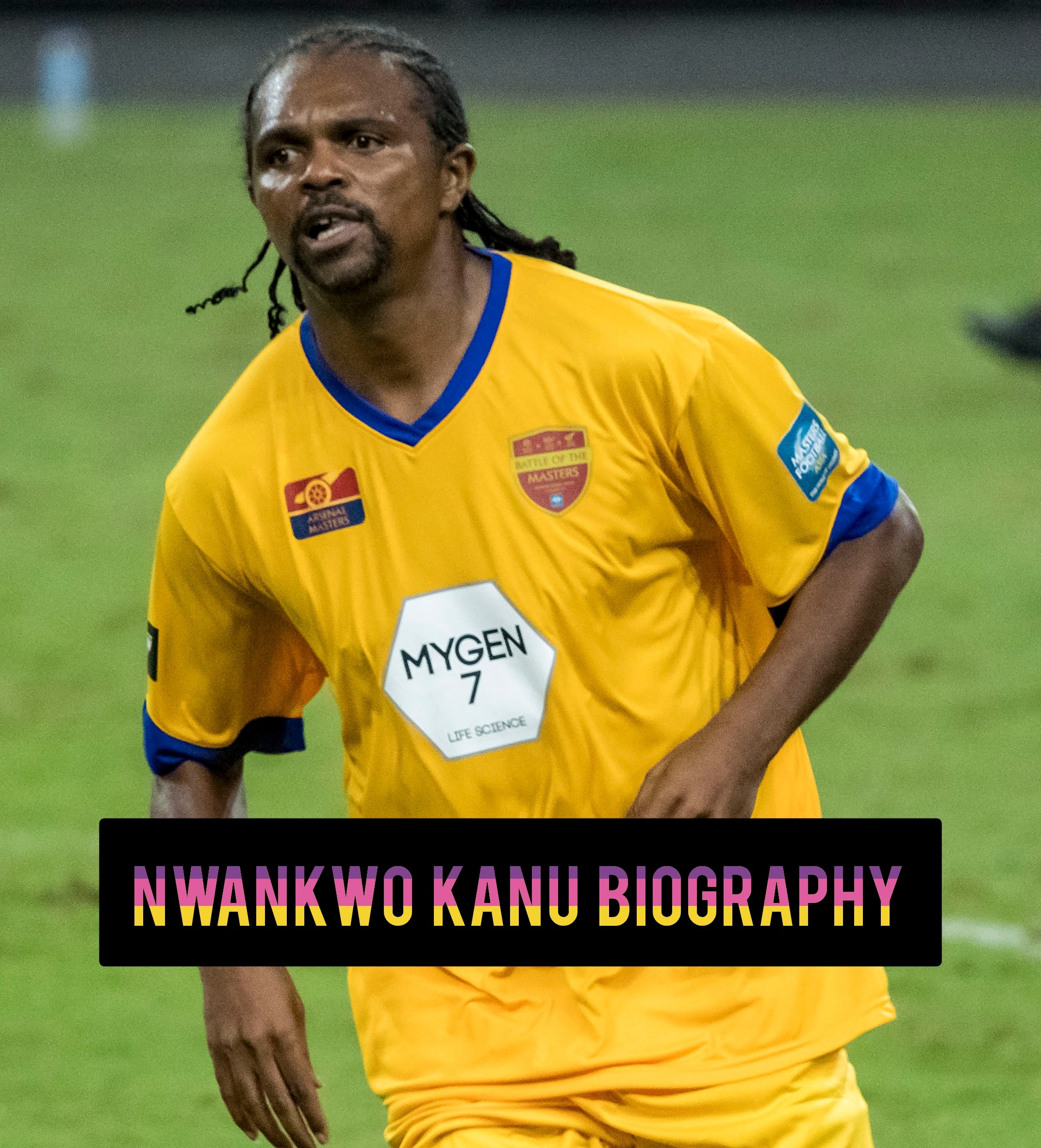
Nwankwo Kanu Biography
Nwankwo Kanu stands as one of the most decorated and resilient figures in African football history. Tall elegant and calm under pressure he combined technical skill with remarkable leadership to achieve success at the highest levels of the game. From winning Olympic gold with Nigeria to collecting major European trophies and overcoming a life threatening heart condition his story continues to inspire. This biography explores the journey of a player known as Papilo whose career and later humanitarian work left a lasting mark on football and beyond.
An interesting fact that still draws strong reactions is the dramatic semi final of the 1996 Olympic Games. Nigeria trailed Brazil three goals to one late in the match when Kanu scored to make it three two. In extra time he produced the golden goal that sent Nigeria into the final. That victory against a side featuring Ronaldo and other stars remains one of the greatest moments in African sporting history and helped secure the gold medal.
Nwankwo Kanu Early Life
Nwankwo Christian Kanu was born on 1 August 1976 in Owerri the capital of Imo State in southeastern Nigeria. He belongs to the Aro subgroup of the Igbo people and his family roots lie in Arochukwu in neighbouring Abia State. His name Nwankwo refers to a child born on Nkwo market day according to Igbo tradition. He grew up in a modest household with his parents Chief Iheme Kanu a retired civil servant and Susan Nwannediya Kanu who worked as a trader. The family valued discipline education and hard work. Kanu has spoken of the support he received from his parents and siblings including brothers Christopher and Ogbonna as well as stepbrothers.
As a boy he played football on the streets and local pitches of Owerri. His height already set him apart and he showed early promise as a forward with good control and awareness. He attended Holy Ghost College in Owerri for secondary education but left formal schooling early to focus on football. At around fifteen he began playing for local side Federation Works. His performances soon attracted attention and he moved to Iwuanyanwu Nationale later known as Heartland Football Club. There he helped the team win the Nigerian Premier League in the 1992 to 1993 season scoring regularly and gaining valuable experience.
The turning point came in 1993 when he represented Nigeria at the FIFA Under 17 World Championship in Japan. Kanu scored five goals during the tournament as Nigeria claimed the title. That success brought him to the attention of European clubs. Ajax Amsterdam signed him later that year for a modest fee. The move marked the start of his professional career in Europe and took the young player from the pitches of eastern Nigeria to one of the strongest clubs in the Netherlands.
Nwankwo Kanu Personal Life
Nwankwo Kanu has maintained a stable and private family life. He married Amarachi Kanu on 26 June 2004 in a ceremony held in Owerri. Amarachi who was eighteen at the time has spoken of the strong connection that developed between them. She has pursued her own interests as an interior designer fitness enthusiast and author while supporting her husband’s career and later work. The couple have three children sons Sean Chukwudi born in 2005 and Iyang Onyekachi born in 2008 and daughter Pinky Amarachi born in 2012. Sean has followed a football path spending time in academy systems in England.
Kanu has often described family as the foundation of his life. He lives with his wife and children and values the balance between public commitments and private time. His Christian faith has been a constant source of strength especially during difficult periods. Friends and those close to him note his calm demeanour and preference for a relatively quiet lifestyle away from constant media attention. He has shown interest in business and property development while remaining connected to his Nigerian roots. A lesser known aspect of his character is the quiet determination that carried him through personal and professional challenges without seeking unnecessary publicity.
Nwankwo Kanu Rise to Prominence
Kanu’s rise began with the move to Ajax in 1993. Under coach Louis van Gaal he developed quickly in a system that valued technical ability and tactical understanding. He contributed to three consecutive Eredivisie titles between 1993 and 1996. The peak of that period arrived in the 1994 to 1995 season when Ajax won the UEFA Champions League. Kanu featured in the campaign that saw the Dutch side defeat AC Milan in the final. The same year Ajax also claimed the Intercontinental Cup and UEFA Super Cup. These successes established him as one of the most promising young forwards in Europe.
In the summer of 1996 Kanu captained the Nigeria Olympic team known as the Dream Team at the Atlanta Games. His leadership and goals including the decisive contributions against Brazil carried Nigeria to the gold medal the first for an African nation in Olympic football. That achievement raised his profile further. Shortly afterward he transferred to Inter Milan. The move to Serie A appeared to signal the next stage of a glittering career. Yet a routine medical examination revealed a serious congenital heart defect involving the aortic valve. Doctors initially believed his playing days were over.
Kanu underwent successful open heart surgery in Cleveland Ohio in November 1996. The recovery required months of careful rehabilitation. Inter Milan under president Massimo Moratti stood by the player and covered the costs of treatment. Kanu returned to training and gradually regained fitness. Although his time at Inter was limited by the recovery process he still contributed to the club’s UEFA Cup victory in 1998. The experience of overcoming the heart condition and returning to elite football became a defining chapter in his story and later inspired his humanitarian work.
In 1999 Kanu moved to Arsenal. The transfer to the Premier League under Arsène Wenger brought him into a squad known for attractive football and success. He adapted to English football and soon produced memorable moments including a famous hat trick against Chelsea completed in the final fifteen minutes of a match. His height vision and ability to score important goals made him a valued squad member. Arsenal won the Premier League and FA Cup double in 2001 to 2002 and claimed another league title in the undefeated Invincibles season of 2003 to 2004. Kanu collected further FA Cup medals during his time at the club. These achievements confirmed his status as a major European player and a key figure for Nigeria.
Nwankwo Kanu Major Achievements
Nwankwo Kanu’s list of honours is among the most impressive of any African footballer. With Ajax he won three Eredivisie titles the UEFA Champions League the UEFA Super Cup and the Intercontinental Cup. At Inter Milan he claimed the UEFA Cup. With Arsenal he secured two Premier League titles and two FA Cups. Later with Portsmouth he added a third FA Cup winners medal in 2008 scoring the winning goal in the semi final and featuring in the final. He is one of the few players to have won the Champions League Premier League FA Cup and Olympic gold medal.
At international level he captained Nigeria to Olympic gold in 1996 and played in multiple Africa Cup of Nations and World Cup tournaments. He earned eighty six caps and scored thirteen goals for the Super Eagles. Individually he was named African Footballer of the Year in 1996 and 1999 making him Nigeria’s only multiple winner of the award. He also received the BBC African Footballer of the Year prize on two occasions. Arsenal later recognised him among the club’s greatest players.
Beyond trophies Kanu’s contribution lay in the calm leadership he brought to high pressure matches and the example of perseverance he set. His elegant style and ability to produce moments of quality under pressure left a strong impression on teammates fans and younger players. The Kanu Heart Foundation established in 2000 has funded hundreds of life saving heart surgeries for children across Africa turning personal adversity into a lasting positive impact.
Nwankwo Kanu Challenges and Setbacks
The most serious challenge of Kanu’s career arrived immediately after the 1996 Olympics. The discovery of a congenital heart defect during his Inter Milan medical threatened both his life and his future in football. Initial medical advice suggested he should never play again. The period of uncertainty and recovery tested his mental strength. He has spoken of turning to his Christian faith and the support of family and the club during that time. Successful surgery and careful rehabilitation allowed him to return yet the experience left a permanent mark and required ongoing monitoring. He later underwent a second procedure related to the same valve.
Other setbacks included periods of limited playing time as he recovered and later competition for places at top clubs. Moves to West Bromwich Albion and Portsmouth after Arsenal brought mixed fortunes though the FA Cup success with Portsmouth provided a late high point. International disappointment also came through Nigeria’s failure to win the Africa Cup of Nations during his peak years despite strong squads. Kanu responded to each difficulty with patience and focus. His ability to return from the heart condition and continue performing at a high level for many more seasons remains one of the most impressive aspects of his career.
Nwankwo Kanu Legacy and Current Status
Nwankwo Kanu’s legacy rests on sporting excellence resilience and humanitarian service. He is remembered as a player who achieved at the highest club and international levels while overcoming a condition that could have ended his career. Arsenal fans still recall his important goals and contribution to successful teams. In Nigeria he is celebrated as a national hero whose Olympic gold and African awards brought pride to the country.
Since retiring from playing around 2012 Kanu has focused on business philanthropy and football development. He established the Kanu Heart Foundation which has funded more than five hundred and later reports indicate over seven hundred open heart surgeries for underprivileged children. The foundation continues its work across Nigeria and other African countries. Kanu has also developed business interests including real estate and hospitality with a hotel in Lagos and property projects in the southeast. He serves as a UNICEF Goodwill Ambassador and has taken on roles in sports administration including involvement with Enyimba Football Club. In recent years he has supported grassroots talent identification programmes and continued to advocate for better structures in Nigerian football. His calm public presence and ongoing commitment to health and youth development keep his influence strong.
Conclusion
Nwankwo Kanu’s life shows that talent combined with determination and faith can overcome even the most serious obstacles. From the streets of Owerri to the greatest stages of world football and then into a life of service he has demonstrated the power of second chances. His story encourages others to face challenges with courage and to use success for the benefit of those in need. The memory of his elegant play and the lives saved through his foundation ensure that his contribution will be remembered long after the final whistle.
FAQs
What is Nwankwo Kanu’s full name and date of birth?
Nwankwo Christian Kanu was born on 1 August 1976 in Owerri Nigeria.
Which major European trophies did Nwankwo Kanu win?
He won the UEFA Champions League with Ajax the UEFA Cup with Inter Milan two Premier League titles and three FA Cups with Arsenal and Portsmouth.
What was Nwankwo Kanu’s role in the 1996 Olympics?
He captained Nigeria to the gold medal scoring crucial goals including the golden goal that defeated Brazil in the semi final.
How did Nwankwo Kanu overcome his heart condition?
After diagnosis during a medical at Inter Milan he underwent successful open heart surgery in the United States and returned to professional football after a period of recovery.
What is the Kanu Heart Foundation?
It is a charitable organisation founded by Kanu in 2000 that funds life saving heart surgeries and related care for underprivileged children in Africa.
Is Nwankwo Kanu married and does he have children?
He is married to Amarachi Kanu and they have three children Sean Iyang and Pinky.
What does Nwankwo Kanu do today?
He focuses on his foundation business interests sports consultancy and efforts to develop young football talent in Nigeria.