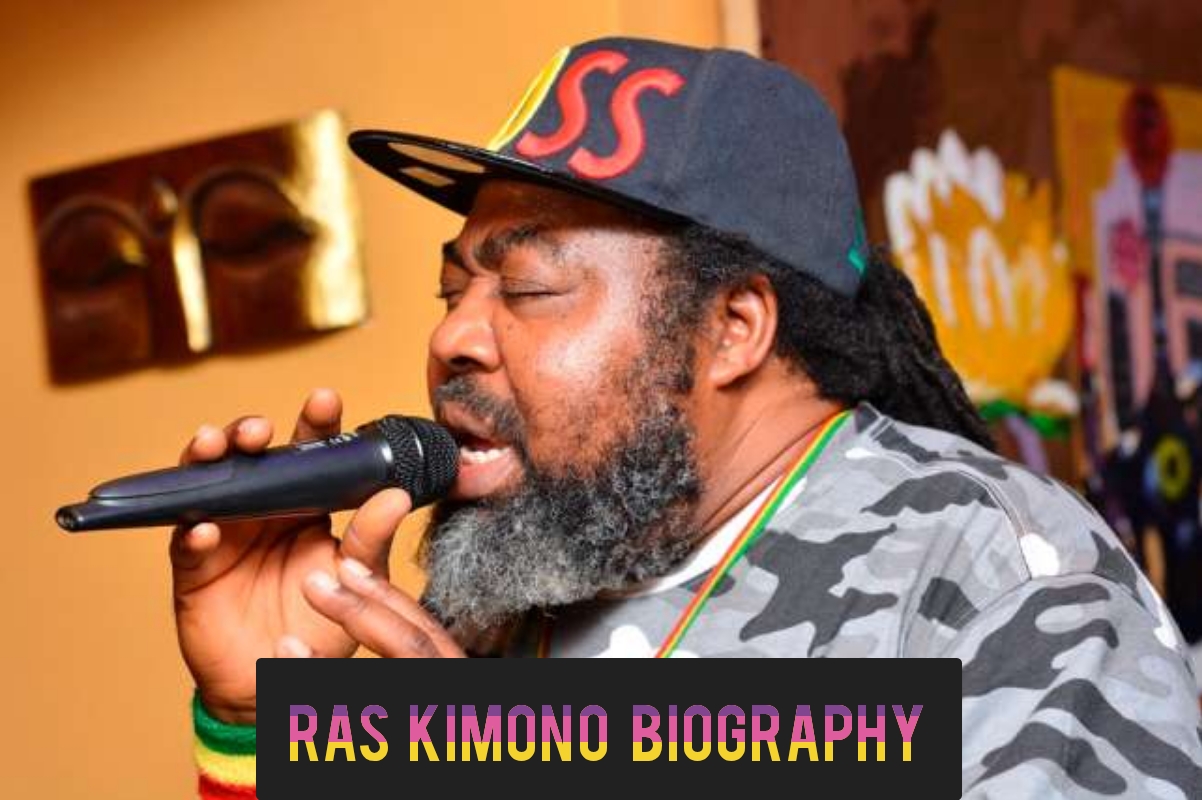
Ras Kimono Biography
Ras Kimono remains one of the most distinctive voices in Nigerian music history. As a reggae artist who rose to national and continental fame in the late 1980s, he blended Jamaican rhythms with African sensibilities and delivered sharp social commentary that spoke directly to the struggles of ordinary people. His work helped define a golden era of Nigerian reggae and left a lasting mark on the industry and on the many artists who followed him.
This biography traces the full arc of his life from humble beginnings in Delta State through his breakthrough years, personal journey, professional triumphs, difficulties, and enduring influence. It presents a clear and complete picture of the man known as the Rub a Dub Master.
Ras Kimono Intro
Few Nigerian musicians of his generation kept such a consistent and visible personal identity for so long. Ras Kimono grew and maintained his dreadlocks for thirty six years until the day he died. That long commitment to the Rastafarian image was more than appearance. It matched the seriousness with which he approached his music and his message. While many of his contemporaries changed styles or softened their lyrics, he stayed true to roots reggae and to songs that addressed poverty, injustice, and the need for African unity. His breakthrough single Rum Bar Stylee captured the energy of the streets and the dance floors at the same time, turning him into an instant star across West Africa and beyond.
That combination of deep personal conviction and catchy, danceable music made Ras Kimono unique. He was never interested in being called a legend while he was alive, yet his body of work and the respect he earned from fans and fellow artists continue to secure that place for him.
Ras Kimono Early Life
Ras Kimono was born on 9 May 1958 in Onicha Olona, a town about twenty kilometres from Asaba in Aniocha North Local Government Area of Delta State, Nigeria. Some records also list the nearby community of Ekeleke Elumelu. His real name at birth was Oseloke Augustine Onwubuya, though variations such as Austine Okeleke Onwubuya and Ukeleke Elumelu Onwubuya appear in different accounts. His father was Onwubuya Amafuibe and his mother was Elizabeth Nwaugha. The couple had two sons, Uzumefune and Augustine.
The family background was modest. Growing up in a rural part of Delta State in the years after Nigerian independence meant limited access to basic amenities. Electricity was unreliable or absent in many homes, and daily life required hard work and resilience. Young Augustine lost both parents at a relatively early age. That loss forced him to develop independence sooner than most children. The experience of poverty, inequality, and hardship that surrounded him would later become central themes in his songwriting.
He began his education at St Mary’s Catholic School in Onicha Olona. Music already showed itself as a strong interest during these primary school years. The young boy was drawn to rhythm and performance. He later attended Gbenoba Secondary School in Agbor. Formal education did not hold him for long. He left school early, preferring to follow the path that felt natural to him. In later interviews he spoke of receiving what he called Jah’s education rather than classroom learning, and he rarely discussed his academic background in detail.
The music bug took hold firmly. He first learned the basics of live performance by joining the Rovers Dance Band of a local musician known as Saint Augustine. Agbor eventually felt too small for his ambitions. He moved to Lagos, the centre of Nigerian entertainment, in search of greater opportunities. Life in the city was difficult. He tried different roles to survive and at one point lived with and played in the Afro Vibrations band of Perry Earnest Okocha. These early experiences in the Lagos music circuit gave him practical knowledge of performing and of the industry’s demands.
Ras Kimono Personal Life
Ras Kimono kept much of his private life away from the public eye, yet certain details became known over the years. He was a devoted family man who raised five daughters. His eldest child, Ogechukwu Nwamaka Onwubuya, known professionally as Oge Kimono, was born on 14 August 1985. She later followed her father into music and has spoken warmly of the close bond they shared. He was her best friend and mischief partner in her words, and he guided her with care even from a distance at times.
In 1990 he married Sybil after a traditional ceremony on 8 December and a larger celebration at the University of Lagos. Sybil, who had a background connected to the navy, also served as his manager for many years. The couple had three daughters together: Senami, Nehita and Somnebi. The marriage later ended around 2013. After the separation he married Efemena, known as Efe, who also worked as his manager. They had a daughter named Dimma. Efe herself passed away in September 2018, only a few months after Ras Kimono.
One of the deepest personal losses he experienced was the death of twin children in 1993. He spoke of that event as his greatest disappointment. His only brother, Uzumefune, also died in the United States in 2005. These family tragedies stayed with him.
Ras Kimono lived according to Rastafarian principles in important ways. He maintained his dreadlocks for thirty six years. He was a vegetarian and publicly stated that he neither drank alcohol nor smoked, setting him apart from some stereotypes associated with the reggae lifestyle. He enjoyed simple pleasures such as reading the Bible, watching wrestling, and playing snooker, where he sometimes called himself The Punisher. He was also known as a skilled cook. Friends and family described him as humble, generous, and deeply concerned with the welfare of ordinary people. He preferred to describe himself as African rather than limiting his identity to one nationality, reflecting his pan African outlook.
Ras Kimono Rise to Prominence
The path to recognition was gradual. In Lagos Ras Kimono became part of the group known as The Jastix or Jastix Reggae Ital. The lineup included Majek Fashek, Amos McRoy Jegg and Black Rice Osagie. They performed regularly in bars and clubs and built a local following. Although he later clarified that he was never a formal contracted member, the association placed him firmly inside the growing Nigerian reggae scene of the 1980s.
He spent time experimenting with different styles and also worked as a mobile disc jockey, moving between colleges, universities and even a boat at the Marina in Lagos to promote reggae. He travelled to Europe for a period in the 1980s, gaining further experience before returning home with clearer focus.
The decisive turning point came with the release of his debut solo album Under Pressure in 1989 on the Premier Music label, sometimes listed as 1988. Backed by his Massive Dread Reggae Band, the album featured strong tracks including the title song, Natty Get Jail and the massive hit Rum Bar Stylee, also known as Rhumba Stylee. The single fused Jamaican reggae rhythms with local African flavour and a distinctive patois delivery that recalled the communicative style of Fela Kuti. It spoke to both the dance floor and the everyday struggles of ordinary Nigerians.
Sales exceeded one hundred thousand copies. Airplay was heavy across radio stations. Suddenly Ras Kimono was a continental star. The success was not a one album wonder. He followed quickly with We No Wan in the same period and then What’s Gwan in 1990. The latter album proved even more successful and confirmed his position at the centre of Nigerian popular music. Topics ranged from social inequality to the need for Africans to reject colonial mentalities and artificial boundaries. He was not afraid to name powerful figures he believed were harming the people.
Live performances multiplied. He toured across Africa, Europe and the United States, carrying his brand of reggae to new audiences. Stadium shows and major festivals became part of his schedule. By the early 1990s he stood as one of the leading voices of Nigerian reggae alongside Majek Fashek, and the genre itself enjoyed a golden period partly because of their work.
Ras Kimono Major Achievements
Ras Kimono’s career produced a series of commercially and critically successful albums. Under Pressure established him. What’s Gwan expanded his reach and influence. Later releases included Rub A Dub, Run Fi Cover in 1992, Oracle of Jah, Still I Arise and Matter of Time after his return from overseas. Each project reinforced his reputation for roots reggae with clear social messages.
He won multiple awards at the Nigeria Music Awards and the Fame Music Awards. Under Pressure earned a Gold Disc. What’s Gwan achieved double Platinum status and swept major categories including Reggae Artist of the Year, Song of the Year, Album of the Year and Artiste of the Year. These honours recognised both commercial strength and artistic impact.
Beyond sales and trophies, his contribution to the field was significant. He helped popularise a distinctly Nigerian form of reggae that mixed Jamaican structure with African rhythmic feel and patois shaped by local speech. Songs such as Kill Apartheid addressed international injustice. Tracks about poverty, corruption and the need for unity gave voice to the underclass. He performed with or shared stages with international reggae figures and appeared at major events including PANAFEST in Ghana, URTNA in Kenya, Rototom Reggae Sunsplash in Italy and various sunsplash events in Nigeria and Europe. In the United States he played respected venues in New York and Washington.
His influence reached younger artists. Daddy Showkey has publicly called him a father figure and credited him with providing a platform and an example. Other musicians of the period and later generations have acknowledged the door he helped open for socially conscious reggae in Nigeria. His music continued to receive radio play across West Africa long after the peak commercial years, keeping his message alive for new listeners.
Ras Kimono Challenges Setbacks
Early life itself presented the first major obstacles. Losing parents young and growing up with limited resources required toughness. Moving to Lagos without established connections meant years of struggle, odd jobs and gradual building of reputation before any breakthrough arrived.
Once success came, new difficulties appeared. The mid 1990s brought economic hardship under military rule in Nigeria. The music industry contracted. Live work and record sales became harder to sustain. Ras Kimono eventually disbanded the Massive Dread Reggae Band and relocated to the United States. He spent several years there, roughly from the late 1990s into the 2000s, promoting his music but largely out of the Nigerian spotlight. When he returned around 2010 the industry had changed. Newer styles dominated, and rebuilding the earlier level of commercial success proved difficult. The 2012 album Matter of Time received limited attention compared with his classic work.
Personal losses added weight. The death of the twins in 1993 remained a deep wound. The later death of his brother and the end of his first marriage were further tests. Health issues in his final years culminated in the sudden illness that took his life. On 9 June 2018, while preparing to travel to the United States from Murtala Muhammed International Airport in Lagos, he felt unwell, collapsed, and was taken first to a hospital in Ikeja and then to Lagoon Hospital in Ikoyi. He died the following morning, 10 June 2018, at the age of sixty.
Through these setbacks he continued to perform when possible and to hold to his principles. He never abandoned the core message of his music or the Rastafarian lifestyle he had chosen.
Ras Kimono Legacy Current Status
Ras Kimono passed away in 2018, yet his influence remains active. His classic albums and singles still receive airplay on radio stations across West Africa. Younger listeners discover Rum Bar Stylee, Under Pressure and What’s Gwan and find the social commentary still relevant. Artists who grew up listening to him continue to cite his example of using music as a tool for awareness rather than pure entertainment.
His daughter Oge Kimono carries the family name into the music world and has spoken about the values and guidance she received from him. Fans and fellow musicians remember him as a humble man who stayed close to the realities of ordinary people even after fame arrived. Tributes after his death highlighted his role as a consistent advocate for the masses and a pioneer who helped establish reggae as a serious force in Nigerian popular music.
The long dreadlocks, the refusal to compromise his message, and the body of recorded work form a clear legacy. He showed that a musician from a modest Delta State background could reach continental audiences while remaining true to a vision of justice and African identity. In that sense his presence continues through the songs that still play and through the artists who keep the spirit of socially conscious reggae alive.
Conclusion
Ras Kimono’s life demonstrates the power of persistence and conviction. From a childhood marked by loss and limited means he built a career that gave voice to the struggles of many. He turned personal observation of hardship into music that moved both the body and the mind. His story reminds us that authentic art rooted in real experience can travel far and last long after the artist is gone. The Rub a Dub Master left more than hit songs. He left an example of staying true to purpose in a changing world.
FAQs
Who was Ras Kimono?
Ras Kimono was a Nigerian reggae musician born Oseloke Augustine Onwubuya on 9 May 1958 in Delta State. He became famous in the late 1980s with the album Under Pressure and the hit Rum Bar Stylee. He was known for roots reggae mixed with African elements and for lyrics that addressed social and political issues.
What is Ras Kimono’s real name?
His full name at birth is recorded as Oseloke Augustine Onwubuya. Other versions that appear in different sources include Austine Okeleke Onwubuya and Ukeleke Elumelu Onwubuya. He was widely known only by the stage name Ras Kimono.
When and where was Ras Kimono born?
He was born on 9 May 1958 in Onicha Olona, Aniocha North Local Government Area, Delta State, Nigeria.
What are Ras Kimono’s most famous songs?
His best known tracks include Rum Bar Stylee also called Rhumba Stylee, Under Pressure, Natty Get Jail, and songs from the album What’s Gwan. These defined his peak years and remain popular.
Did Ras Kimono win any awards?
Yes. He received recognition at the Nigeria Music Awards and Fame Music Awards. Under Pressure earned a Gold Disc and What’s Gwan achieved double Platinum status along with several category wins including Artiste of the Year.
Was Ras Kimono married and did he have children?
He was married more than once. His marriage to Sybil in 1990 produced three daughters. He later married Efe. Altogether he had five daughters, the eldest being Oge Kimono who is also a musician.
When did Ras Kimono die?
He died on 10 June 2018 in Lagos at the age of sixty after a sudden illness that began while he was at the airport preparing to travel.
What was unique about Ras Kimono’s lifestyle?
He maintained dreadlocks for thirty six years, lived as a vegetarian, and stated publicly that he did not drink alcohol or smoke. These choices reflected his Rastafarian principles and set him apart from some common images of reggae artists.