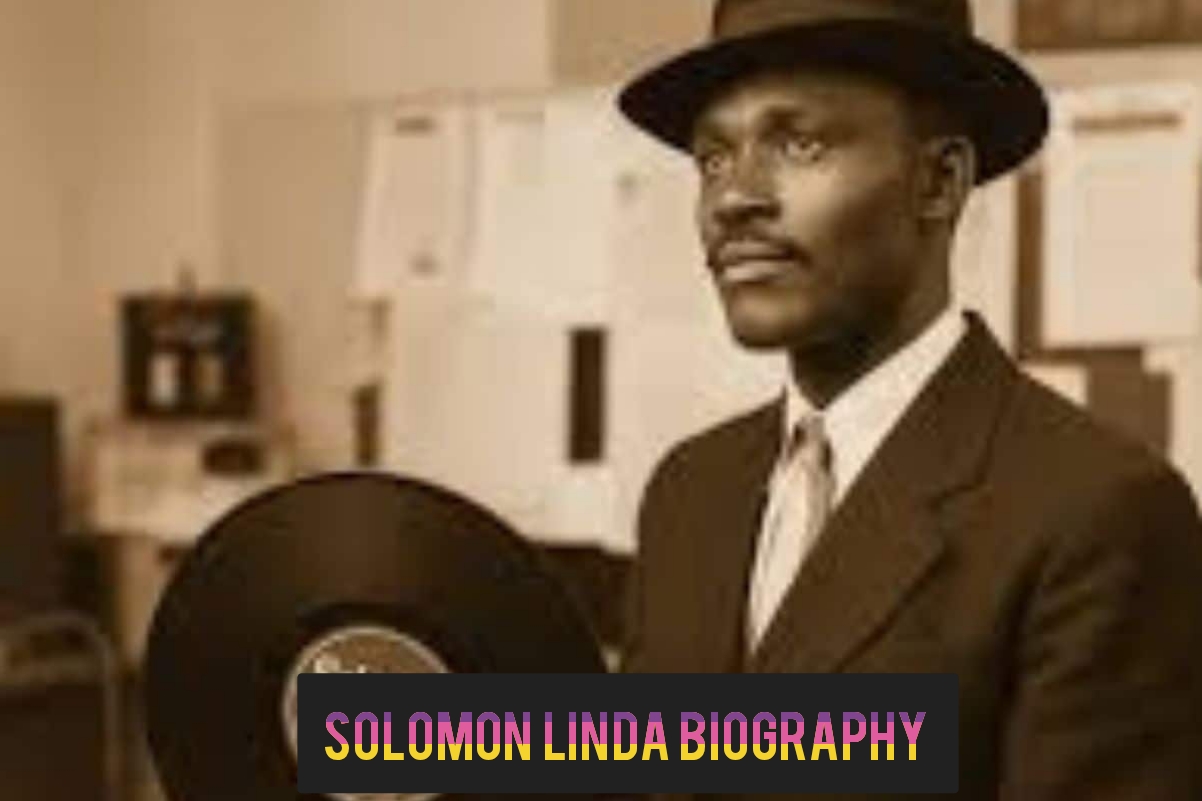
Solomon Linda Biography
Solomon Popoli Linda was a South African Zulu musician, singer, and composer whose 1939 recording of the song Mbube became one of the most influential pieces of music ever to emerge from Africa. The song later evolved into the worldwide hit The Lion Sleeps Tonight and helped shape the isicathamiya style of a cappella singing later made famous by groups such as Ladysmith Black Mambazo. Although Linda created a melody that generated millions in royalties for others, he lived and died in poverty, a story that continues to raise important questions about fairness in the music industry.
This biography explores the life of Solomon Linda from his rural childhood in KwaZulu Natal to his years as a migrant worker and performer in Johannesburg, the creation of Mbube, the personal and professional challenges he faced, and the long struggle of his family for recognition and compensation. His story is both a celebration of creative genius and a reminder of how talent from marginalized communities has often been undervalued.
Solomon Linda Intro
An interesting fact that draws readers in is that a simple song improvised by a Zulu migrant worker in a Johannesburg studio in 1939 went on to become one of the most recorded and profitable melodies in popular music history. Solomon Linda’s Mbube sold more than one hundred thousand copies in South Africa, crossed the Atlantic, and was transformed into Wimoweh by Pete Seeger and The Weavers and later into The Lion Sleeps Tonight by The Tokens. The song has appeared in films, commercials, and stage productions around the world, generating enormous revenue. Yet Linda himself received almost none of it and died with very little money.
Linda’s contribution goes beyond a single hit. He helped invent and popularize a distinctive style of Zulu choral music that blended traditional elements with urban influences. His high falsetto lead and the use of multiple bass voices became hallmarks of the isicathamiya tradition. Decades after his death, his family finally secured some recognition and a share of royalties, bringing a measure of justice to a story that had long been incomplete.
Solomon Linda Early Life
Solomon Popoli Linda was born in 1909 near Pomeroy in the Msinga region of what was then the Colony of Natal, now part of KwaZulu Natal in South Africa. He grew up in a rural Zulu community on a labor reserve where traditional music played a central role in daily life. As a boy he herded cattle and absorbed the sounds of amahubo and wedding songs known as izingoma zomshado. These communal singing traditions shaped his musical ear from an early age.
He attended Gordon Memorial Mission School, a Christian institution that exposed him to Western hymns, choir singing, and elements of European musical culture. At school he took part in choir contests and began blending the syncopated styles he heard with the Zulu songs of his home. Like many young men from rural areas, he left his homestead in search of work. In 1931 he moved to Johannesburg, then a rapidly growing gold mining city that attracted large numbers of African migrant laborers. He found menial jobs, first at the Mayi Mayi furniture shop on Small Street and later at the Carlton Hotel.
In Johannesburg he continued to sing. He joined a choir managed by his uncles and performed at weddings, parties, and hostel competitions. The urban environment, with its mix of workers from different regions and the presence of American influenced music, encouraged new forms of expression. Linda and his companions developed a polished stage presence, wearing suits and performing with energy and precision. These early experiences in both rural tradition and city life prepared him for the innovations that would later define his career.
Solomon Linda Personal Life
Solomon Linda married Regina Madiba in 1949. Together they raised a family of several children. After the Evening Birds disbanded around 1948, Linda continued to perform while working and supporting his household. He remained rooted in the Zulu migrant community of Johannesburg and Soweto. Those who knew him described a tall, somewhat shy man who became a local celebrity among Zulu audiences yet lived modestly.
He was known for his distinctive falsetto singing voice, which stood out in male choral groups. Off stage he preferred a quiet life focused on family and music. Lesser known details include the strong influence of his uncles in his early singing career and the fact that he continued to work ordinary jobs even after Mbube became a major local hit. Family members later recalled that he collapsed on stage in 1959 and was diagnosed with kidney disease. Some relatives believed his illness was connected to jealousy over his success, reflecting traditional beliefs about witchcraft, though medical records pointed to kidney failure.
Linda died on 8 October 1962 in Johannesburg at the age of about fifty three. He left behind his wife and children in difficult financial circumstances. His widow struggled to support the family, at times brewing and selling beer to make ends meet. For many years the family could not even afford a proper headstone for his grave. These personal hardships stood in sharp contrast to the growing international success of the song he had created.
Solomon Linda Rise to Prominence
In the early 1930s Linda began performing regularly with a group that became known as Solomon Linda and the Evening Birds. The ensemble specialized in a cappella singing and competed successfully in the hostel and township contests that were popular among migrant workers. Their style featured careful choreography and a strong rhythmic drive. Linda often took the high lead part, singing in a clear falsetto that gave the group a distinctive sound.
In 1938 a talent scout noticed the Evening Birds and brought them to the Gallo Record Company studios in Johannesburg, the only professional recording facility for black musicians in the region at the time. Under the guidance of producer Griffith Motsieloa they recorded several tracks. During a 1939 session Linda improvised a new song called Mbube, the Zulu word for lion. The lyrics recalled a childhood experience of chasing lions away from cattle. The recording featured Linda’s soaring falsetto over a powerful choral foundation with multiple bass voices.
Mbube was released and quickly became a major success. It sold more than one hundred thousand copies in South Africa over the following years, an extraordinary figure for the time. The master disc eventually wore out from repeated pressings. Linda and the Evening Birds became stars in the world of Zulu migrant music. They dominated singing competitions and earned respect across the townships and hostels. The song’s popularity established Linda as a leading figure in the emerging urban Zulu musical culture.
Solomon Linda Major Achievements
Solomon Linda’s greatest achievement was the creation of Mbube. The song not only became a commercial hit in South Africa but also gave its name to a whole style of music. The mbube or isicathamiya tradition that he helped shape is characterized by a cappella male voices, intricate harmonies, a strong bass section, and a high lead often sung in falsetto. This style later reached global audiences through groups such as Ladysmith Black Mambazo.
Mbube itself traveled far beyond South Africa. In the late 1940s the American folk singer Pete Seeger heard the recording, adapted the chorus as Wimoweh, and performed it with The Weavers. The song became popular in the United States folk scene. In 1961 The Tokens recorded a new version with English lyrics by George David Weiss titled The Lion Sleeps Tonight. That recording reached number one on the American charts and has been covered by dozens of artists ever since. The melody has appeared in films including The Lion King, television programs, advertisements, and stage shows, generating substantial income over many decades.
Linda is also credited with specific musical innovations. He expanded the bass section by using several singers on the low parts rather than one, creating a richer foundation. His use of falsetto as the main melodic voice brought a new texture to male choral singing. These techniques became standard features of the isicathamiya style. Although he recorded other songs, some with social or political themes reflecting the hardships of black South Africans, Mbube remains his most enduring contribution.
Solomon Linda Challenges and Setbacks
The central challenge of Solomon Linda’s life was the loss of control over his own creation. Shortly after recording Mbube he sold the rights to the Gallo Record Company for a small sum, reported as ten shillings. Under the conditions of the time, black musicians had little bargaining power and limited understanding of copyright. The song went on to earn large amounts of money for publishers, arrangers, and performers in Europe and America, while Linda received almost nothing beyond his modest local earnings and a small payment from Pete Seeger years later.
Health problems ended his performing career. In 1959 he collapsed on stage and was diagnosed with kidney disease. He spent his remaining years in declining health and died in 1962 in poverty. His family was left without resources. His widow and children lived in difficult circumstances for decades, unaware of the full extent of the song’s international success or their potential claim to royalties.
The legal and commercial barriers of the apartheid era and the global music industry compounded these difficulties. Copyright laws, complex publishing arrangements, and the geographic and cultural distance between South Africa and the centers of the American and European music business made it almost impossible for Linda or his heirs to benefit during his lifetime and for many years afterward. Only after sustained effort by family members and legal advocates in the early twenty first century was a measure of recognition and compensation achieved.
Solomon Linda Legacy and Current Status
Solomon Linda’s legacy is twofold. Musically, he is recognized as a pioneer of isicathamiya and the originator of one of the most famous melodies in popular music. Scholars and musicians acknowledge his role in shaping a distinctive South African choral tradition that continues to thrive. The song Mbube and its later versions remain widely known and performed.
In the years after his death, journalists and researchers, notably Rian Malan in a widely read article, brought the story of Linda and his family to international attention. In the early 2000s his daughters pursued legal claims related to the use of the song, particularly in connection with Disney’s The Lion King. A settlement reached in 2006 provided the family with a lump sum for past royalties and a share of future income for a defined period. Linda was formally credited as a co writer of The Lion Sleeps Tonight. Although the settlement did not capture the full historical value of the song, it marked an important step toward justice and public recognition.
Today Solomon Linda is remembered as both a creative genius and a symbol of the inequalities that have often accompanied the global circulation of African music. His story has been told in documentaries, articles, and legal discussions about intellectual property and cultural heritage. The melody he created continues to be heard around the world, carrying with it the memory of the Zulu singer who first gave it life in a Johannesburg studio.
Conclusion
Solomon Linda’s life shows how a single moment of inspiration can echo across continents and generations. From the hills of Msinga to the recording studios of Johannesburg and the airwaves of the world, his song has traveled farther than he ever could. The recognition that finally reached his family offers a measure of closure, yet his story also challenges us to value the creators of the music we love and to ensure that the benefits of cultural exchange are shared more fairly. In the enduring popularity of Mbube and The Lion Sleeps Tonight, the voice of Solomon Linda continues to be heard.
FAQs
Who was Solomon Linda?
Solomon Linda was a South African Zulu singer, composer, and musician best known for creating the 1939 song Mbube, which later became the international hit The Lion Sleeps Tonight. He was a pioneer of the isicathamiya style of a cappella singing.
When and where was Solomon Linda born?
He was born in 1909 near Pomeroy in the Msinga region of what is now KwaZulu Natal, South Africa.
What is the song Mbube?
Mbube is a Zulu a cappella song meaning lion that Solomon Linda composed and recorded with his group the Evening Birds in 1939. It became a major hit in South Africa and later formed the basis for Wimoweh and The Lion Sleeps Tonight.
Did Solomon Linda receive royalties for his song?
During his lifetime he received very little money from the international success of Mbube. He sold the rights for a small sum shortly after recording it. Decades later his family reached a settlement that provided some compensation and formal credit.
When did Solomon Linda die?
He died on 8 October 1962 in Johannesburg from kidney disease. He was approximately fifty three years old and died in poverty.
How is Solomon Linda remembered today?
He is recognized as the originator of one of the most famous melodies in popular music and as an important innovator in South African choral music. His story has drawn attention to issues of copyright, cultural ownership, and fairness in the music industry.