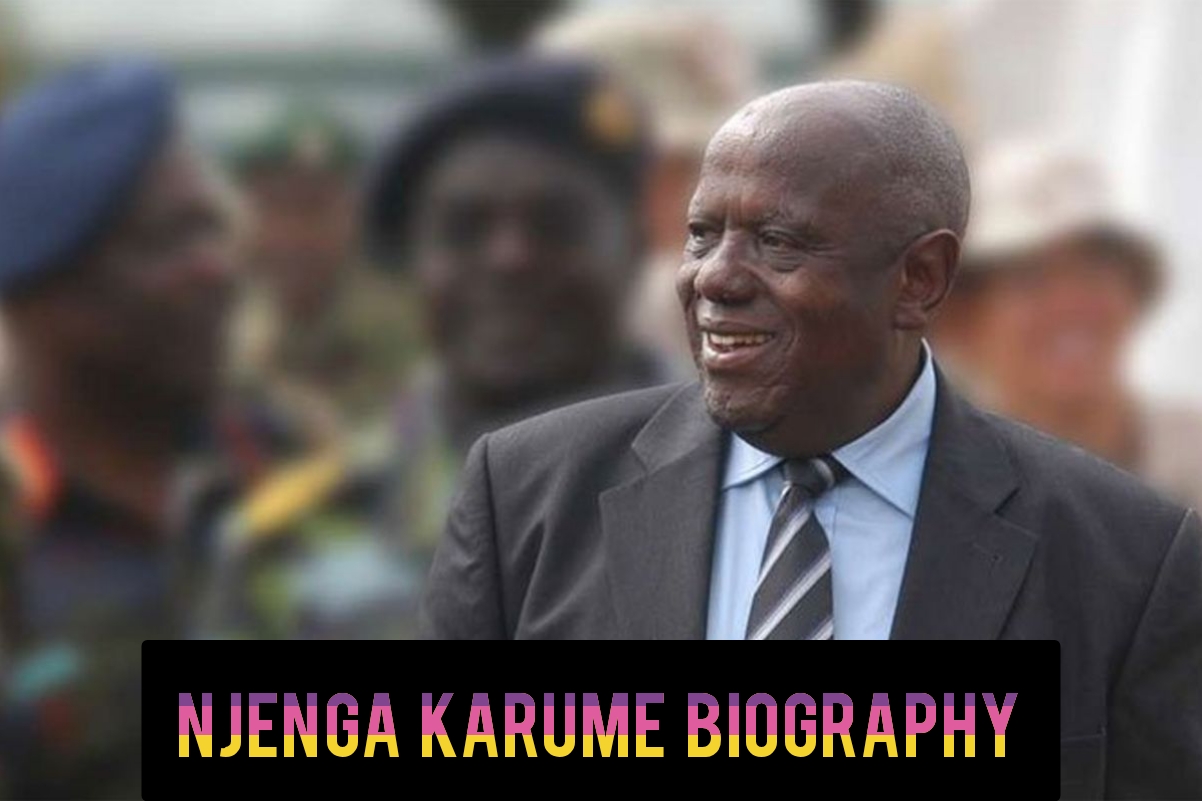
Njenga Karume Biography
James Njenga Karume was a Kenyan businessman and politician whose life moved from rural hardship to substantial commercial success and high public office. He built enterprises in transport, distribution, real estate, agriculture and hospitality while serving for many years as a Member of Parliament and later as Minister of Defence. His story reflects the opportunities and pressures of Kenyan economic and political life across the late colonial period and the first decades of independence. This biography presents his journey in clear and simple English for every reader.
An interesting fact that continues to draw attention is that a boy who began by trading charcoal and selling stationery to fellow pupils later controlled a group of companies valued in the hundreds of millions of dollars, held cabinet rank, and published an autobiography titled Beyond Expectations From Charcoal to Gold that recorded his own path from poverty to prominence.
Njenga Karume Early Life
James Njenga Karume was born in 1929 on Lord Delamare’s Soysambu ranch near Lake Elementaita in Nakuru District of Kenya. He was the eldest of eight children born to Joseph Karume, later known as Karogo, and Teresia Njeri Karogo. His parents worked as indentured servants under colonial settlers. The family lived with the limited means common to many African households in that era. Resources were scarce and opportunities for formal advancement were restricted.
Because no suitable schools for African children existed near Elementaita, young Njenga was sent to Kahuho Karing’a Primary School in Ndeiya, Limuru, beginning around 1942 when he was already in his early teens. He later continued primary education in the Kiambu area. He completed his primary schooling around 1949 at about the age of twenty. Although he performed well, his father could not afford the fees required for secondary school at institutions such as Mang’u High School. Formal classroom education therefore ended at the primary level.
Several years later he enrolled in a short practical course at Jeans School, the institution that later became the Kenya Institute of Management. There he gained useful knowledge about business organisation and management. From an early age he showed a practical interest in trade. While still a pupil he hawked stationery to other students. After leaving school he turned to charcoal trading across parts of the Rift Valley and then to timber. These early activities taught him the realities of buying, selling, transport and dealing with customers under colonial restrictions. The experience of limited schooling and economic pressure formed a lasting determination to create security through enterprise.
Njenga Karume Personal Life
Njenga Karume met Maryann Wariara Waireri in 1951. They married the following year and together had ten children. Among them were Joseph Karume Njenga, Jane Mukuhi, Kennedy Njoroge Karume and others who later appeared in accounts of the family. He also married Margaret Njeri in later years. Family life remained important to him even as business and political duties grew demanding.
He kept strong connections to the Kiambu region and to the wider Central Kenya community. He valued direct dealing and practical work. In 2009 he published his autobiography, Beyond Expectations From Charcoal to Gold, prepared with the assistance of Mutu wa Gethoi. The book recounted his childhood hardships, the growth of his commercial interests and his years close to national leadership. It remains one of the fuller personal records left by a Kenyan entrepreneur and politician of his generation.
He was known for personal loyalty to friends and political associates. He maintained close relationships with Kenya’s first three presidents at different stages of his career. At the same time he lived with the ordinary pressures that accompany a large family and a complex commercial estate. After his death the management of that estate became the subject of extended family and legal discussion, illustrating the difficulties that can follow the concentration of substantial assets in one generation.
Njenga Karume Rise to Prominence
Njenga Karume’s commercial progress began with small scale trading in charcoal and timber. He steadily accumulated capital and practical experience. A significant advance came when he entered the beer distribution trade. He established Nararashi Distributors and developed a working relationship with Kenya Breweries Limited. The distribution of beer and related products provided reliable cash flow and wider business contacts. He also created the Kiambu General Transport Agency, expanding into haulage and logistics services.
Real estate formed another important pillar. He invested in commercial properties in Nairobi, including Cianda House, and in residential developments in the capital and surrounding areas. Agricultural interests followed, with dairy and tea farms such as Cianda and Kacharoba. Hospitality developed later through the Jacaranda Group of Hotels and properties that included Lake Elementaita Lodge. Over time his holdings grew to encompass more than forty companies, with additional interests in banking and other industrial concerns. By the later years of his life the overall enterprise was valued at a substantial figure, often estimated near two hundred million United States dollars.
Political standing rose alongside business success. He became closely associated with the Gikuyu Embu Meru Association, known as GEMA, and served as a leading figure within that organisation. His relationship with President Jomo Kenyatta opened the path to formal politics. In 1974 he was nominated as a Member of Parliament. In the elections of 1979, 1983 and 1988 he won the Kiambaa constituency seat. He served as an assistant minister in several portfolios under President Daniel arap Moi. After a period away from elective office he returned to Parliament and in December 2006 was appointed Minister of Defence in the administration of President Mwai Kibaki.
Njenga Karume Major Achievements
The creation of a diversified commercial group from very limited beginnings stands as Njenga Karume’s central business achievement. Beginning with charcoal and stationery, he established enterprises in transport, distribution, real estate, agriculture and hospitality. The Jacaranda hotels, Cianda properties and associated farms became recognised parts of his portfolio. His ability to move from informal trade into formal corporate structures demonstrated practical entrepreneurial capacity in the post colonial Kenyan economy.
In politics he combined consistent local representation with national influence. As Member of Parliament for Kiambaa across many years he maintained a solid base in Kiambu. His service as assistant minister and later as Minister of Defence placed him inside the core of government decision making. He acted as a personal friend and adviser to successive presidents and occupied a visible place in the political networks of Central Kenya. His role within GEMA gave him additional organisational reach during the years when that association was active.
His autobiography supplied a lasting written record of his experiences. By setting down his own account he offered younger Kenyans a description of how limited formal education and early poverty need not prevent commercial and political advancement. The book continues to serve as a reference for those interested in Kenyan business history and the shift from colonial to independent economic life.
Recognition of his public service included the national honour of Elder of the Golden Heart. His long parliamentary career and cabinet appointment marked him as one of the more enduring political figures of his generation. At the height of his commercial activity he held interests that touched banking, manufacturing support services and large scale property development, contributing to employment and to the growth of private capital among indigenous Kenyans.
Njenga Karume Challenges and Setbacks
Limited formal education closed certain early doors and required him to acquire business knowledge largely through direct experience. Colonial restrictions on African enterprise made the first steps in trade more difficult than they would later become. Building capital from charcoal and timber demanded patience, careful calculation and resilience in the face of uncertain markets.
In business he encountered commercial disputes. A notable conflict with Kenya Breweries over distribution arrangements produced legal proceedings and financial pressure. He continued related transport and distribution work until circumstances altered. Managing a growing collection of companies across different sectors brought the ordinary risks of debt, competition, changing regulations and fluctuating demand.
Politics presented further difficulties. After the death of President Kenyatta the political climate shifted. His earlier association with discussions about constitutional change in the nineteen seventies created tensions with the incoming administration. He experienced periods of reduced influence and time away from elective office before returning to Parliament and later to cabinet under a different president. Balancing extensive business interests with political responsibilities required constant attention and careful judgement.
In his final years he faced declining health. He was admitted to Karen Hospital in February 2012. His condition worsened and he died there on 24 February from cardiac arrest. The years that followed his death saw prolonged family disagreements over the management and distribution of the estate he had placed in trust. Those disputes illustrated the challenges that can arise when substantial assets must be administered across a large family after the founder is gone.
Njenga Karume Legacy and Current Status
Njenga Karume died on 24 February 2012 at Karen Hospital in Nairobi. He was in his early eighties. His passing removed a figure who had been active in Kenyan business and politics for more than four decades.
His commercial legacy rests in the companies and properties he established, particularly in hospitality, real estate and agriculture. Although the estate later became the subject of family and legal processes, the scale of what he created from charcoal trading remains a clear example of indigenous entrepreneurship. The Jacaranda hotels and related holdings continued to operate within the broader Kenyan hospitality and property sectors. Agricultural land and urban buildings associated with his name remained part of the economic landscape.
In politics he is remembered as a long serving Member of Parliament for Kiambaa, an assistant minister under President Moi, and Minister of Defence under President Kibaki. His closeness to Kenya’s first three presidents gave him a distinctive position in the networks of power. His involvement with GEMA and with the political life of Central Kenya forms part of the historical record of that era.
The autobiography Beyond Expectations From Charcoal to Gold keeps his personal voice available to later readers. It records both the hardships of his early life and the methods by which he expanded his interests. Younger entrepreneurs and students of Kenyan history continue to refer to his story as an illustration of practical determination and the capacity to move from limited beginnings to substantial achievement.
Conclusion
The life of Njenga Karume demonstrates that limited formal education and early poverty need not fix a person’s future. Through steady trading, careful expansion into new sectors and active participation in politics he built both a commercial group and a public career. His journey from charcoal seller to cabinet minister and substantial property owner remains an example of what persistent effort and practical judgement can achieve. The record of his life continues to encourage those who begin with few advantages yet refuse to accept permanent limitation.
FAQs
Who was Njenga Karume?
James Njenga Karume was a Kenyan businessman and politician who built a diversified commercial empire and served as Member of Parliament for Kiambaa and later as Minister of Defence.
When and where was Njenga Karume born?
He was born in 1929 on Lord Delamare’s Soysambu ranch near Lake Elementaita in Nakuru District, Kenya.
How did Njenga Karume begin in business?
He started by hawking stationery as a schoolboy, then moved into charcoal trading and timber before expanding into beer distribution, transport, real estate, agriculture and hospitality.
What political offices did Njenga Karume hold?
He was a nominated Member of Parliament in 1974, elected MP for Kiambaa in several elections, served as an assistant minister under President Moi, and was appointed Minister of Defence under President Kibaki in 2006.
When did Njenga Karume die?
He died on 24 February 2012 at Karen Hospital in Nairobi.
What book did Njenga Karume write?
He wrote the autobiography Beyond Expectations From Charcoal to Gold, published in 2009, which recounts his life from early poverty to business and political success.
What is the lasting legacy of Njenga Karume?
His lasting legacy includes the commercial enterprises he built in hospitality, real estate and agriculture, his long parliamentary and ministerial service, and the personal example of rising from limited beginnings through practical enterprise and public engagement.