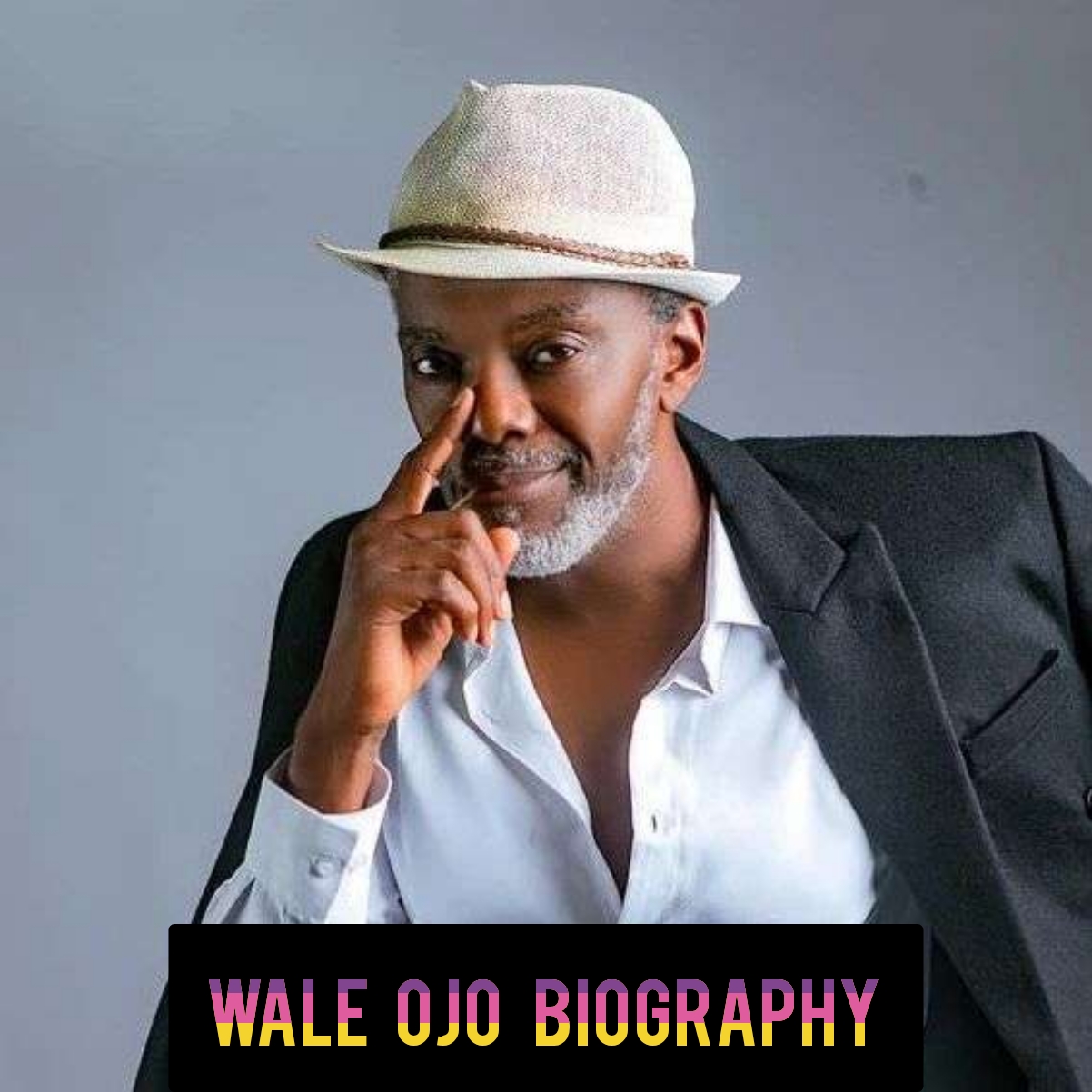
Wale Ojo Biography
Wale Ojo stands as one of the most enduring and versatile figures in African and British cinema. With a career that began in childhood on the pioneering screens of Nigerian television and stretched across stages in the United Kingdom, major Hollywood productions, and the evolving landscape of Nollywood, he has built a body of work defined by depth, range, and quiet authority. His performances have earned critical recognition on both continents, while his efforts behind the camera and through initiatives like New Nigeria Cinema have helped raise the standard of storytelling coming out of Nigeria. This biography traces the path of an actor who has moved fluidly between cultures, mediums, and generations while remaining rooted in craft and purpose.
Wale Ojo Interesting Fact That Draws the Reader In
Few actors can claim to have shared the screen with both Rowan Atkinson in a global comedy franchise and the late Akin Lewis in a classic Nigerian television series, all while founding a movement aimed at elevating an entire national film industry. Wale Ojo did exactly that. Long before he portrayed complex leads in award-winning Nollywood dramas or appeared in Apple TV science fiction, he was an eight-year-old boy on the set of an NTA Ibadan production, learning the rhythms of performance in the birthplace of African television. That early start, combined with formal training in British drama schools and a lifelong connection to Nigerian literary giants such as Wole Soyinka, created an artist uniquely positioned to bridge worlds. His recent Best Lead Actor win at the 2024 Africa Magic Viewers Choice Awards for Breath of Life felt less like a sudden breakthrough and more like the natural culmination of nearly five decades of steady, deliberate work.
Wale Ojo Early Life
Wale Ojo was born on September 9, 1964, in London, England, to Nigerian parents. His family roots run deep in Ibadan, Oyo State, and extend into Edo State through his mother’s royal lineage. His father, Barrister Joseph Adeleye Ojo, was a lawyer who maintained a polygamous household with several wives. His mother, Princess Teresa Otieyeke Ojo (née Anao), came from the royal family of Ewohimi in Edo State and worked as an actress. She became the central figure in his upbringing and the strongest early influence on his artistic path.
The family spent significant time in Ibadan, where young Wale experienced both the privileges of an upper-middle-class childhood and the rich cultural environment of a city known for its theatrical tradition. He has described his early years as pampered, with holidays spent flying between England and Nigeria. His mother ensured he remained connected to Nigerian life, often taking him to performances and immersing him in the world of the University of Ibadan theatre community. There he absorbed the work of pioneering figures such as Zulu Sofola, Chief Wale Ogunyemi, Tunji Oyelana, and the towering presence of Wole Soyinka.
At the age of eight, Ojo began professional acting. He appeared alongside Akin Lewis in the NTA Ibadan series Why Worry, one of the early dramas produced by Africa’s first television station, then known as Western Nigeria Television. That experience marked the formal start of a career that would span more than fifty years. By the age of twelve, the family relocated more permanently to England. Ojo continued his education there, eventually studying drama at the University of Hull, from which he graduated in 1986. The dual upbringing left him equally at home in British theatre traditions and Nigerian cultural expression, a balance that would define his later choices.
Wale Ojo Personal Life
Wale Ojo has kept the details of his private life largely out of the public eye. He is unmarried and has spoken in interviews about past relationships that did not lead to lasting partnerships. Public records and his own statements indicate that he does not have children, though he has occasionally referred in broader terms to guiding younger people and respecting the individual paths of the next generation. He maintains close ties with his siblings, including an older sister named June and a brother named Niyi, and has spoken warmly of extended family gatherings.
His mother remained a central figure until her passing in 2024 at the age of 85. In a public tribute, Ojo described her as forever caring and loving, noting that she was mother to three children, grandmother to six, and great-grandmother to nine. Her influence extended beyond encouragement; she actively supported his early television work and introduced him to the artistic circles that shaped his worldview.
Outside of acting, Ojo is a musician. He leads an Afrobeats band called Wale Ojo and the Milagros, which has performed in London, Brazil, and the United States. Music has been a parallel passion throughout his life, though it has never overshadowed his primary commitment to performance. He is also an avid swimmer and deep-sea diver, finding relaxation in water across different parts of the world. These quieter pursuits complement a public life spent largely in front of cameras and on stages. Friends and colleagues often note his professionalism, curiosity, and willingness to mentor emerging talent through workshops and acting classes.
Wale Ojo Rise to Prominence
The transition from child actor to professional performer took place in the mid-1980s. In 1986, while still a student, Ojo played a youthful Othello in a production in London’s East End. That role opened doors to British theatre. Over the following years he appeared on stages across the United Kingdom, building a reputation for disciplined and thoughtful work. His screen career gained early international notice in 1995 when he appeared as a gambler in Guy Ritchie’s debut short film The Hard Case. The same year marked a turning point in visibility. He followed it with a memorable turn as a gangster in the 1999 feature Rage.
Throughout the late 1990s and 2000s, Ojo balanced British television and film with occasional returns to Nigerian projects. Credits from this period include the BBC series Heartburn Hotel, appearances in The No. 1 Ladies’ Detective Agency, and roles opposite major stars such as James Purefoy in The Philanthropist. In 2011 he appeared as President Chambal in Johnny English Reborn alongside Rowan Atkinson and as Doctor Oyelowo in the critically praised Irish film The Guard with Brendan Gleeson and Don Cheadle.
The decisive shift toward sustained prominence in Nigeria came in 2012 with Kunle Afolayan’s romantic comedy Phone Swap. Ojo’s performance as Akin earned him the Best Actor award at the Nigeria Entertainment Awards and introduced him to a much wider African audience. Around the same time he starred as Bayo Adebanjo in the popular comedy series Meet the Adebanjos, which ran for several seasons and brought him a nomination for Best Comedy Actor at the Africa Magic Viewers Choice Awards. These projects established him as a reliable leading man capable of both humour and dramatic weight.
Wale Ojo Major Achievements
The breadth of Ojo’s filmography is striking. On the international side he has appeared in Half of a Yellow Sun opposite Chiwetel Ejiofor and Thandie Newton, the Apple TV series Foundation as Professor Arren Sorn, and the BBC drama Black Earth Rising. In Nollywood he has delivered memorable work in The CEO, Render to Caesar, Kasanova, Blood Sisters, Alter Ego, and many others. His portrayal of the older Timi Johnson in the 2023 Amazon Prime Video original Breath of Life earned him the Best Lead Actor award at the 2024 Africa Magic Viewers Choice Awards, one of the most competitive categories in African film. The film itself collected multiple major prizes that night.
Beyond acting, Ojo founded New Nigeria Cinema, an initiative dedicated to improving production values, narrative strength, and international competitiveness of Nigerian films. The project hosted screenings and discussions at the British Film Institute in London in 2010 and has continued to advocate for higher standards. He has also stepped behind the camera, making his directorial debut with the short film Ghost of Tarkwa Bay and later directing the documentary This, Your Lagos. In recent years he wrote and directed the feature This Is Not a Nollywood Movie, a satirical comedy that premiered in late 2025 and reflected his long experience inside the industry.
His stage work remains significant. In 2025 he returned to the British stage to play Elesin Oba in Wole Soyinka’s Death and the King’s Horseman for Utopia Theatre at the Crucible Theatre in Sheffield. He has also portrayed Soyinka himself in the film adaptation of the writer’s prison memoir The Man Died. These roles close a circle that began with his childhood exposure to Soyinka’s work and underscore a career-long engagement with Nigeria’s literary heritage.
Awards and nominations span more than a decade and include wins and recognitions from the Nigeria Entertainment Awards, Africa Magic Viewers Choice Awards, Africa Movie Academy Awards, and Nollywood Movies Awards. Equally important is the quieter influence he exerts through mentoring and consistent professionalism. Colleagues frequently cite him as an example of an actor who treats every role, whether large or small, with the same seriousness.
Wale Ojo Challenges and Setbacks
Building a career that spans two continents is rarely straightforward. Ojo has spoken about the decision, early on, to prove he could succeed independently rather than rely on family support. The move between the structured world of British theatre and the rapidly changing, often under-resourced environment of early Nollywood required constant adaptation. Funding challenges, varying production standards, and the need to maintain visibility in both markets demanded resilience.
Personal relationships also brought difficulty. He has acknowledged past romantic setbacks and the high rate of marital breakdown in the industry and beyond. Remaining single into later adulthood is not a narrative the public always accepts easily, yet he has addressed the topic with frankness and without self-pity. The death of his mother in 2024 was a profound loss, one he marked with a public tribute that revealed the depth of their bond.
The COVID-19 pandemic presented practical challenges as well. Ojo has noted that a paycheck from Foundation sustained him for several months while he was in the Dominican Republic during lockdowns. Such periods of uncertainty are common in an industry dependent on continuous work, yet he has consistently returned to new projects with renewed focus. His response to obstacles has been to keep working, to expand into writing and directing, and to use his platform to advocate for better conditions within Nigerian cinema.
Wale Ojo Legacy and Current Status
Today Wale Ojo continues to work at a high level. Recent and upcoming projects include the Soyinka biopic The Man Died, stage performances of classic Nigerian drama, and his own directorial efforts. He remains active on both sides of the Atlantic, moving between London and Lagos as projects demand. Through New Nigeria Cinema and personal mentoring he invests in the next generation of filmmakers and actors, emphasising craft, discipline, and cultural authenticity.
His legacy rests on several pillars: the example of a long, sustained career that began in childhood and shows no sign of slowing; the successful navigation of British and Nigerian industries without diluting either identity; and a commitment to raising the quality of African storytelling. Younger actors see in him proof that longevity is possible when talent is paired with professionalism. Audiences recognise a performer capable of quiet intensity, comic timing, and historical weight.
As the Nigerian film industry continues its global expansion, Ojo’s early advocacy for higher production values and stronger narratives looks increasingly prophetic. He has lived the transition from the video era into the current period of international streaming partnerships and festival recognition. His body of work serves as both archive and roadmap.
Conclusion
Wale Ojo’s story is one of continuity and quiet ambition. From the television studios of Ibadan in the 1970s to the stages of Sheffield and the sets of major international productions, he has remained committed to the craft of acting while expanding the possibilities of Nigerian cinema. His career demonstrates that cultural roots and international experience need not stand in opposition. They can enrich each other. In an industry that often prizes novelty, his steady presence offers a different model: excellence sustained over decades, curiosity that leads from performance into production, and a belief that African stories deserve the highest standards of telling. The work continues, and the influence grows.
FAQs
Who is Wale Ojo?
Wale Ojo is a British-Nigerian actor, director, and producer known for a career that began as a child performer on Nigerian television and expanded into British theatre, Hollywood films, and major Nollywood productions. He is recognised for roles in Phone Swap, Breath of Life, Johnny English Reborn, and the series Meet the Adebanjos, among many others.
When and where was Wale Ojo born?
Wale Ojo was born on September 9, 1964, in London, England, to Nigerian parents. He spent much of his early childhood in Ibadan, Nigeria, before relocating with his family to England at the age of twelve.
What is Wale Ojo best known for?
He is best known for his award-winning performance in the 2012 film Phone Swap, his role as the older Timi in the 2023 film Breath of Life that earned him Best Lead Actor at the 2024 AMVCA, and his long-running work in the comedy series Meet the Adebanjos. He is also recognised for founding New Nigeria Cinema.
Is Wale Ojo married?
Wale Ojo is not married. He has kept details of past relationships private and has spoken openly about remaining single while focusing on his career and personal interests.
Does Wale Ojo have children?
Public information indicates that Wale Ojo does not have children. He has occasionally spoken in general terms about guiding younger people and respecting individual career paths.
What awards has Wale Ojo won?
His major awards include Best Actor at the 2012 Nigeria Entertainment Awards for Phone Swap and Best Lead Actor at the 2024 Africa Magic Viewers Choice Awards for Breath of Life. He has also received multiple nominations from the AMVCA and Africa Movie Academy Awards.
What is New Nigeria Cinema?
New Nigeria Cinema is an initiative founded by Wale Ojo to improve the quality, production values, and international competitiveness of Nigerian films. It has organised screenings and discussions, including events at the British Film Institute in London.
Where did Wale Ojo study?
He studied drama at the University of Hull in the United Kingdom, graduating in 1986. Earlier education took place in both Nigeria and England.
Has Wale Ojo directed any films?
Yes. He made his directorial debut with the short film Ghost of Tarkwa Bay and later directed the documentary This, Your Lagos. He also wrote and directed the 2025 feature This Is Not a Nollywood Movie.
What other interests does Wale Ojo have outside acting?
He is a musician who leads an Afrobeats band, Wale Ojo and the Milagros. He is also passionate about swimming and deep-sea diving, activities he pursues for relaxation.