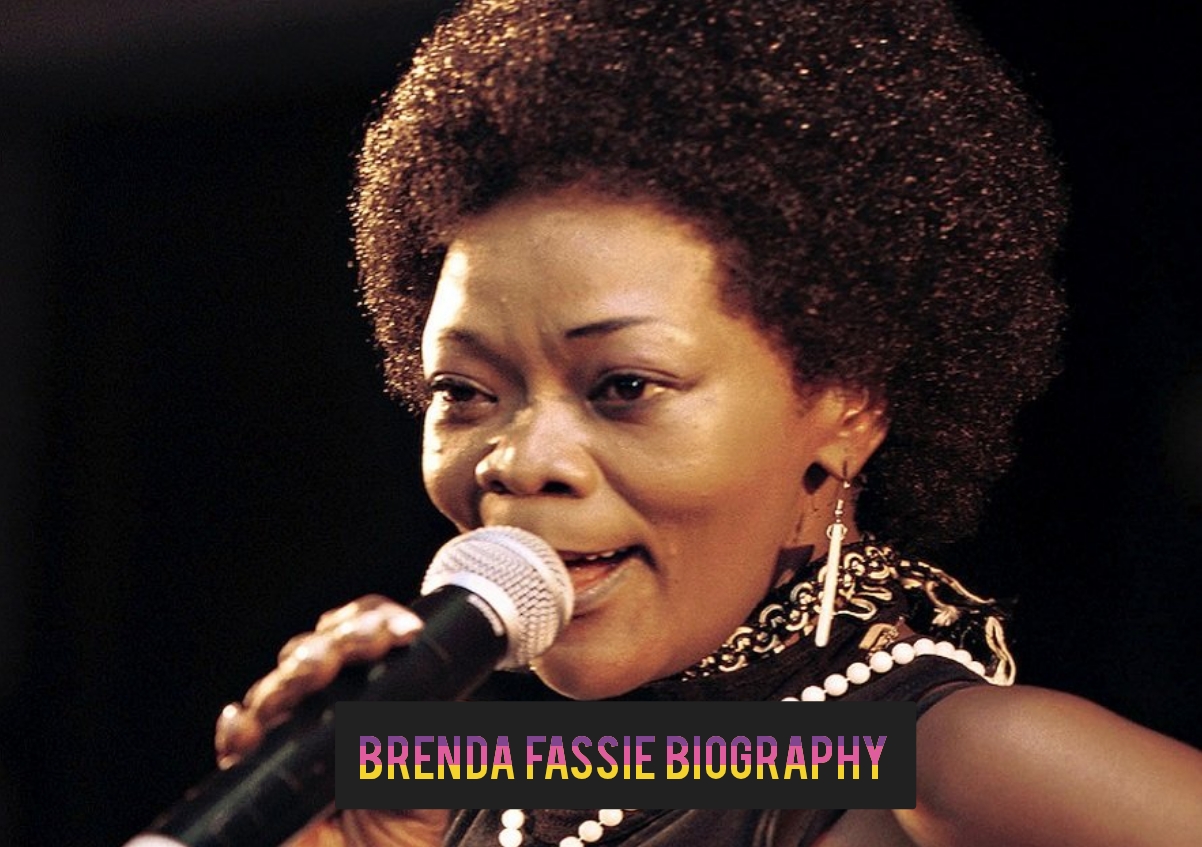
Brenda Fassie Biography
Brenda Fassie remains one of South Africa’s most magnetic and unforgettable musical voices, a performer whose raw energy and emotional power turned township life into anthems that reached far beyond the country’s borders. Known to millions as MaBrrr or the Queen of African Pop, she brought disco, bubblegum, and later kwaito flavoured sounds to stages across the continent and overseas. Her songs spoke of everyday joys, heartbreak, struggle, and hope during the final years of apartheid and the first years of democracy.
This biography traces the full arc of her life from a crowded home in Langa to national stardom, personal turbulence, and lasting cultural impact. It presents her story in clear and accessible language so that every reader can follow the journey of a woman who lived loudly, sang honestly, and left a mark that still echoes in South African music today.
Brenda Fassie Intro
Time magazine once called her the Madonna of the Townships, a title that captured both her global reach and her deep roots in the daily realities of black South African life. Brenda Fassie could fill stadiums, sell hundreds of thousands of records, and still feel completely at home performing for small crowds in the dusty streets where she grew up. She once said she liked to create controversy because it was her trademark. That bold spirit defined her from childhood. While many artists of her generation carefully polished their public image, Brenda refused to hide her flaws, her desires, or her pain. The result was a career that felt intensely personal to her fans. They saw their own struggles and celebrations reflected in her music and in the open way she lived. Her story begins in a modest township house where a little girl with a big voice already knew she was destined for more.
Brenda Fassie Early Life
Brenda Nokuzola Fassie was born on 3 November 1964 in Langa, one of the oldest black townships near Cape Town. She was the youngest of nine children in a working class family. Her father, Matthew Mangaliso Fassie, worked as a bank guard and was known as a strong singer. He died when Brenda was only two years old. Her mother, Makokosie or Sarah Fassie, was a domestic worker and a skilled pianist who kept music alive in the home. The family lived in a small house on Makana Square where singing was part of everyday life. Evenings often filled with family harmonies around the piano.
From the age of four Brenda stepped onto stages with a children’s group called the Tiny Tots that her mother organised. She sang for tourists who docked in Cape Town and for church events. People paid to hear the small girl with the surprisingly mature voice. She loved traditional songs such as Elaqaba and quickly learned breathing techniques by watching visiting musicians who sometimes stayed at the Fassie home. Brenda attended Thembani Lower Primary and later Moshesh Primary School in Langa. Teachers and neighbours noticed her talent early. She was lively, confident, and already certain that music would be her path.
At sixteen a well known Johannesburg producer named Koloi Lebona travelled to Cape Town after hearing about the young singer from local musicians. He visited the family home and was deeply impressed. With her mother’s agreement Brenda moved to Soweto to live with Lebona and his wife. The plan was for her to finish school while preparing for a professional career. Life in the sprawling Johannesburg township opened new doors. Brenda soon found herself filling in for a member of the popular vocal group Joy who was on maternity leave. The experience proved irresistible. Formal education gave way to the stage, and her professional journey began in earnest.
Brenda Fassie Personal Life
Brenda’s personal life was as colourful and complicated as her music. In 1985 she gave birth to her only child, a son named Bongani, whose father was Dumisani Ngubeni, a fellow musician in the Big Dudes. Motherhood remained important to her even during the busiest years of her career. Bongani later spoke of the deep bond they shared and of how her presence continued to shape his life long after her death.
In 1989 Brenda married Nhlanhla Mbambo. The marriage was short and difficult. It ended in divorce in 1991 amid public reports of conflict. After that relationship she lived more openly as a woman who loved both men and women. She spoke frankly about her attraction to women at a time when such openness was rare and often risky in South African society. One significant relationship was with Poppie Sihlahla. Another later partner was Gloria Chaka, with whom she shared a home in her final years. Brenda never tried to hide these parts of her life. She once said she had always been with women and that people had always known.
Away from the spotlight Brenda was known among family and close friends as bubbly, funny, and dramatic. She loved attention and sometimes courted the press, yet she also valued private moments of generosity. She supported relatives and friends quietly. Music remained her constant companion and her greatest source of comfort. She collected records, practised tirelessly, and treated the stage as both workplace and home. Lesser known details include her strong sense of family loyalty and her belief that her music itself was the truest record of who she was. She once told an interviewer that if people wanted to know the real Brenda they should simply buy her CDs because her son needed the money.
Brenda Fassie Rise to Prominence
Brenda’s breakthrough arrived in 1983 when she became the lead singer of Brenda and the Big Dudes. Their single Weekend Special, written in a bright disco influenced bubblegum style, sold more than two hundred thousand copies and became one of the fastest selling records in South Africa at the time. The song crossed borders. Remixes reached the American charts, and the group toured Britain, Europe, the United States, Australia, and Brazil. Suddenly a teenager from Langa was an international name.
After the Big Dudes period Brenda began releasing music under her own name. Albums and singles such as Life is Going On and Too Late for Mama kept her at the top of local charts through the late 1980s. She worked closely with producer Sello Chicco Twala, a partnership that would prove lasting and fruitful. In 1990 she released Black President, a powerful tribute to the still imprisoned Nelson Mandela. The song was banned for a time by the apartheid government, yet it only increased her stature among people who saw her as a voice of resistance and hope.
By the middle of the 1990s personal struggles had slowed her momentum. Many observers wondered whether her career was finished. Then came the remarkable comeback. In 1998 she reunited with Chicco and released the album Memeza. It became the best selling South African album of the year and contained the enormous hit Vulindlela. The song captured the optimistic spirit of the new democracy and was later used by the African National Congress in its 1999 election campaign. Brenda was once again the biggest star in the country. She followed with further multi platinum albums including Nomakanjani and Amadlozi. For several years in a row she claimed the South African Music Award for best selling release. Her rise had begun with a teenage voice in a township group and reached its peak with an artist who could fill arenas and speak directly to a changing nation.
Brenda Fassie Major Achievements
Brenda Fassie’s commercial success was unmatched in her time. She released more than fifteen albums and sold millions of copies across southern Africa. Weekend Special remains a landmark of 1980s township pop. Too Late for Mama showed her ability to deliver emotional ballads. Black President became an anthem of the anti apartheid struggle. Memeza and Vulindlela defined the late 1990s sound and helped shape the emerging kwaito movement. Many younger artists later cited her as a major influence on their own work.
Awards followed the sales. She won Kora Awards for Most Promising Female Artist of Africa and Best Female Artist of Africa in 1996, plus a Jury Special Award in 2001. At the South African Music Awards she collected Best Female Artist and Song of the Year in 1999, Best Selling Release of the Decade and Best Song of the Decade in 2004, and a posthumous Lifetime Achievement Award in 2005. In 2001 Time magazine devoted a major feature to her and cemented the nickname Madonna of the Townships. She performed for Nelson Mandela and other national leaders. She toured widely in Africa and further afield, carrying South African popular music to new audiences.
Her impact went beyond charts and trophies. She proved that a black woman from a township could command the national stage on her own terms. She sang in English, Xhosa, Zulu, and Sotho, making her music accessible across language groups. She addressed social issues without losing the dance floor energy that made people move. In doing so she helped expand the possibilities for African pop and for women within it.
Brenda Fassie Challenges/Setbacks
Fame arrived early and brought heavy pressures. Brenda struggled with substance abuse for many years. Cocaine and later crack cocaine took a severe toll on her health, her reliability, and her relationships. She missed concerts, faced public criticism, and checked into rehabilitation facilities more than once. In 1995 she was found in a Johannesburg hotel room beside the body of her partner Poppie Sihlahla, who had died of a drug overdose. The tragedy forced Brenda into another attempt at recovery and became a turning point in how the public viewed her private battles.
Legal and personal troubles added to the strain. She faced assault charges and other court appearances. Her short marriage ended amid accusations of abuse and financial conflict. Money that should have secured her future sometimes disappeared through poor management and the costs of addiction. Yet she refused to disappear. After each setback she returned to the studio and the stage. The success of Memeza proved that audiences still loved her and were willing to forgive the chaos that surrounded her. She spoke openly about her struggles, which helped reduce some of the stigma around addiction and around living as a queer person in South Africa. The challenges were real and painful, but they never fully silenced the voice that had first been heard in a Langa living room.
Brenda Fassie Legacy
Brenda Fassie died on 9 May 2004 in a Johannesburg hospital at the age of thirty nine. She had been admitted after a cardiac arrest linked to an asthma attack and complications from drug use. She remained in a coma for nearly two weeks. Nelson Mandela, Winnie Mandela, and then President Thabo Mbeki visited her bedside. When life support was withdrawn, the nation mourned. Her funeral in Cape Town drew thousands of fans who overwhelmed the stadium. A bronze statue later stood outside a Johannesburg music venue as a permanent reminder of her presence.
More than twenty years later her music still plays on radio stations, in taxis, and at parties. Younger artists sample her songs and speak of her influence. Her son Bongani continues to honour her memory through his own work in music. Documentaries, books, and anniversary concerts keep her story alive. She is remembered as a pioneer who lived without apology, who gave voice to township life, and who showed that South African pop could be both deeply local and widely loved. The Queen of African Pop left no quiet legacy. She left a loud, dancing, complicated, and enduring one.
Conclusion
Brenda Fassie’s life teaches that talent alone is never enough. Courage to be fully oneself, even when that self is messy and contradictory, can turn a local voice into a national treasure. She faced hardship, addiction, and loss, yet she kept returning to the microphone. In doing so she gave millions of people songs that still lift spirits and tell the truth about their lives. Her example continues to encourage artists and ordinary listeners alike to claim their place in the world without fear.
FAQs
Who was Brenda Fassie?
Brenda Fassie was a South African singer, songwriter, and performer known as the Queen of African Pop or the Madonna of the Townships. She rose to fame in the 1980s and remained a major star until her death in 2004.
When and where was Brenda Fassie born?
She was born on 3 November 1964 in Langa, a township near Cape Town, South Africa.
What was Brenda Fassie’s biggest hit?
Weekend Special from 1983 was her breakthrough and one of her most famous songs. Later hits such as Vulindlela and Too Late for Mama were also enormously popular.
Did Brenda Fassie have children?
Yes. She had one son, Bongani Fassie, born in 1985.
What awards did Brenda Fassie win?
She won multiple South African Music Awards and Kora Awards, including Best Female Artist and recognition for best selling albums of the decade.
How did Brenda Fassie die?
She died on 9 May 2004 after suffering cardiac arrest and remaining in a coma. Complications related to asthma and drug use were involved.
Why is Brenda Fassie still important today?
Her music continues to be played and sampled. She opened doors for women in African pop, spoke openly about her life, and left songs that capture both the pain and the joy of South African experience.