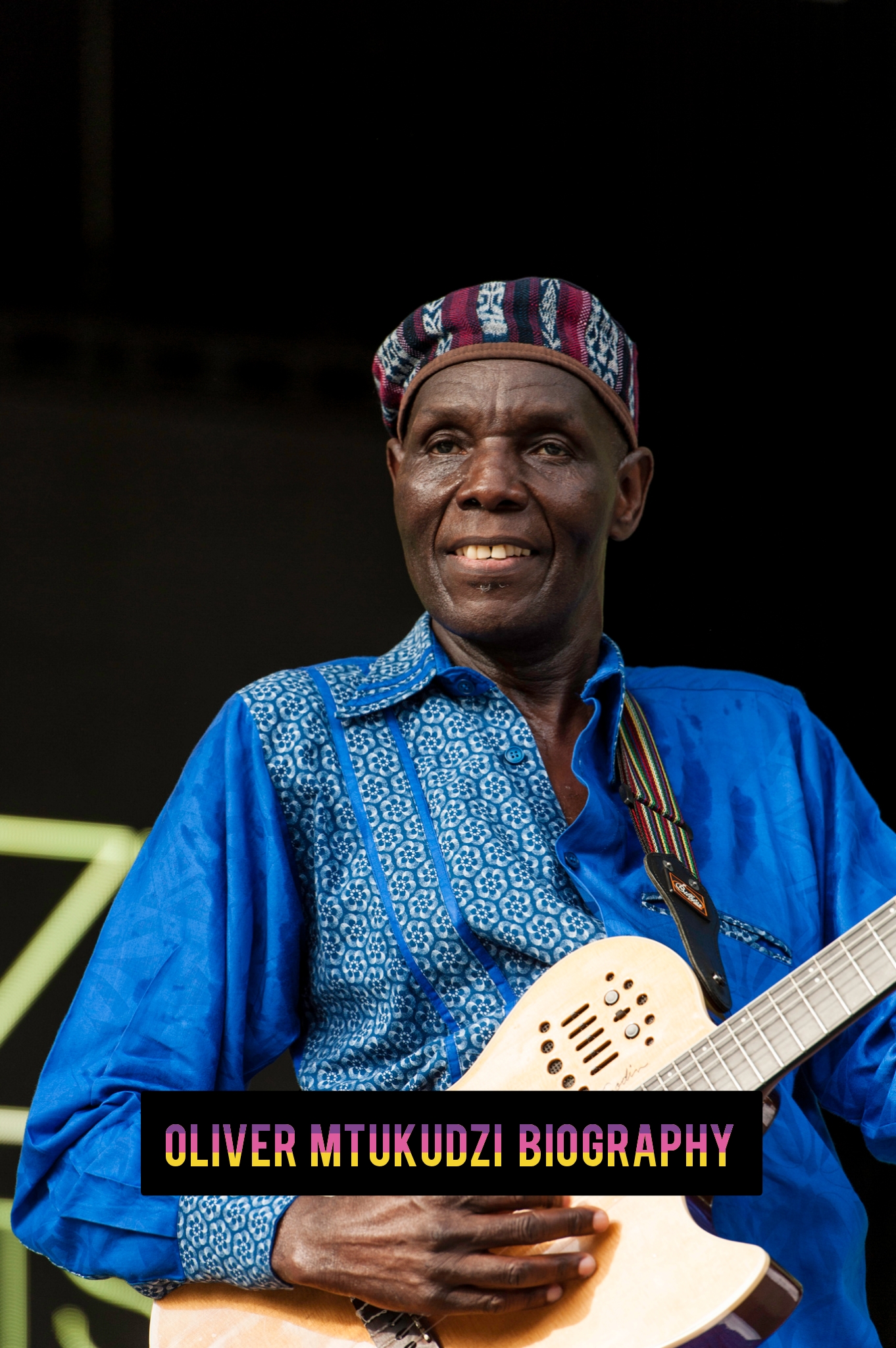
Oliver Mtukudzi Biography
Oliver Mtukudzi stands as one of Africa’s most enduring musical voices, a man whose husky delivery and thoughtful lyrics carried the everyday hopes and hardships of ordinary people across decades of change in Zimbabwe and far beyond. Known affectionately as Tuku, he created a distinctive sound that blended traditional Shona rhythms with South African township styles, gospel warmth, and global influences into what fans simply called Tuku Music. His work spoke of responsibility, dignity, family, and community at a time when many sought both comfort and clarity.
This biography explores the full arc of his life, from a childhood in a crowded Harare township to international stages, film roles, philanthropy, and a lasting cultural institution. It traces how personal loss, political upheaval, and a deep sense of purpose shaped an artist who never stopped singing to the situations around him. Through more than sixty albums, mentorship of young talent, and quiet advocacy, Mtukudzi left a body of work that continues to guide and inspire.
Oliver Mtukudzi Intro
When Oliver Mtukudzi once walked home with blistered feet after another fruitless day searching for work in the industrial areas of Salisbury, he began humming a phrase that would soon become a national anthem of quiet resistance. The words “Nhamo dzandimomotera” captured the weight of daily struggle under colonial rule, and the song that grew from that moment, Dzandimomotera, spent weeks at the top of the charts. That simple act of turning personal hardship into melody defined the man who would become Zimbabwe’s most beloved musical ambassador. Tuku never claimed to be a political revolutionary in the conventional sense. He simply sang what he saw and felt, and in doing so gave voice to millions.
His music carried messages about HIV and AIDS when the topic was still whispered, about the rights of widows when customary law left them vulnerable, and about the need for elders to know when to step aside. Yet the same voice that addressed heavy subjects also celebrated love, childhood, and the simple joy of gathering. This combination of social insight and deep humanity made him more than a star. It made him a trusted presence in homes across Southern Africa and eventually on stages from the Hollywood Bowl to WOMAD festivals.
Oliver Mtukudzi Early Life
Oliver Dairai Mtukudzi was born on 22 September 1952 in Highfield, a dense and vibrant township then part of Salisbury in Southern Rhodesia, now Harare, Zimbabwe. He was the firstborn in a family of seven children. His parents, Samson and Jesca Mtukudzi, had met while singing in a choir, and music filled the household from the beginning. Both parents performed, and the children often served as informal judges in friendly competitions between mother and father. The family belonged to the Korekore people, with the totem Nzou Samanyanga, and life revolved around Christian faith, hard work, and the sounds of traditional mbira and jit rhythms mixed with whatever music drifted in from neighbours’ radios.
Highfield itself was a crucible of nationalist feeling and cultural energy. It was home to many who would later shape the independence movement. For a young boy with a natural ear, the environment offered constant stimulation. There was no radio in the Mtukudzi home at first, but a local shopkeeper’s set drew crowds, and Oliver absorbed American soul from Otis Redding, Wilson Pickett, and James Brown alongside local styles. He taught himself guitar, sometimes trying to make the instrument sound like a mbira, an approach that more conventional players found unusual but that later became part of his signature style.
His father’s death while Oliver was still entering adulthood forced him into early responsibility. As the eldest, he took on the duty of helping support the family. He found work in a bookstore, a job that provided modest stability but left him restless. In every spare moment he practised on a guitar given to him by a musician who had noticed his talent. School had given him a solid secondary education, yet employment opportunities for a young Black man under the Rhodesian system remained severely limited. That frustration became fuel. He began writing songs about the experience of looking for work and finding none, turning private disappointment into shared language.
Church choirs provided early performance experience. By his late teens he was already composing, first love songs and then pieces that reflected the realities around him. The combination of formal education, self taught instrumental skill, deep family musical roots, and the pressures of township life created the foundation for everything that followed. Highfield did not merely raise a musician. It raised an observer who would spend a lifetime translating observation into melody.
Oliver Mtukudzi Personal Life
Oliver Mtukudzi’s personal life was marked by deep family ties, the joys of fatherhood, and the inevitable losses that accompany a long public career. He married Melody Murape in 1979 in a large ceremony that reflected the community’s affection for the rising young artist. The couple had daughters, including Sandra and Selmor, both of whom later pursued music. The marriage eventually ended in divorce in 1993 after years of strain related to Mtukudzi’s relationship with Daisy, whom he later married. Daisy became his partner in both life and business, helping manage aspects of his career and the arts centre that would become central to his later years. Together they had children, including Samantha and the talented Sam Mtukudzi.
Sam followed his father into music, becoming a skilled guitarist and saxophonist who performed with the Black Spirits and began building his own reputation. His death in a car accident in March 2010 at the age of twenty one was a profound blow. Mtukudzi channelled the grief into the 2013 album Sarawoga, a work of mourning and remembrance that allowed him and his audience to process the loss together. Selmor has continued the family tradition as a musician and has also worked with UNICEF, extending her father’s advocacy.
Mtukudzi was known for a modest personal style despite his fame. He maintained a home with distinctive touches, including a swimming pool shaped like a guitar, a detail that amused visitors and reflected his playful side. He collected acoustic instruments and valued the gifts of fellow musicians, including an acoustic bass from Bonnie Raitt. Away from the stage he remained grounded, often emphasising that music was not a career he had chosen so much as a way of living. He spoke of hunhu, the Shona concept of human identity expressed through moral relationships, as a guiding principle.
He faced health challenges with the same openness he brought to social issues. Diagnosed with diabetes, he managed the condition for years while continuing to perform and record. The disease and its complications ultimately contributed to his death, yet he refused to let it define his public presence until the final months. Friends and family remembered a man of sophisticated tastes who remained approachable, a father who involved his children in his creative world, and a husband who built lasting partnerships even through personal complexity. Lesser known was the quiet determination with which he supported extended family and band members, many of whom became like relatives over decades of shared work.
Oliver Mtukudzi Rise to Prominence
The path from township guitarist to national figure began in earnest in the mid 1970s. In 1975 Mtukudzi recorded his first single, Stop After Orange, also known in some accounts as Stop Before Go. The release marked his entry into professional recording, yet the true breakthrough arrived two years later when he joined the Wagon Wheels. The band included Thomas Mapfumo and James Chimombe, and it benefited from the support of promoter Paul Tangi Mhova Mkondo, who provided resources and access to Club Mutanga, one of the few venues open to Black performers under segregationist policies.
Their single Dzandimomotera became a massive hit, spending eleven weeks at number one and capturing the mood of a population living under the weight of the Rhodesian system. The song’s success elevated both Mtukudzi and Mapfumo. Mtukudzi soon left to form his own group, the Black Spirits, which would remain his primary vehicle for the rest of his career. In 1978 he released the album Ndipeiwo Zano, whose title track asked for advice and spoke to the determination of people seeking a better path. The following year brought further releases, and by the time Zimbabwe achieved independence in 1980 Mtukudzi was already a recognised voice.
Independence provided a powerful platform. The album Africa, released that year, contained the hits Zimbabwe and Mazongonyedze and helped give the new nation a soundtrack of pride and possibility. Mtukudzi also performed a reggae flavoured version of the national anthem Ishe Komborera Africa. Through the 1980s he released album after album, building a devoted local following through constant live performance even in remote areas. His style, already distinctive, continued to evolve by absorbing mbira patterns, mbaqanga drive, and the rhythmic pulse of jit while retaining a warm, conversational vocal delivery.
International attention grew gradually. By the 1990s he was appearing at major festivals and collaborating across borders. The 1999 album Tuku Music, released internationally, brought wider recognition and led to extensive touring in North America and Europe alongside artists such as Baaba Maal and Toumani Diabaté. Bonnie Raitt’s cover of his song Hear Me Lord further introduced Western audiences to his work. What began as local expression had become a global conversation conducted in the language of Tuku Music.
Oliver Mtukudzi Major Achievements
Oliver Mtukudzi’s achievements span music, film, stage, advocacy, and institution building. He recorded more than sixty albums, many of them bestsellers in Zimbabwe and across the region. Hits such as Neria, Todii, Bvuma, and countless others entered the cultural bloodstream, used at weddings, funerals, political gatherings, and quiet family moments. Neria, both song and film, addressed the plight of widows under customary law and earned him the M Net Best Soundtrack Award in 1992. The film itself was a landmark as one of the first major Zimbabwean features with a local cast.
He starred in Jit, the first feature film with an all Zimbabwean cast, and later wrote and directed the stage musical Was My Child, which highlighted the struggles of street children and earned recognition from the Zimbabwe Writers’ Union. His willingness to engage social issues through accessible art set him apart. Songs addressing HIV and AIDS, including Todii and earlier pieces developed with World Health Organisation materials in the late 1980s, helped open public conversation at a time of stigma and fear. He lost band members and his brother Robert to the disease and responded by using his platform to promote responsibility and compassion.
Awards accumulated over the decades. He received KORA Awards, including Best African Male Artist and a Lifetime Achievement Award, National Arts Merit Awards, honorary degrees from the University of Zimbabwe and other institutions, and the Cavaliere of the Order of Merit from the Italian government. In 2011 he was appointed UNICEF Goodwill Ambassador for Eastern and Southern Africa, a role in which he advocated for children’s rights, HIV prevention, and an end to child marriage. Forbes once included him among the most powerful celebrities in Africa.
Perhaps his most tangible institutional achievement was the founding of Pakare Paye Arts Centre in Norton in 2004. Built on land that had once been a rundown site, the centre offered recording facilities, performance spaces, accommodation, and above all a place where young talent could develop without the barriers Mtukudzi himself had faced. He financed much of it personally and insisted it was not a conventional school with rigid curricula but a village of the arts where talent could teach as well as learn. The centre continues to nurture musicians, host festivals, and serve as a living memorial.
Oliver Mtukudzi Challenges Setbacks
Success never came without obstacles. In the Rhodesian years the simple act of performing in certain venues carried risk, and the political climate made socially conscious lyrics a careful balancing act. After independence new challenges emerged. Economic hardship, political tension, and the devastating impact of HIV and AIDS tested both the nation and the artist. Mtukudzi lost multiple band members in a short period, including his brother, and had to rebuild while continuing to tour and record. The emotional toll was real, yet he channelled it into songs that helped others process similar losses.
Personal setbacks included the end of his first marriage and the far deeper wound of Sam’s death in 2010. The loss of a son who was also a musical collaborator and intended successor at Pakare Paye could have silenced a lesser artist. Instead Mtukudzi created Sarawoga and kept working, demonstrating the same resilience he often sang about. Health issues related to diabetes gradually limited his energy, yet he continued performing into his final year, including large outdoor shows that drew tens of thousands.
Navigating Zimbabwe’s complex political landscape required care. Mtukudzi performed at events associated with different sides yet consistently prioritised social messages over partisan allegiance. Songs such as Bvuma, which urged acceptance of ageing and the need to step aside, were widely interpreted as commentary, yet he maintained that he simply sang to situations rather than to parties. Economic instability affected the music industry and the ability of ordinary people to attend shows, yet he remained committed to playing for local audiences even when international tours offered greater financial reward. Each setback became material for reflection rather than a reason to withdraw.
Oliver Mtukudzi Legacy Current Status
Oliver Mtukudzi died on 23 January 2019 at Avenues Clinic in Harare from complications related to diabetes. He was sixty six. The nation mourned deeply. He was declared a national hero, and tributes poured in from across Africa and the wider world. President Emmerson Mnangagwa and many cultural figures acknowledged the comfort his voice had provided in difficult times. His funeral and subsequent memorials reflected the breadth of his impact.
His legacy lives most visibly at Pakare Paye Arts Centre, which remains active under the stewardship of his family, including Daisy and children such as Samantha. The centre hosts the Oliver Mtukudzi International Festival of the Arts, workshops, performances, and community programmes. Young artists who trained or performed there continue to credit the space with giving them opportunity. His catalogue remains widely available and regularly revisited. New generations discover Tuku Music through streaming, radio, and live reinterpretations.
Selmor and other family members carry forward both the musical and advocacy traditions. Collaborations he made late in life, including with younger artists such as Winky D, demonstrated his openness to evolving sounds while remaining rooted in core values. Academic studies, documentaries, and biographies continue to examine his work through the lens of hunhu, social history, and musical innovation. In Zimbabwe and the diaspora his songs still mark life’s major moments. The man who once hummed a tune on a dusty road home became the soundtrack of a nation’s emotional life, and that soundtrack endures.
Conclusion
Oliver Mtukudzi showed that a single voice, grounded in honesty and craft, can speak for many. He never pretended that music alone could solve poverty, disease, or injustice, yet he refused to treat those realities as subjects too heavy for song. By turning observation into melody and personal struggle into shared language, he created a body of work that still offers company, counsel, and occasional celebration. His greatest achievement may be the quiet confidence he left behind, the sense that ordinary experiences deserve to be sung with dignity and that talent finds its fullest expression when it lifts others. In the ongoing life of Pakare Paye and in every play of a Tuku track, that spirit continues.
FAQs
Who was Oliver Mtukudzi?
Oliver Mtukudzi, affectionately known as Tuku, was a Zimbabwean musician, songwriter, actor, philanthropist, and UNICEF Goodwill Ambassador whose distinctive Tuku Music blended traditional and modern African sounds with socially conscious lyrics.
When and where was Oliver Mtukudzi born?
He was born on 22 September 1952 in Highfield, then part of Salisbury in Southern Rhodesia and now Harare, Zimbabwe.
What is Tuku Music?
Tuku Music is the name given to Oliver Mtukudzi’s unique style, which combines elements of mbira, jit, mbaqanga, gospel, and other influences into a warm, rhythmic, and lyrically thoughtful sound.
How many albums did Oliver Mtukudzi release?
He released more than sixty albums over a career spanning more than four decades.
What was Pakare Paye Arts Centre?
Pakare Paye is an arts centre founded by Oliver Mtukudzi in Norton in 2004 to provide a space for young talent to develop skills in music, performance, and related arts without the barriers he had faced as a young artist.
Did Oliver Mtukudzi act in films?
Yes, he starred in the films Jit and Neria and contributed music and direction to stage works addressing social issues.
What social issues did his music address?
His songs frequently dealt with HIV and AIDS awareness, the rights of women and widows, children’s welfare, personal responsibility, ageing, and community values.
When did Oliver Mtukudzi die?
He died on 23 January 2019 in Harare after a long battle with diabetes related complications.
Is Oliver Mtukudzi’s legacy still active?
Yes, through the ongoing work of Pakare Paye Arts Centre, family members who continue in music and advocacy, regular festival celebrations of his work, and the enduring popularity of his extensive catalogue.