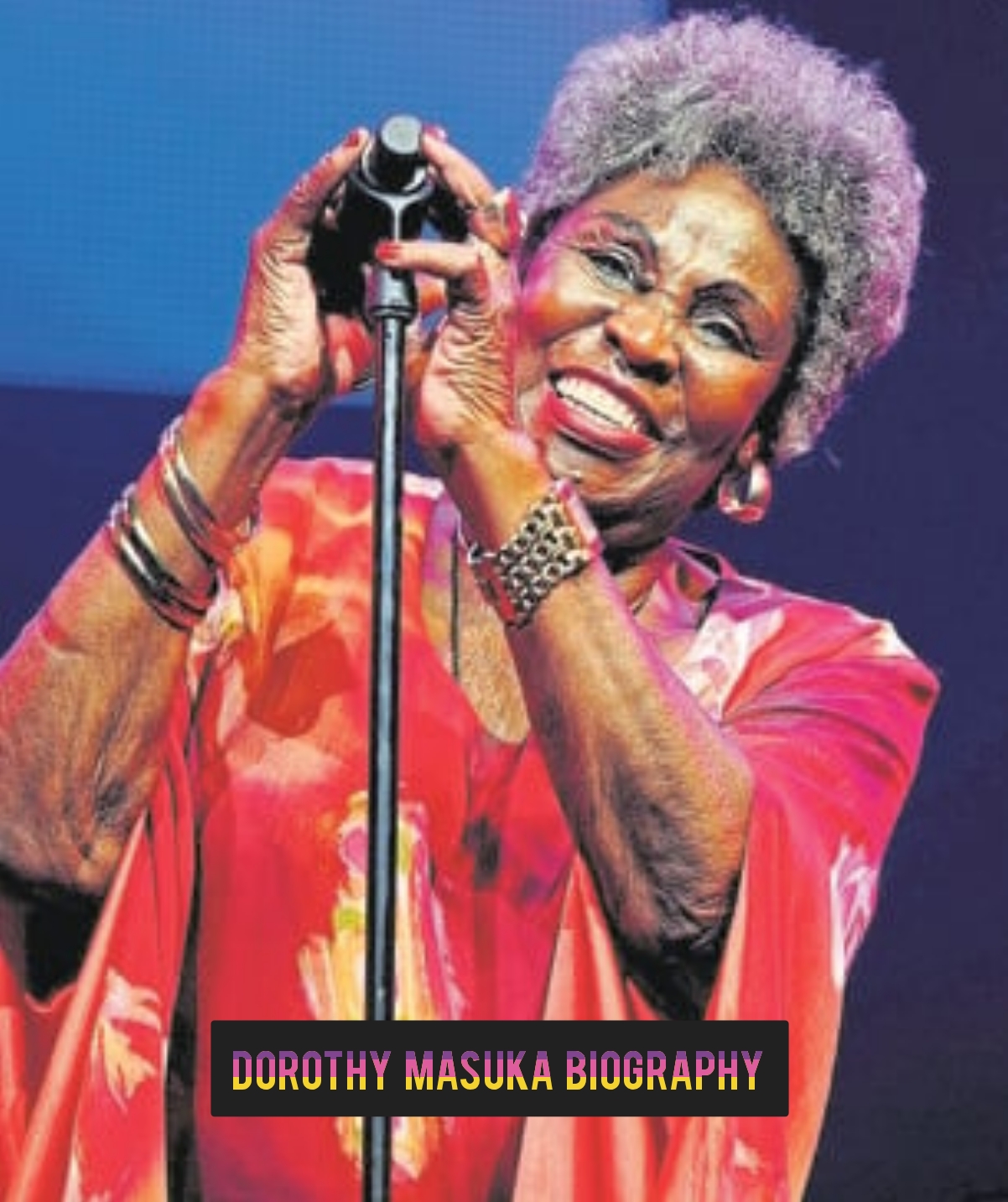
Dorothy Masuka Biography
Dorothy Masuka stands as a pioneering force in southern African music and a quiet yet determined voice in the long struggle against colonial and apartheid rule. Born in what was then Southern Rhodesia and raised across borders, she became one of the first Black female recording stars to achieve widespread popularity in the 1950s, writing songs that mixed jazz swing with township rhythms and sharp social observation. Her compositions travelled farther than she sometimes could, covered by artists such as Miriam Makeba and Hugh Masekela, and her own performances continued into her eighties.
This biography traces the full path of her life, from a childhood marked by illness and movement between countries to early stardom, forced exile lasting more than three decades, and a late return to stages and recognition. It examines the personal costs, the artistic breakthroughs, and the lasting influence of a woman who described herself as a child of the entire African continent.
Dorothy Masuka Intro
Imagine a teenage girl composing a song on a train journey that would become a classic of South African music and still be performed decades later. That is how Dorothy Masuka began her professional career. At an age when most of her peers were still in school, she was already recording hits, appearing on magazine covers, and sharing stages with the leading artists of her generation. Her voice and her pen later drew the attention of security police, forcing her into a long exile, yet the same qualities that made her dangerous to authorities also made her unforgettable to audiences across Africa and beyond.
Dorothy Masuka Early Life
Dorothy Masuka was born on 3 September 1935 in Bulawayo, then part of Southern Rhodesia and now Zimbabwe. She was the fourth of seven children. Her father came from Zambia and worked as a chef for hotels and railway companies. Her mother, Liza Mafuyani, was a Zulu woman whose family roots lay in the Natal region of South Africa, now KwaZulu Natal. The couple had settled in Bulawayo, creating a household that already crossed the colonial borders of the time. Dorothy later spoke of herself as belonging to every part of the continent, a view shaped by this mixed heritage.
Her early years were marked by fragile health. As a baby and young child she suffered from asthma and other illnesses so severe that family members sometimes doubted she would survive. The family eventually decided that the climate and medical care available in South Africa might help. In 1947, at the age of twelve, Dorothy moved to Johannesburg to live with an aunt. She was enrolled at St Thomas Convent School, a Catholic boarding school that offered one of the better educations then available to Black children. There she joined the school choir. Teachers and fellow pupils quickly noticed the strength and clarity of her voice.
Music had already been present in her life. From the age of seven months her mother observed that the child hummed constantly and could not sit still without making sound. By the age of two she was performing little songs for visiting relatives. Her maternal grandmother had been a sangoma, a traditional healer and spiritual figure, and Dorothy later described how many of her compositions arrived in dreams. She would wake and immediately sing the melody to someone in the house so that the memory would not fade. These early experiences formed a deep connection between her creative work and a sense of spiritual guidance.
School life did not hold her for long. The pull of professional music proved stronger than classroom discipline. She ran away more than once. On one occasion she travelled to Durban and joined the African Ink Spots under the guidance of Philemon Magotsi. Authorities returned her to Johannesburg, but she left again, this time for Bulawayo, where she performed with the Golden Rhythm Crooners. Her parents and teachers wanted her to complete her education, yet the record companies and audiences that discovered her talent gradually accepted that her future lay on stage rather than in a classroom. By the age of sixteen she had signed with Troubadour Records and was already a recognised recording artist.
Dorothy Masuka Personal Life
Dorothy Masuka guarded many details of her private world, especially the political side of her exile years. She once remarked that there were three Dorothy figures: the singer, the mother, and the politician, and that the last of these remained off limits for discussion. What is known is that she raised a family while living under difficult conditions far from the stages of her youth. She had several children. Two of them died young, losses that she later described as among the hardest trials of her life. In the aftermath of those deaths she returned more fully to her Christian faith, finding in it an anchor that helped her continue.
During the long years in Zambia she worked as a flight attendant for an independent African airline, one of the early women to hold such a position. The job provided steady income and a measure of independence while she raised her children. Friends from the music world of the 1950s remained important. Women who had known her in Johannesburg sent parcels of fruit and photographs, helped name her children, and offered comfort when illness or grief struck. These networks of support stretched across borders and decades.
In later life she lived in Yeoville, Johannesburg, surrounded by children and grandchildren. She spoke of working so that the younger generation would have something after she was gone. She maintained a quiet interest in farming plans in Zambia and continued to value the spiritual practices that had shaped her songwriting. Colleagues and younger artists often addressed her with affectionate titles such as Auntie Dot or Mam Dorothy, reflecting the warmth and maternal presence she brought to the music community. She remained a devout person who found strength in faith after personal loss, yet she never lost the playful sense of humour that had once produced songs poking gentle fun at township life and the men who lingered too long in shebeens.
Dorothy Masuka Rise to Prominence
The early 1950s marked the rapid rise of Dorothy Masuka from schoolgirl to star. After leaving formal education she recorded a series of singles that captured the energy of urban Black life in South Africa. The song that launched her most clearly was Hamba Nontsokolo, composed on a train journey between Zimbabwe and Johannesburg. The melody and lyrics spoke of movement and longing in a way that listeners immediately recognised. It became a classic and remains one of the songs most closely associated with her name.
By her late teens she had written and recorded nearly thirty singles, many of them major hits. Contemporary reports noted that her record sales in South Africa were second only to those of the American singer Bing Crosby. She appeared on the covers of popular magazines and became a rival to established performers such as Dolly Rathebe. Talent scouts and producers recognised both her vocal power and her gift for writing material that reflected everyday experience. Songs about police raids on illegal liquor sellers, about the difficulties of township life, and about the simple pleasures of music and dance found ready audiences.
A decisive stage in her early career came when she joined Alfred Herbert’s African Jazz and Variety revue. The travelling show brought Black musicians before mixed audiences and featured many of the leading names of the era, including Miriam Makeba and Hugh Masekela. Dorothy Masuka stood out as a principal attraction. She also performed with the Harlem Swingers and other groups that toured extensively. Her style blended American jazz influences with local rhythms and languages, creating a sound that felt both modern and rooted in southern African experience.
The same qualities that brought commercial success eventually attracted official attention. As her lyrics grew more pointed, the apartheid authorities took notice. The song Dr Malan, which referred to the difficult laws of the National Party government, was banned. Copies were seized and destroyed. In 1961 she recorded a tribute to Patrice Lumumba, the Congolese independence leader who had been assassinated. That recording proved the final provocation. Security police confiscated the master tapes. Dorothy Masuka was advised not to return to South Africa. She left the country and began more than three decades of exile.
Dorothy Masuka Major Achievements
Dorothy Masuka’s achievements rest on both the volume of her early work and the enduring quality of the songs she created. In the 1950s she produced a body of recordings that helped define the sound of urban African popular music. Hamba Nontsokolo, Khawuleza, Kulala, and the original version of what became known as Pata Pata all entered the standard repertoire. Miriam Makeba later adapted Pata Pata and took it to international audiences, turning it into one of the best known South African songs of the twentieth century. Other artists, including Hugh Masekela and later generations of performers, continued to interpret her material.
Even while living in exile she remained active. She performed in support of independence movements in several African countries and used her music to raise funds and awareness for the anti apartheid cause. In London she appeared at venues such as the Palladium and on television programmes. After Zimbabwe gained independence she returned there and recorded the album Ingalo in 1981, singing in Shona, Ndebele, and Nyanja. The record marked a public reappearance after years of relative silence.
In the 1990s, following the release of Nelson Mandela and the gradual dismantling of apartheid, she resettled in South Africa and resumed a full recording and performing career. Albums such as Pata Pata, Mzilikazi, Lendaba, and Nginje introduced her work to new listeners. She continued to appear at festivals and major concerts well into her eighties. In 2017 she opened a concert at New York’s Town Hall featuring Abdullah Ibrahim and Ekaya, delivering performances that warmed and won over the audience.
Formal recognition followed. In 2002 she was inducted into the Afropop Hall of Fame in New York. In 2006 South African President Thabo Mbeki awarded her the Order of Ikhamanga in Silver for excellence in music and contribution to national heritage. Further honours included the Arts and Culture Trust Lifetime Achievement Award in Music in 2017 and other lifetime and enduring icon awards. These distinctions confirmed what audiences had known for decades: that Dorothy Masuka had shaped the musical language of her region and carried its messages across borders and generations.
Dorothy Masuka Challenges and Setbacks
The greatest challenge Dorothy Masuka faced was the political exile that removed her from the centre of South African music life for thirty one years. After the ban on her more outspoken songs and the seizure of the Lumumba recording, she could not safely return. She moved through Malawi, Tanzania, and London before settling for an extended period in Zambia. The loss of regular access to recording studios, established audiences, and the vibrant Johannesburg scene of the 1950s meant that her career as a full time professional singer was interrupted at its height.
In Zambia she supported herself and her children by working as a flight attendant. The job offered stability but left little room for the intensive musical activity she had known earlier. She continued to perform when opportunities arose and remained connected to liberation movements, yet the demands of raising a family under conditions of exile limited her output. The death of two of her children added profound personal grief. She later spoke of those losses as a turning point that strengthened her reliance on faith.
Health difficulties had shadowed her from infancy. Asthma and other illnesses complicated travel and performance schedules throughout her life. In 2018, while touring Europe, she suffered a stroke. Complications from that event and related hypertension led to her withdrawal from public appearances. Despite these obstacles she refused to abandon music. When political conditions allowed, she returned first to Zimbabwe and later to South Africa, rebuilt her performing career, and continued writing and recording. The same determination that had driven her to leave school and pursue singing as a teenager carried her through the long years of absence and the physical trials of later life.
Dorothy Masuka Legacy and Current Status
Dorothy Masuka died on 23 February 2019 at her home in Johannesburg at the age of eighty three. She passed away surrounded by her children and grandchildren after a period of declining health following the earlier stroke. News of her death prompted tributes from musicians, writers, and political figures across southern Africa and beyond. She was remembered as a trailblazer for women in popular music, a composer whose songs entered the shared cultural memory, and a quiet activist who used melody and lyric to challenge injustice.
Her recordings remain available and continue to be performed. Younger artists cite her as an influence, both for the musical style she helped shape and for the example of artistic independence she set. The songs she wrote in the 1950s still appear in repertoires and on compilation albums that introduce new listeners to the golden age of South African jazz and township music. Institutions that preserve African musical heritage keep her work in their collections, and occasional film and documentary projects have sought to tell parts of her story.
Although she is no longer present to take the stage, the body of compositions she left behind and the path she opened for later female performers ensure that her presence continues. She is recalled with affection as Auntie Dot or Mam Dorothy, titles that capture both the warmth of her personality and the respect she earned over a lifetime of music and quiet resistance.
Conclusion
Dorothy Masuka’s life shows how talent, courage, and a deep sense of belonging to a wider African community can survive even the harshest political obstacles. From a sickly child in Bulawayo to a teenage star in Johannesburg, from forced exile to a late flowering of recognition, she never stopped singing the stories of ordinary people and the hope of freedom. Her example reminds us that a single voice, raised with honesty and skill, can travel farther and last longer than the systems that once tried to silence it.
FAQs
Who was Dorothy Masuka?
Dorothy Masuka was a Zimbabwe born South African jazz singer and songwriter who rose to fame in the 1950s as one of the first Black female recording stars in southern Africa. She wrote many popular songs, some of which were later performed by Miriam Makeba and other major artists, and she became known for combining entertainment with subtle political commentary.
When and where was Dorothy Masuka born?
Dorothy Masuka was born on 3 September 1935 in Bulawayo, then part of Southern Rhodesia and now Zimbabwe.
What was her family background?
Her father was a Zambian man who worked as a chef. Her mother, Liza Mafuyani, was a Zulu woman from the Natal region of South Africa. Dorothy was the fourth of seven children and often described herself as a child of the whole African continent because of this mixed heritage.
How did she begin her music career?
Her talent was noticed while she sang in the choir at St Thomas Convent School in Johannesburg. She left school to perform with groups such as the African Ink Spots and the Golden Rhythm Crooners. A song she composed on a train, Hamba Nontsokolo, became a major hit and launched her professional career while she was still a teenager.
Why was Dorothy Masuka forced into exile?
Her songs grew more critical of apartheid policies. The track Dr Malan was banned, and a tribute she recorded to the Congolese leader Patrice Lumumba in 1961 led the South African security police to seize the master tapes. She was advised not to return and spent the next thirty one years living outside South Africa.
Where did she live during exile?
She spent time in Malawi, Tanzania, and London before settling for many years in Zambia, where she worked as a flight attendant and raised her family. She returned to Zimbabwe after that country gained independence and later moved back to South Africa once apartheid began to end.
What are some of her best known songs?
Hamba Nontsokolo remains one of her signature pieces. She also wrote the original version of Pata Pata, later made internationally famous by Miriam Makeba, as well as Khawuleza, Kulala, and many other tracks that captured township life and political feeling.
Did Dorothy Masuka receive any major awards?
Yes. She was inducted into the Afropop Hall of Fame in 2002. In 2006 she received the Order of Ikhamanga in Silver from the South African government. She also received a lifetime achievement award from the Arts and Culture Trust in 2017 and other honours recognising her contribution to music.
When did Dorothy Masuka die?
She died on 23 February 2019 in Johannesburg at the age of eighty three after complications related to a stroke and hypertension.
What is Dorothy Masuka’s lasting legacy?
She is remembered as a pioneering female voice in African popular music, a gifted songwriter whose work entered the standard repertoire, and an artist who used her platform to support the struggle for freedom. Her recordings and the example of her long career continue to inspire new generations of musicians.