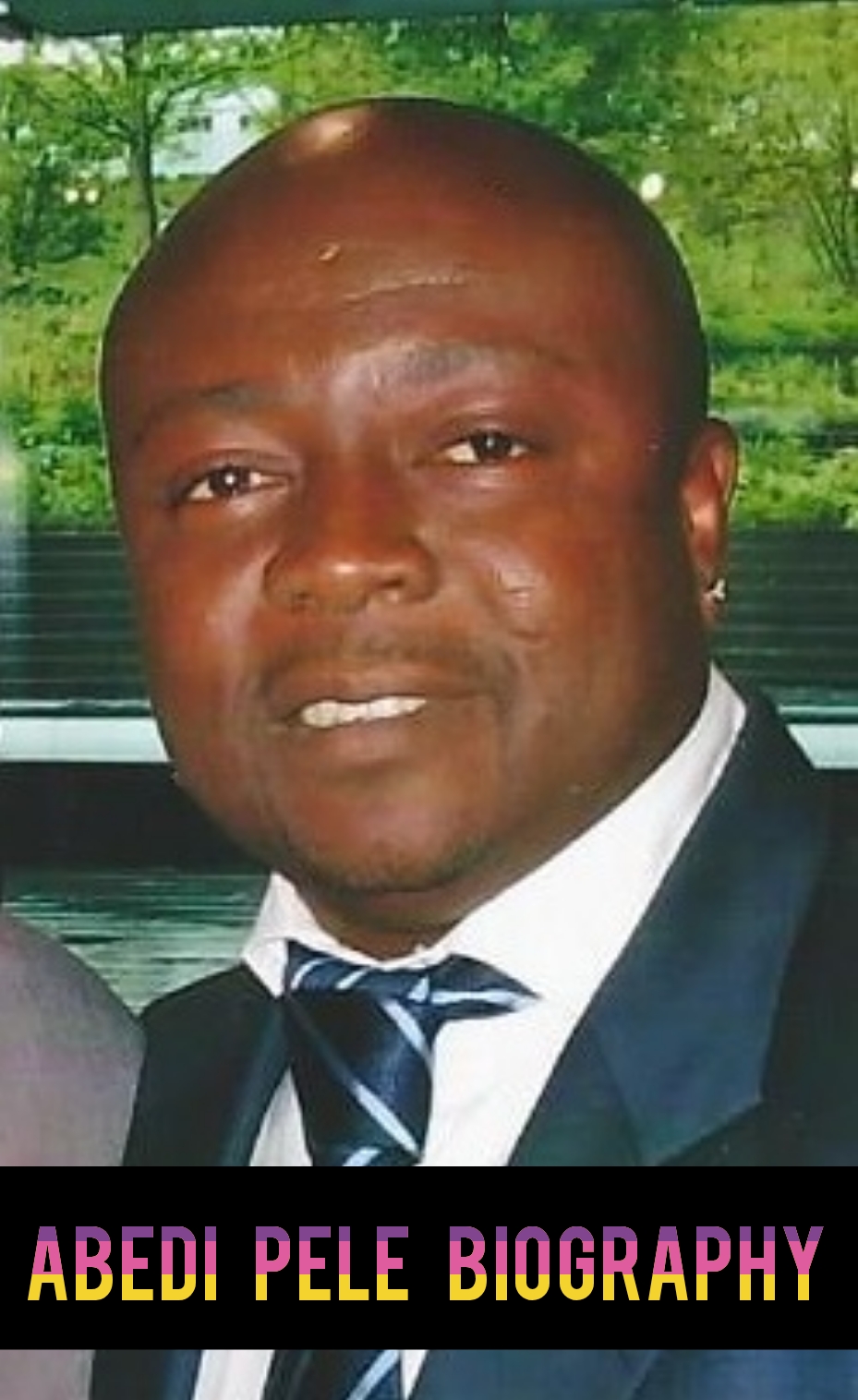
Abedi Pele Biography
Abedi Pele stands among the finest footballers Africa has ever produced. Known for his vision, skill, and leadership, he helped open doors for African players in Europe and left a lasting mark on the game both at club and international level. From modest beginnings in Ghana to lifting the UEFA Champions League with Olympique de Marseille, his career remains a source of pride for his nation and inspiration across the continent.
His story shows how talent combined with determination can overcome limited resources and create a legacy that extends far beyond the pitch. This biography explores the full path of the man known as the Maestro and the African Maradona.
Abedi Pele An Unforgettable Nickname and Lasting Impact
Few players earn a nickname that links them directly to the greatest name in football history. As a schoolboy in Ghana, Abedi Ayew showed such natural ability with the ball that coaches and teammates began calling him Pele after the Brazilian legend. The name stuck for life and later grew into additional titles such as the African Maradona and the Maestro. That early recognition pointed to a career filled with moments of pure brilliance, including a decisive role in Marseille becoming the first French club to win the European Cup. The nickname continues to remind fans of the magic he brought to every match he played.
Abedi Pele Early Life
Abedi Ayew was born on 5 November 1964 in the town of Kibi, also known as Kyebi, in the Eastern Region of Ghana. He grew up in Dome, a community on the northern outskirts of Accra. His family lived modestly, and from a young age he helped his mother sell coal to support the household. Football offered an escape and a path forward. He played barefoot on dusty pitches with balls made from socks or plastic bags, developing the close control and creative vision that would define his style.
He attended Ghana Senior High School in Tamale. There his skills stood out so clearly that the Pele nickname took hold. The headmaster, B.A. Fuseini, played an important role in his development, offering guidance and support that Abedi later described as fatherly. Fuseini even travelled to Dome to speak with the family and help arrange opportunities for the young player. Abedi has often said that much of what he achieved in life can be traced back to the lessons and care he received during those school years.
His early football steps came with local sides such as the Great Falcons. By his mid teens he joined Real Tamale United, where he scored freely and attracted wider attention. The combination of natural talent and the discipline gained from school life prepared him for the professional path that followed.
Abedi Pele Personal Life
Abedi Pele married Maha Ayew, a businesswoman of Lebanese descent, and the couple have built a strong family life centred on mutual support. They have four children: three sons named André, Jordan, and Rahim (also known as Ibrahim), and a daughter named Imani. All three sons followed their father into professional football and have represented the Ghana national team. André and Jordan have enjoyed long careers in Europe and have captained the Black Stars at different times. Rahim has also played at a high level. Imani has pursued her own path outside the game.
The Ayew family is widely regarded as one of the most successful football families in African history. Abedi’s brothers, Kwame and Sola Ayew, also played professionally in Ghana and for the national youth sides. The shared passion for the game has kept the family closely connected through the years.
Abedi has spoken about the importance of stability at home. In conversations with other players he has stressed that keeping a strong family foundation helps a career last longer and brings greater personal satisfaction. Away from football he has shown interest in youth development and community work. He maintains a respectful and private approach to personal matters while remaining open about the values of hard work and family unity that guided his own rise.
Abedi Pele Rise to Prominence
Abedi’s professional journey began in earnest with Real Tamale United in the late 1970s and early 1980s. His performances earned a call up to the Ghana national team while he was still a teenager. In 1982, at just seventeen years old, he was part of the Black Stars squad that won the Africa Cup of Nations in Libya. That early success marked him as a player of special promise.
After the tournament he moved to Al Sadd in Qatar, where he helped the club win the national championship. Short spells followed in Switzerland with FC Zurich and back in Ghana before he made the important step into European football. In 1986 he joined Chamois Niort in France. Moves to Mulhouse and then Olympique de Marseille followed. At Marseille he began to show the full range of his ability as an attacking midfielder who could create chances, score goals, and control the tempo of matches.
A loan or period at Lille helped him refine his game further. When he returned to Marseille he became a central figure in one of the strongest sides in Europe. The breakthrough moment arrived during the early 1990s when Marseille challenged for domestic and continental titles. His vision and technique made him a key link between midfield and attack. Opponents found it difficult to contain his movement and passing range. By the time he helped Marseille reach the 1993 UEFA Champions League final, he had already established himself as one of the leading African players of his generation.
Abedi Pele Major Achievements
The peak of Abedi Pele’s club career came with Olympique de Marseille. He contributed to multiple French league titles in the late 1980s and early 1990s and played a decisive role in the 1993 Champions League campaign. In the final against AC Milan he delivered the corner kick from which Basile Boli scored the only goal of the match. Marseille became the first and still the only French club to lift the European Cup. That victory remains one of the proudest moments in French club football history and a landmark for African players in Europe.
Individually he collected the African Footballer of the Year award three years in a row from 1991 to 1993, a feat no other player has matched. He also won the BBC African Footballer of the Year award and the Golden Ball as the best player at the 1992 Africa Cup of Nations. Although Ghana lost the final of that tournament to Ivory Coast on penalties, Abedi’s performances earned widespread praise and the additional nickname African Maradona. He finished high in the FIFA World Player of the Year voting in both 1991 and 1992, one of the first African players to do so.
For Ghana he earned more than sixty caps and scored thirty three goals. He captained the Black Stars for several years and appeared in multiple Africa Cup of Nations tournaments. In 1998 the Ghanaian government awarded him the Order of the Volta, the country’s highest civilian honour, in recognition of his service to the nation through sport.
Later in his career he played for Olympique Lyonnais, Torino in Italy, 1860 Munich in Germany, and Al Ain in the United Arab Emirates. He retired in the late 1990s after a career that spanned more than two decades and took him across several continents.
Abedi Pele Challenges and Setbacks
Poverty shaped his early years and required him to balance school, work, and football. Leaving home for opportunities abroad meant adjusting to new cultures, languages, and playing styles. European football in the 1980s was not always welcoming to African players, and Abedi had to prove himself repeatedly at each new club.
One of the deepest disappointments of his career was that Ghana never qualified for the FIFA World Cup during his playing years. He took part in several qualifying campaigns but the Black Stars did not reach the finals until 2006, long after he had retired. Many observers still regard him as one of the finest players never to appear at a World Cup.
At Marseille a major corruption scandal surrounding match fixing and financial issues led to the club’s temporary relegation and the departure of several key figures. Abedi moved on to Lyon and continued his career, showing the resilience that had carried him from Dome to the European stage. Later, after retirement, he faced a controversy involving alleged irregularities in a lower league promotion play off connected to his club Nania FC. An initial guilty finding by the Ghana Football Association was later overturned on appeal after procedural problems were identified. He continued his work in football development despite the public scrutiny.
Throughout these difficulties he maintained a focus on the next challenge rather than dwelling on setbacks. His ability to adapt and keep performing at a high level became one of the defining traits of his career.
Abedi Pele Legacy and Current Status
Abedi Pele’s influence reaches far beyond the goals and trophies he collected. He was among the first African players to succeed consistently at the highest level of European club football and helped change perceptions about the quality of talent coming from the continent. His three consecutive African Player of the Year awards set a standard that later stars have aimed to match. The success of his sons André, Jordan, and Rahim has extended the family name into a new generation of Black Stars players and European clubs.
After retiring he founded Nania FC in Ghana with the aim of developing young players who might otherwise lack opportunities. He has remained involved with the club as president and has continued to work with FIFA and CAF committees. He has taken part in numerous charity matches and ambassadorial roles. In recent years he has been seen training with Nania players and demonstrating the same free kick technique that once delighted crowds. He continues to speak about the values of discipline, family, and giving back to the game that gave him so much.
His place in Ghanaian football history is secure. He is widely regarded as the greatest player the country has produced and one of the finest Africa has ever seen. The Order of the Volta, the Champions League medal, and the three African Player of the Year trophies form a collection that few can equal.
Conclusion
Abedi Pele’s life shows that exceptional skill, when paired with hard work and strong personal values, can lift a person from humble surroundings to global recognition. He carried the hopes of Ghana on the international stage, helped a French club achieve historic success, and raised a family that continues to represent the nation with pride. His story remains a powerful example for young players across Africa who dream of following a similar path. The Maestro’s legacy lives on every time a Ghanaian child picks up a ball and imagines what is possible.
FAQs
Who is Abedi Pele?
Abedi Pele is the professional name of Abedi Ayew, a retired Ghanaian footballer widely regarded as one of the greatest African players of all time. He played as an attacking midfielder and captained the Ghana national team.
When and where was Abedi Pele born?
He was born on 5 November 1964 in Kibi in the Eastern Region of Ghana and grew up in Dome near Accra.
Why is he called Abedi Pele?
He received the nickname Pele as a schoolboy because his football skills reminded people of the Brazilian legend Pelé. The name stayed with him throughout his career.
What are Abedi Pele’s greatest achievements?
He won the UEFA Champions League with Marseille in 1993, claimed the African Footballer of the Year award three consecutive times from 1991 to 1993, and helped Ghana win the Africa Cup of Nations in 1982. He also received the Order of the Volta from the Ghanaian government.
Who is Abedi Pele’s wife?
He is married to Maha Ayew, a businesswoman who has supported him throughout his career and family life.
How many children does Abedi Pele have?
He has four children: André, Jordan, Rahim, and Imani. The three sons have all played professional football and represented Ghana.
Did Abedi Pele play in the World Cup?
No. Ghana did not qualify for the FIFA World Cup during his playing career, although he took part in several qualifying campaigns.
Which clubs did Abedi Pele play for in Europe?
His main European clubs included Olympique de Marseille, Lille, Olympique Lyonnais, Torino, and 1860 Munich.
What does Abedi Pele do now?
He is involved with Nania FC in Ghana as president and continues to support youth development and football related charity work. He also maintains roles connected to FIFA and CAF.
Why is Abedi Pele considered a legend in Ghana?
He is seen as the greatest footballer the country has produced because of his skill, leadership, international success, and the way he inspired later generations of Ghanaian players, including his own sons.