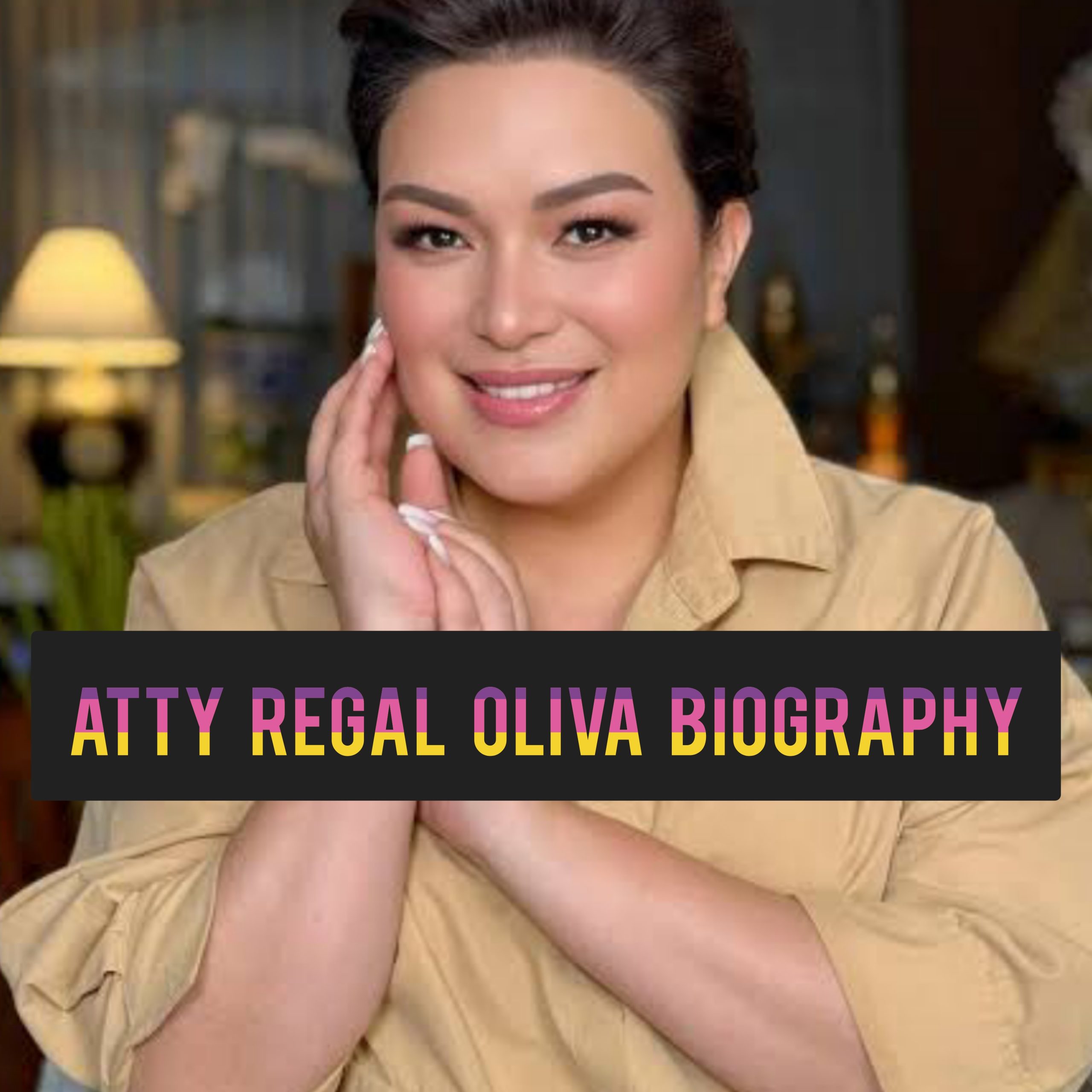
Atty Regal Oliva Biography
Atty. Regal Mendoza Oliva stands as one of the most recognizable legal voices emerging from the Visayas in recent years. A well known Cebu based lawyer, former city treasurer, digital commentator, and advocate for equality, she has built a public presence that combines sharp legal analysis with an accessible style that reaches millions. Her work spans local government finance, institutional reform, gender inclusion, and national political commentary, making her a figure who bridges the technical world of law with everyday public understanding.
Through her platform known as Regal POV and her role as a pillar anchor with Peanut Gallery Media Network, she has explained complex issues such as constitutional questions, due process, and policy gaps in language that ordinary citizens can follow. Her journey from a childhood marked by difference to leadership in the legal community offers a story of persistence, institutional change, and the quiet power of refusing to accept closed doors.
Atty Regal Oliva Early Life
Atty Regal Oliva was born on June 18, 1977, in Cebu. She grew up in a family with deep roots in public service and the law. Her grandfather, Alejandro Mendoza, served as a judge in Mandaue when it was still a town and in other municipalities. Her mother, Ofelia Mendoza Oliva, worked as city treasurer of Toledo and became a lasting example of strength and integrity. Young Regal often accompanied her mother to city hall, absorbing the atmosphere of local government long before she understood its formal structures.
She attended an all boys school in Cebu, specifically Sacred Heart School. In those years the world offered few words for the feelings she carried. She has said she never felt she was a heterosexual male or simply a gay man. She identified as a girl from early on. At around age twelve she recognized attraction to the same sex, yet gender identity itself had always been present. Walking through the campus gardens, she imagined herself as a princess from the movies she loved. School authorities noticed what they considered too feminine behavior and called her father. The message was clear that being herself was wrong.
Her father, shaped by the expectations of an earlier generation, struggled to accept her. He issued orders to reform or leave. Looking back, she understands that his reaction came from fear of how society would treat his child. Her mother responded differently. In public she stood with her husband. In private she encouraged Regal’s artistic interests, including drawing women in elaborate gowns inspired by fashion magazines and the glamorous style of Imelda Marcos. Those quiet acts of acceptance taught lessons that words alone could not. Regal has often said that when people ask where her strength comes from, she answers that it was born from the strong woman who made her.
High school brought constant struggle. Every time she expressed herself, it was treated as a problem. She learned to wear a mask, to walk, talk, and act according to expectations of masculinity. The performance was nearly flawless until moments of genuine expression broke through. Faith added another layer of difficulty. Sunday sermons described people like her as living in sin. She questioned why God had created her this way and why her truth should be treated as shameful. The internal conflict lasted years. Eventually she found peace not because society had changed, but because she stopped apologizing for existing.
She pursued higher education at Silliman University in Dumaguete. There she earned a bachelor’s degree in political science in 1999 and a master’s degree in fiscal administration in 2001. The university was a Christian institution that at the time frowned on open expressions of difference. A friend once advised her not to be too flamboyant if she wanted to succeed. Yet she refused to disappear. She helped form Bakla ng Silliman Lumalaban, an early gay rights group on campus. She ran for student government president, lost by a narrow margin attributed in part to her identity, and later returned to win by a landslide. She also became the youngest president of the Silliman Alumni Association. These experiences taught her that visibility and persistence could shift institutional attitudes.
Atty Regal Oliva Personal Life
Atty Regal Oliva has spoken of herself as a lover of life, a patron of the arts, and someone who once dreamed of becoming a fashion designer. Broadway musicals and elegant style remain part of her personal world. She has described herself as flamboyant in the best sense, carrying a regal presence that matches her name. Friends and colleagues note her quick wit, humor, and ability to lighten serious discussions without losing substance.
She has maintained a respectful privacy around intimate relationships while openly embracing her identity as a transgender woman. Family remains central. The influence of her mother continues to guide her sense of integrity and courage. She has also spoken of the pain of loss. In 2009 both her father and a close best friend fell seriously ill in the same period. Caring for them in the hospital became a turning point that deepened her resolve to enter law school and complete the long delayed childhood dream of becoming a lawyer.
Lesser known aspects of her life include her quiet work as a resource speaker on local taxation, governance, and human rights both in the Philippines and abroad. She completed a special diploma on international human rights at an Australian Christian university in Sydney. She values sister city relationships and cultural exchange, having spoken of visits to Japan and the warmth of Filipino hospitality she hopes others will discover. Contentment, she has said, comes not from titles but from supportive relationships and the knowledge that her path has made the next person’s steps a little easier.
Atty Regal Oliva Rise to Prominence
After finishing her master’s degree, Atty Regal Oliva began her public service career in Tacloban City. She spent roughly seven years at city hall, first as chief of staff to then Mayor Alfredo Bejo Romualdez and later as head of the licensing division under the treasury office. Those years taught her the practical workings of local government and the reality of public scrutiny. During labor disputes, protesters carried placards that attacked her identity rather than her work. The experience forced her to expend enormous energy simply to make people look beyond the labels and evaluate her actual performance.
She returned to Mandaue around 2008, first as acting treasurer and then as city treasurer. By 2010 she held the regular post and would serve a total of sixteen years in the city’s finance office, eleven of them in a permanent capacity. She became one of the youngest city treasurers in the country. Under her leadership the city’s revenue collection and financial systems improved markedly. She pushed for modernization, digitalization, and technology driven reforms that strengthened public finance management. Colleagues and local officials later described her as a key contributor to the growth of Mandaue’s budget and fiscal health.
While working full time, she enrolled at the University of San Carlos College of Law. The decision was fueled by the losses of 2009 and a lifelong desire to understand the law more deeply. Balancing city hall duties with evening classes demanded discipline. She has said she thrives under pressure and prefers to keep many responsibilities in her hands at once. In 2014 she passed the Philippine Bar examinations and took her oath as a lawyer.
A defining moment occurred when she arrived at law school wearing high heels and was stopped at the gate. Rules required male attire. Instead of turning away, she walked into the dean’s office and asked a simple constitutional question: where does the Constitution prohibit studying law while wearing high heels? The university granted an exemption. Years later that individual exemption grew into formal institutional policy allowing transgender students at the University of San Carlos to wear uniforms and maintain appearances consistent with their gender identity. It became the first Catholic educational institution in the country to recognize such expression.
In the courtroom she faced similar questions. A judge once asked whether to address her as panyero or panyera. She left the decision to the court. The judge chose panyera. Such exchanges helped open broader conversations that eventually reached the Supreme Court. In 2022 the Code of Professional Responsibility and Accountability expressly allowed lawyers to appear in attire consistent with their gender identity.
While serving in Mandaue she also helped advance the city’s Anti Discrimination Ordinance and LGBT Code in 2013. The measure gave legal protection to LGBTQIA plus residents years before many other local governments adopted similar safeguards. These early institutional wins marked her transition from behind the scenes public servant to visible advocate.
Atty Regal Oliva Major Achievements
Atty Regal Oliva’s career achievements span public finance, legal leadership, advocacy, and digital education. As city treasurer she modernized revenue systems and strengthened local fiscal capacity. Her work earned recognition within the Philippine Association of Local Treasurers and Assessors, where she later served as executive vice president.
In the legal community she rose steadily. She served as president of the Integrated Bar of the Philippines Cebu City Chapter, deputy governor for the Eastern Visayas Region, and national director for gender equality within the IBP. In 2023 she made history as the first transgender woman elected president of the Cebu Lady Lawyers Association. The election signaled growing inclusivity within professional legal organizations in the Philippines. She has also served as internal vice president of the Zonta Club of Cebu II, a women’s advocacy group focused on gender equality, education, and empowerment.
Her digital platform, Regal POV, has become one of her most far reaching contributions. As an anchor with Peanut Gallery Media Network she broke down national issues such as the International Criminal Court proceedings involving former President Rodrigo Duterte, questions of detention and due process, the absence of divorce in the Philippines, annulment limitations, and gaps in anti drunk driving enforcement. Her clear explanations attracted a rapidly growing audience. By early 2026 she had overtaken other network anchors in total followers and become the first PGMN anchor to surpass two million Facebook followers. Later that year she crossed 2.5 million and continued climbing past three million across platforms. Her content combines legal precision with humor and directness, making complex topics understandable to ordinary viewers.
She is a sought after speaker on legal ethics, governance, public accountability, human rights, diversity and inclusion, and local taxation. She has addressed mandatory continuing legal education programs and forums on ethical lawyering in the social media age. Her TEDx talk at Silliman University years earlier already framed her life as a journey of coming out and claiming dignity in public service.
Beyond titles, her impact appears in concrete policy changes. The University of San Carlos transgender student guidelines, the 2022 courtroom attire rules, and Mandaue’s anti discrimination ordinance all carry traces of her persistence. She has consistently framed her advocacy around equality rather than special privilege, arguing that LGBTQIA plus Filipinos seek the same protection and access that others already enjoy.
Atty Regal Oliva Challenges and Setbacks
The path was never smooth. Childhood and adolescence brought bullying at school, prejudice in the community, and sermons that painted her existence as sinful. Family acceptance was incomplete for years. The mask she wore exacted an emotional cost she later described as extremely heavy.
In Tacloban public protests targeted her identity rather than her competence. Entering law school required a constitutional argument simply to walk through the gate in heels. Early courtroom appearances forced judges and colleagues to confront their own assumptions about address and appearance.
Political ambition brought new obstacles. In 2024 she resigned as Mandaue city treasurer to run for the lone congressional district of Mandaue City. She challenged the incumbent and accused political forces of orchestrating an earlier transfer to Navotas as a way to sideline her. The 2025 election did not go her way. She lost. Yet she has spoken without bitterness, noting that politics expanded her understanding of ordinary lives and that service can take many forms beyond a single office.
Online commentary and public disagreement have also brought criticism and name calling. She has responded by emphasizing due process, the presumption of innocence, and the constitutional protection of free speech. In one statement she reminded audiences that free speech is not a privilege granted by government but a freedom that must remain protected especially in times of controversy.
Each setback became material for growth. She learned to measure progress not by the absence of opposition but by the doors that remained open for those who followed.
Atty Regal Oliva Legacy and Current Status
Today Atty Regal Oliva continues as a practicing lawyer, law professor, digital commentator, and advocate. Her platform reaches millions and shapes public conversation on law, politics, and governance. She remains active in legal education and professional forums, speaking on ethics in the digital age and the responsibilities of lawyers in public discourse.
Her leadership in CELLA and Zonta Club of Cebu II keeps her connected to women’s advocacy and gender justice. She continues to press for the SOGIE Equality Bill, clarifying that the measure seeks equal protection rather than special rights. Younger transgender lawyers and students now enter classrooms and courtrooms under policies that did not exist when she began. That institutional shift forms part of her quiet legacy.
She has not closed the door on future public service. In interviews she has left open the possibility of running again while focusing for now on the work of explanation and accountability through her media platform. Her presence in national discussions on due process, institutional gaps, and constitutional freedoms keeps her relevant far beyond Cebu.
Conclusion
The story of Atty Regal Oliva is not only about personal triumph. It is about the steady work of turning individual refusals into collective openings. From a child walking through school gardens imagining herself a princess to a lawyer who asked the Constitution itself to justify exclusion, she has insisted that no one belongs locked inside a box. Her life demonstrates that dignity, competence, and courage can reshape institutions one policy, one courtroom, and one conversation at a time. In a country still wrestling with questions of equality and accountability, her voice remains a clear reminder that the law is strongest when it protects the full humanity of every person who stands before it.
FAQs
Who is Atty Regal Oliva?
Atty Regal Mendoza Oliva is a Cebu based lawyer, former Mandaue City treasurer, and digital legal commentator known for her platform Regal POV. She is the first transgender woman to serve as president of the Cebu Lady Lawyers Association and has built a large following by explaining complex legal and political issues in accessible language.
When was Atty Regal Oliva born?
She was born on June 18, 1977, in Cebu.
What is Atty Regal Oliva known for?
She is known for her long service as city treasurer of Mandaue, her leadership roles in the Integrated Bar of the Philippines and the Cebu Lady Lawyers Association, her advocacy for LGBTQIA plus rights and gender equality, and her widely followed legal and political commentary on social media and Peanut Gallery Media Network.
Did Atty Regal Oliva run for political office?
Yes. In 2024 she resigned as city treasurer to run for the lone congressional district of Mandaue City in the 2025 elections. She did not win the race but has spoken of the experience as valuable for understanding community needs.
What educational background does Atty Regal Oliva have?
She earned a bachelor’s degree in political science in 1999 and a master’s degree in fiscal administration in 2001 from Silliman University. She completed her law degree at the University of San Carlos and was admitted to the Philippine Bar in 2014. She also studied international human rights in Australia.
How has Atty Regal Oliva contributed to LGBTQIA plus rights?
She helped advance Mandaue City’s Anti Discrimination Ordinance and LGBT Code in 2013. Her individual challenges at the University of San Carlos contributed to formal policies allowing transgender students to express their gender identity. Her courtroom presence helped prompt later rules permitting lawyers to wear attire consistent with their gender identity. She continues to advocate for the SOGIE Equality Bill as a measure of equal protection.