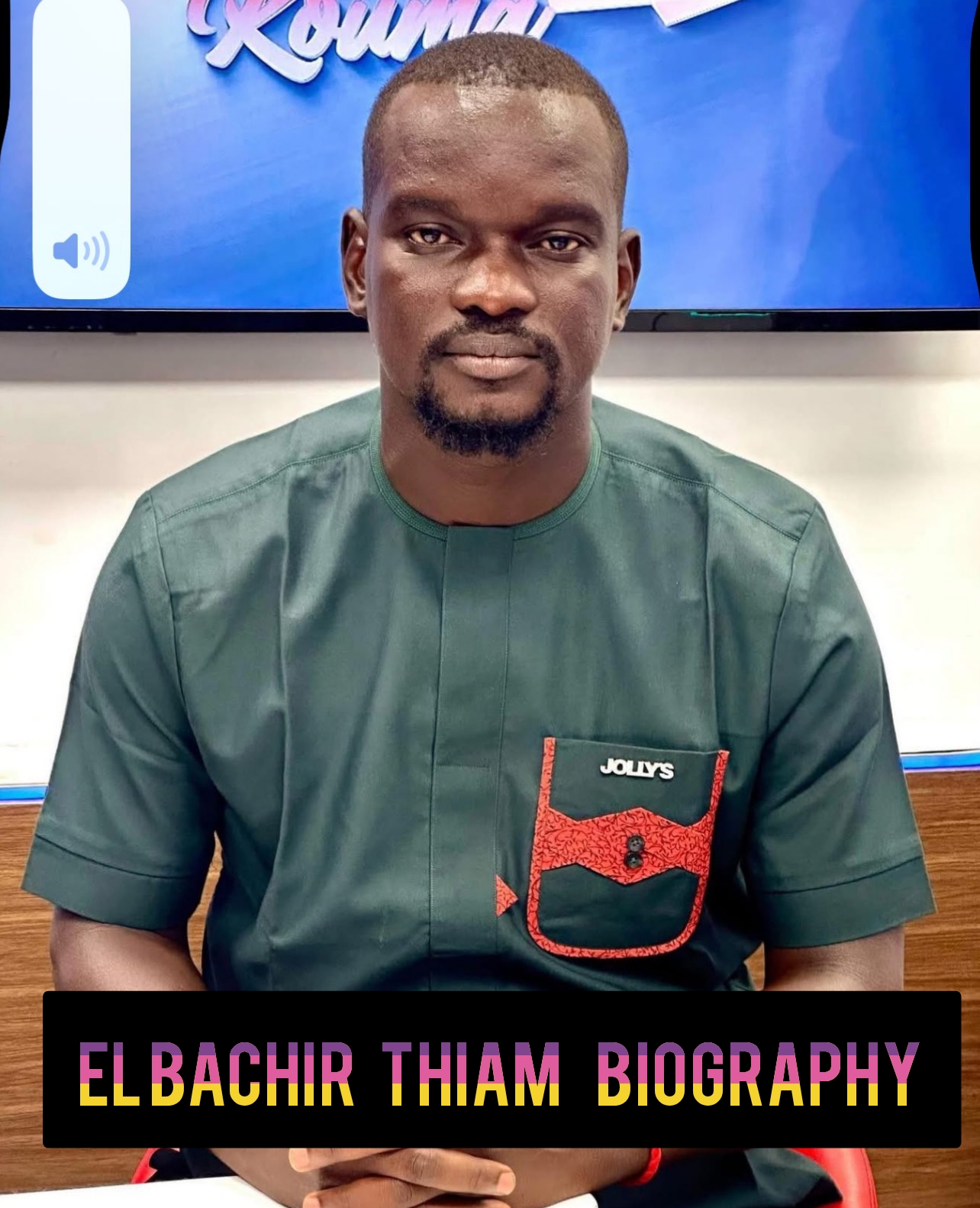
El Bachir Thiam Biography
El Bachir Thiam stands as a compelling figure in contemporary Malian public life, a journalist and civil society activist whose experiences mirror the turbulent path of his nation’s recent political transitions. His story is one of quiet determination meeting sudden international attention, shaped by a commitment to constitutional order and free expression in a period marked by restricted civic space. Working with the MaliActu website and engaging in political movements, he has become associated with efforts to advocate for democratic principles during Mali’s prolonged transitional period. This biography draws on publicly available reports from United Nations experts, human rights organizations, and local accounts to present a clear picture of his known activities and the circumstances that brought him wider notice.
What draws many readers to the story of El Bachir Thiam is the stark timing of events in May 2025. On 7 May he publicly criticized what he described as an “infinite transition” in Mali. The very next day, on 8 May, he was seized in broad daylight in Kati by a group of hooded men traveling in an unmarked vehicle. For more than four months his whereabouts remained unknown, prompting appeals from his family, civil society, and United Nations experts. His eventual release and reunion with his family, including the child born during his absence, underscored both the human cost of such detentions and the resilience that followed.
El Bachir Thiam Early life
Public records do not provide a confirmed date of birth for El Bachir Thiam, nor detailed accounts of his childhood, parents, or formal education. What is known places him as a young man rooted in Kati, the military garrison town near Bamako that has long held strategic importance in Malian political and security affairs. Local descriptions portray him as one of the more influential young leaders in Kati, someone who emerged through community engagement rather than through high-profile national office. His early activism is linked to the wave of public discontent that culminated in the events of 18 August 2020, when military officers removed the elected government amid widespread protests over insecurity, corruption, and governance failures. Accounts from Malian media describe him as having been at the forefront of several local efforts aimed at bringing about change during that period.
Growing up and working in Kati would have exposed him to the realities of a town closely tied to the armed forces and to the broader challenges facing Mali: persistent insecurity in the north and center, economic pressures, and debates over the proper length and character of any transitional authority. Journalism offered one avenue for engagement. He became associated with MaliActu, an online platform covering national developments. Through writing and public commentary he addressed questions of governance and fundamental freedoms. Parallel to this work he joined civil society groups, including the Collectif Sirako, and took on the role of spokesperson and communications officer for a youth movement that called for a return to constitutional order. These activities positioned him within networks seeking peaceful avenues for political change rather than confrontation.
His formal affiliation with the political party Yelema – Le Changement, led by former Prime Minister Moussa Mara, came later and appears to have been relatively recent at the time of his disappearance. Yelema itself was dissolved in 2024 along with other political parties under transitional measures. Membership in such a formation, even after its official dissolution, carried symbolic weight in a climate where open criticism of the transition’s duration had become increasingly sensitive. The limited biographical details available suggest a trajectory common to many young Malian activists of his generation: local roots, practical involvement in community and media work, and a gradual move into more structured political and civic organizations as opportunities and pressures evolved.
El Bachir Thiam Personal life
El Bachir Thiam is married to Mariam Dagnon. In July 2025, while he remained missing, she filed a formal complaint for kidnapping and disappearance with the Public Prosecutor of the Kati Court of First Instance. The complaint described how he had last been seen in Kati around midday on 8 May and how witnesses reported armed, hooded individuals presenting themselves as gendarmerie agents taking him away by force. During the months of uncertainty she continued to seek information through available channels. Reports later noted that she gave birth to their child while he was still in secret detention, an event he later described as having caused him profound moral distress because he experienced it from a distance with no contact.
He has at least one younger brother, who publicly expressed relief upon the family’s reunion, describing the release as a new lease on life. Beyond these family references, little is publicly documented about hobbies, personal interests, or private routines. Respect for privacy and the limited nature of available sources mean that further details remain outside the public record. What emerges clearly is the central place of family in the narrative of his detention and return. The anxiety of relatives searching police stations and gendarmeries in Bamako and Kati, the formal legal step taken by his wife, and the emotional weight of a birth occurring in his absence all illustrate the personal dimension of an enforced disappearance. After his release he spoke of emerging strengthened and more determined, reaffirming attachment to democracy, the rule of law, social justice, and fundamental freedoms.
El Bachir Thiam Rise to prominence
El Bachir Thiam was not a nationally dominant political figure before May 2025. Contemporary accounts described him as a young militant of Yelema who was little known to the broader public until his disappearance made his name widely recognized. His rise to prominence was therefore inseparable from the circumstances of his seizure and the subsequent international attention it attracted. On 7 May 2025 he voiced public criticism of the prolonged transitional period, referring to it as an “infinite transition.” The following day, in front of witnesses in Kati, a group of at least five hooded and unidentified men in a gray Toyota V8 with tinted windows and no license plate took him away. Relatives and colleagues searched stations and gendarmeries without success. No official information on his status or location was provided for months.
The context was one of growing restrictions on civic space. In April 2025 transitional authorities had adopted laws that further limited political and associative activity. Peaceful protest movements involving political groups, civil society organizations, and youth networks had begun in early May. Thiam’s role as spokesperson for a youth movement calling for constitutional order placed him among those voicing concerns about the direction of the transition. His association with the dissolved Yelema party and with former Prime Minister Moussa Mara, who himself later faced detention, added to the perception that he was targeted in part because of those links. Some observers suggested that his residence in Kati, a military stronghold, made open dissent particularly unwelcome.
Local and international pressure gradually intensified. His wife’s formal complaint in mid-July kept the matter before judicial authorities. Human rights organizations, Malian civil society, diaspora voices, and media outlets continued to raise the case. On 9 September 2025 United Nations experts issued a public call for his immediate and unconditional release, describing the disappearance as a flagrant violation of Mali’s international obligations and warning of the physical and psychological toll of prolonged secret detention. They also urged an end to broader crackdowns on civil society, human rights defenders, and political opponents. The combination of domestic legal steps, civil society mobilization, and high-level international attention brought his situation into sharper focus and contributed to the eventual outcome.
El Bachir Thiam Major achievements
The principal public achievement associated with El Bachir Thiam lies in the consistency of his civic engagement and the visibility his case ultimately gave to questions of enforced disappearance and civic space in Mali. As a journalist with MaliActu he contributed to public discussion of governance and freedoms. As a member of civil society organizations and as spokesperson for a youth movement he helped articulate calls for a return to constitutional order through peaceful means. His participation in local efforts surrounding the 2020 political changes and his later affiliation with Yelema reflected a sustained, if not always highly publicized, commitment to political participation.
The international response to his detention itself became a form of impact. United Nations experts, the Media Foundation for West Africa, ARTICLE 19, and other organizations used his case to highlight patterns of arbitrary detention and restrictions on expression. His release on or around 26 September 2025 was welcomed by these groups as a positive signal, even as they called for clarification of the circumstances and accountability. In a subsequent public statement he described his detention as resulting from his positions rather than from any criminal acts, recounted the isolation and anxiety of the period, and reaffirmed his attachment to democratic principles and the need for greater political courage and citizen participation in addressing Mali’s multifaceted crisis. The former Yelema party and other supporters provided material and moral assistance to his family during the ordeal, illustrating networks of solidarity that persisted despite the party’s dissolution.
These elements—journalistic work, organizational roles, public criticism of prolonged transition, survival of secret detention, and a renewed public commitment after release—constitute the measurable contributions visible in the record. In a constrained environment, maintaining a consistent voice and emerging with determination intact represent significant personal and civic achievements.
El Bachir Thiam Challenges/setbacks
The central challenge of El Bachir Thiam’s recent public life was the enforced disappearance that began on 8 May 2025. Taken in daylight in front of witnesses, he was held for more than four months in an undisclosed location with no access to family, lawyers, or any judicial process. Relatives reported harsh conditions that included lack of air and light, poor hygiene, and reduced food. Unconfirmed social media rumors even claimed he had died. The absence of official information created prolonged anguish for his family, compounded by the birth of their child during this period. Other activists seized around the same time were released earlier, leaving him among the few remaining in secret detention and raising questions about selective targeting linked to his Yelema affiliation or his residence in Kati.
The broader political environment formed an ongoing obstacle. Laws restricting civic space, the dissolution of political parties, and a pattern of pressure on critical voices created risks for anyone publicly questioning the transition’s duration. Working as a journalist and activist in such conditions required navigating limited room for open debate. The physical and psychological strain of isolation, uncertainty about the future, and separation from family during a major personal event tested resilience. After release he acknowledged the heavy price paid yet stated that he emerged reinforced and more determined. The absence of public accountability for the detention itself remains an unresolved aspect of the case, as human rights groups have continued to call for investigation and clarification.
El Bachir Thiam Legacy/current status
As of the period following his September 2025 release, El Bachir Thiam has returned to private and public life in Mali. He has made at least one public statement reaffirming his commitment to democracy, the rule of law, social justice, and fundamental freedoms, and calling for greater political courage and citizen participation to address the country’s long-running crisis. Organizations that followed his case have treated the release as a positive development for civic space while insisting that it must be followed by broader guarantees of safety for journalists, activists, and political voices, as well as truth and possible reparations regarding the circumstances of the detention.
His experience has become part of the documented record of enforced disappearances and restrictions on expression during Mali’s transitional period. United Nations experts and human rights groups have cited it alongside other cases to illustrate patterns of concern. For younger activists and for those following Malian civic life, the episode illustrates both the risks attached to public criticism and the possibility of eventual release under sustained domestic and international attention. The precise long-term influence of his personal trajectory will depend on future developments in the country’s political landscape and on any continued public role he chooses to play. At present he stands as a living example of an individual who faced severe constraints, survived them, and restated his principles afterward.
Conclusion
The public record of El Bachir Thiam reveals a young Malian journalist and activist whose life intersected with the central tensions of his country’s recent history: the desire for constitutional order, the pressures of prolonged transition, and the costs that can accompany open expression. From local engagement in Kati through media work and organizational roles to the ordeal of secret detention and eventual release, the available facts portray consistency of purpose under difficult conditions. His story does not claim heroic exceptionality; rather it illustrates the ordinary courage required of many who continue to speak and organize when civic space narrows. The reflective takeaway is straightforward. In environments where information and association face constraints, the persistence of individuals who document, advocate, and endure contributes to keeping principles of accountability and rights visible. El Bachir Thiam’s experience, and the attention it received, serve as a reminder that such persistence matters both for those directly affected and for the broader possibility of open public life.
FAQs
Who is El Bachir Thiam?
El Bachir Thiam is a Malian journalist associated with the MaliActu website and a civil society activist who has been involved with organizations including the Collectif Sirako and a youth movement advocating return to constitutional order. He was also a member of the political party Yelema – Le Changement.
What happened to El Bachir Thiam in May 2025?
On 8 May 2025 he was seized in Kati by a group of hooded men in an unmarked vehicle shortly after publicly criticizing the prolonged transitional period in Mali. He was held in secret detention for more than four months.
When was El Bachir Thiam released?
He was released and reunited with his family around 26 September 2025 after more than four months of enforced disappearance.
What role did international organizations play?
United Nations experts issued a public call on 9 September 2025 for his immediate and unconditional release. Organizations such as ARTICLE 19 and the Media Foundation for West Africa followed the case and welcomed the eventual release while calling for further accountability and protection of civic space.
Is detailed information available about his early life?
Public sources do not provide a confirmed birth date, family background beyond his wife and a younger brother, or extensive educational details. Available accounts focus primarily on his activism and the events of 2025.