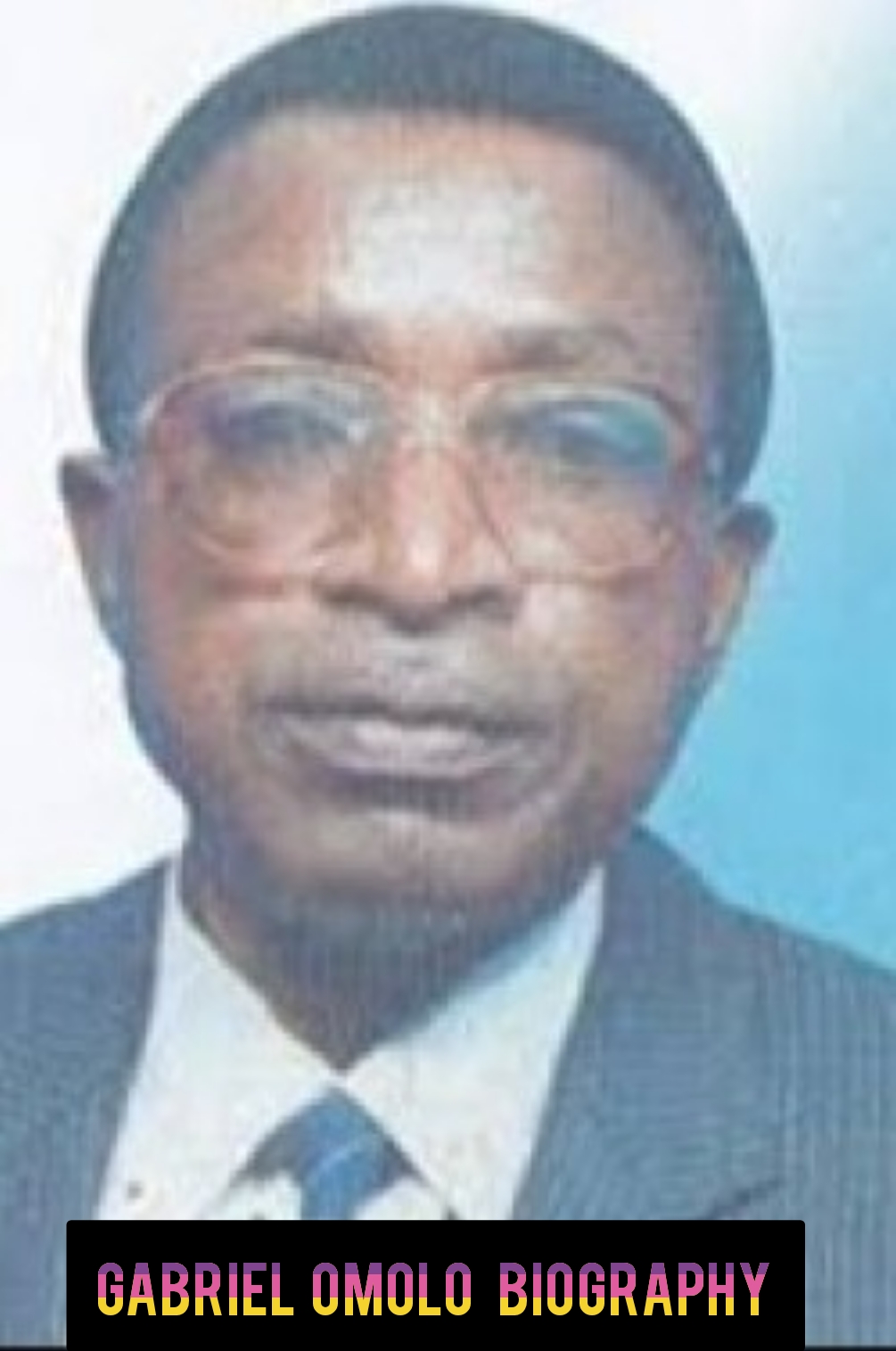
Gabriel Omolo Biography
Gabriel Omolo remains one of the defining voices of Kenyan popular music in the 1960s and 1970s. Best known for the enduring hit “Lunchtime,” he became the first Kenyan musician to receive an international gold disc after the song sold more than 150000 copies across East and West Africa. His songs captured the daily struggles of ordinary city workers with honesty and melody that still resonate today.
This biography traces the journey of a boy raised in Nairobi’s railway quarters who rose through the vibrant studio scene of the capital to become a respected composer, guitarist, and social commentator. Gabriel Omolo’s music helped shape the sound of an era and left a lasting mark on Kenya’s cultural memory.
Gabriel Omolo Early Life
Gabriel Omolo was born in 1939 in Kenya. He grew up in the railway quarters of Muthurwa in Nairobi and later moved with his family to Makongeni. These neighbourhoods were home to many working class families connected to the Kenya Railways, and the environment exposed young Omolo to the rhythms of urban life and the music that flowed through the city.
He attended St Peters Claver Primary School on Racecourse Road. At school he joined the choir and began learning the guitar. The combination of singing and instrumental practice laid the foundation for his future career. Nairobi in the late colonial and early independence years was a lively musical centre, with recording studios and bands experimenting with styles that blended local traditions with influences from across Africa and beyond. Omolo absorbed these sounds while still a student.
After leaving school he continued to develop his skills as a guitarist and singer. The city’s growing entertainment scene offered opportunities for young musicians who were ready to work hard. Omolo’s early exposure to both church music and the popular tunes of the day helped him form a flexible style that could move between entertainment and social observation.
Gabriel Omolo Personal Life
Gabriel Omolo kept much of his private life out of the public eye. He was a family man who maintained connections to his Luo roots in western Kenya. In later years he returned to his ancestral area and was eventually buried in Nyabeda Village in Ugunja Constituency, Siaya County.
Beyond music he showed a practical side. When the recording industry became less reliable he tried different ways of supporting himself. He ran a taxi business and operated a music store in Mombasa for a period. Between 1989 and 1995 he worked as a driver for the United Nations in Nairobi. These experiences kept him close to ordinary Kenyans and may have deepened the social awareness that appeared in his lyrics.
Colleagues and younger musicians remembered him as a steady professional who understood both the artistic and the business sides of music. He remained connected to the community of veteran artists known as the Zilizopendwa generation, those whose classic songs from earlier decades continued to be loved long after their first release.
Gabriel Omolo Rise to Prominence
Omolo’s professional career took shape in the 1960s when he joined the Equator Sound Band. The group was associated with Equator Sound Studio, one of the most important recording centres in Nairobi, run by Charles Worrod. There he worked alongside major figures of the time including Daudi Kabaka, Fadhili William, the Zambian musician Nashil Pichen Kazembe, and Peter Tsotsi. The studio environment was competitive and creative, producing many of the songs that defined Kenyan popular music of the period.
In 1968 tensions with the studio owner led several musicians, including Omolo, to leave. They found new support and continued recording. Omolo later played with the Blue Shade Band and then formed or led Apollo Komesha in the early 1970s. With this group he developed a strong partnership with Phonogram Records.
The turning point came in 1974 with the release of “Lunchtime,” also known as “Sasa ni Lunch Time.” The song described the hard daily life of casual labourers in Nairobi’s Industrial Area who struggled to afford even a simple midday meal. Its honest lyrics and catchy Benga influenced arrangement struck a chord with listeners far beyond Kenya. Sales reached 150000 copies across East and West Africa, an unprecedented figure for a Kenyan artist at the time. In September 1974 Omolo received an international gold disc from Phonogram. The presentation took place in Nairobi with company executives present. He was also given the Guinness Stout Effort Award, becoming the first musician in the country to receive that honour.
Gabriel Omolo Major Achievements
Gabriel Omolo’s greatest commercial and cultural success was “Lunchtime.” The gold disc certification marked a historic moment for Kenyan music, proving that local artists could achieve regional commercial success on a significant scale. With Apollo Komesha he recorded around twenty singles for Phonogram that together sold hundreds of thousands of copies.
His songwriting often addressed real social and political conditions. Early compositions included “Maro Oketho Ugunja.” He wrote songs responding to the assassinations of prominent Luo politicians Argwings Kodhek and Tom Mboya, placing him among artists who used music as a form of public commentary. His work belonged to the broader Benga and Zilizopendwa traditions that mixed danceable rhythms with messages about everyday life.
In later years he received official recognition. He performed at the first Mashujaa Day celebrations in 2010 and was awarded a Head of State Commendation. These honours acknowledged a career that had helped put Kenyan popular music on the regional map. His recordings continued to be played on radio and remained part of the shared soundtrack of older and younger generations alike.
Gabriel Omolo Challenges and Setbacks
Like many musicians of his generation, Omolo faced the instability of the recording industry. Relationships with studio owners could break down, as happened with Equator Sound in 1968. Commercial success did not always translate into lasting financial security. When the market for new recordings slowed he had to find other work, including driving and small business ventures.
Health problems affected him in his final years. He suffered from lung complications and died after a period of illness. The music industry in Kenya has often been criticised for celebrating artists mainly after their deaths rather than supporting them during their active careers. Omolo experienced periods when his earlier achievements received less attention than they deserved.
Despite these difficulties he continued to be regarded with respect by fellow musicians and by listeners who remembered the impact of “Lunchtime” and his other songs. He adapted to changing circumstances without abandoning his identity as an artist.
Gabriel Omolo Legacy and Current Status
Gabriel Omolo died on 3 January 2018 at Busia County Teaching and Referral Hospital at the age of seventy nine. He was buried in Nyabeda Village in Siaya County. His passing was noted across Kenyan media as the loss of one of the remaining links to the classic era of Nairobi studio music.
His song “Lunchtime” continues to be played and discussed whenever Kenyans reflect on the struggles of urban workers. The track has been remixed and referenced by later artists, showing its lasting power. Omolo is remembered as part of the generation that built the foundation of modern Kenyan popular music alongside figures such as Daudi Kabaka and Fadhili William.
Although he did not remain in the spotlight throughout his later decades, the gold disc achievement and the social honesty of his best known work secured his place in the country’s musical history. Younger listeners still discover his recordings through radio programmes dedicated to older Kenyan music and through digital platforms. In the story of Kenyan popular song, Gabriel Omolo stands as a pioneer who proved that local stories told with skill and heart could reach audiences across the continent.
FAQs
Who was Gabriel Omolo?
Gabriel Omolo was a Kenyan singer, guitarist, and composer best known for the 1974 hit “Lunchtime.” He was the first Kenyan musician to receive an international gold disc after the song sold more than 150000 copies in East and West Africa.
When was Gabriel Omolo born?
Gabriel Omolo was born in 1939 in Kenya. He grew up in the railway quarters of Muthurwa and Makongeni in Nairobi.
What was Gabriel Omolo’s biggest hit?
His most famous song is “Lunchtime,” also known as “Sasa ni Lunch Time.” The track described the hardships faced by casual labourers in Nairobi and became a regional success.
Which bands did Gabriel Omolo play with?
He performed with the Equator Sound Band in the 1960s alongside Daudi Kabaka, Fadhili William, and others. He later worked with the Blue Shade Band and led Apollo Komesha, the group with which he recorded his biggest successes.
When did Gabriel Omolo die?
Gabriel Omolo died on 3 January 2018 at the age of seventy nine after suffering from lung complications. He was buried in Nyabeda Village, Siaya County.
Why is Gabriel Omolo still remembered?
He is remembered as a pioneer who achieved the first international gold disc for a Kenyan artist and as a songwriter who captured the daily realities of ordinary people with honesty and musical skill. His work remains part of Kenya’s classic popular music heritage.
Conclusion
Gabriel Omolo’s career shows how closely music can reflect the life of a city and a nation. From the railway estates of Nairobi he rose to create a song that spoke for thousands of workers and earned historic recognition for Kenyan music. He faced the uncertainties of the industry and the need to reinvent himself when times changed, yet the best of his work continued to be heard.
His story reminds us that popular songs can carry both entertainment and truth. “Lunchtime” still echoes because it was rooted in real observation and genuine feeling. In the lasting presence of that music, Gabriel Omolo’s contribution to Kenya’s cultural life remains secure.