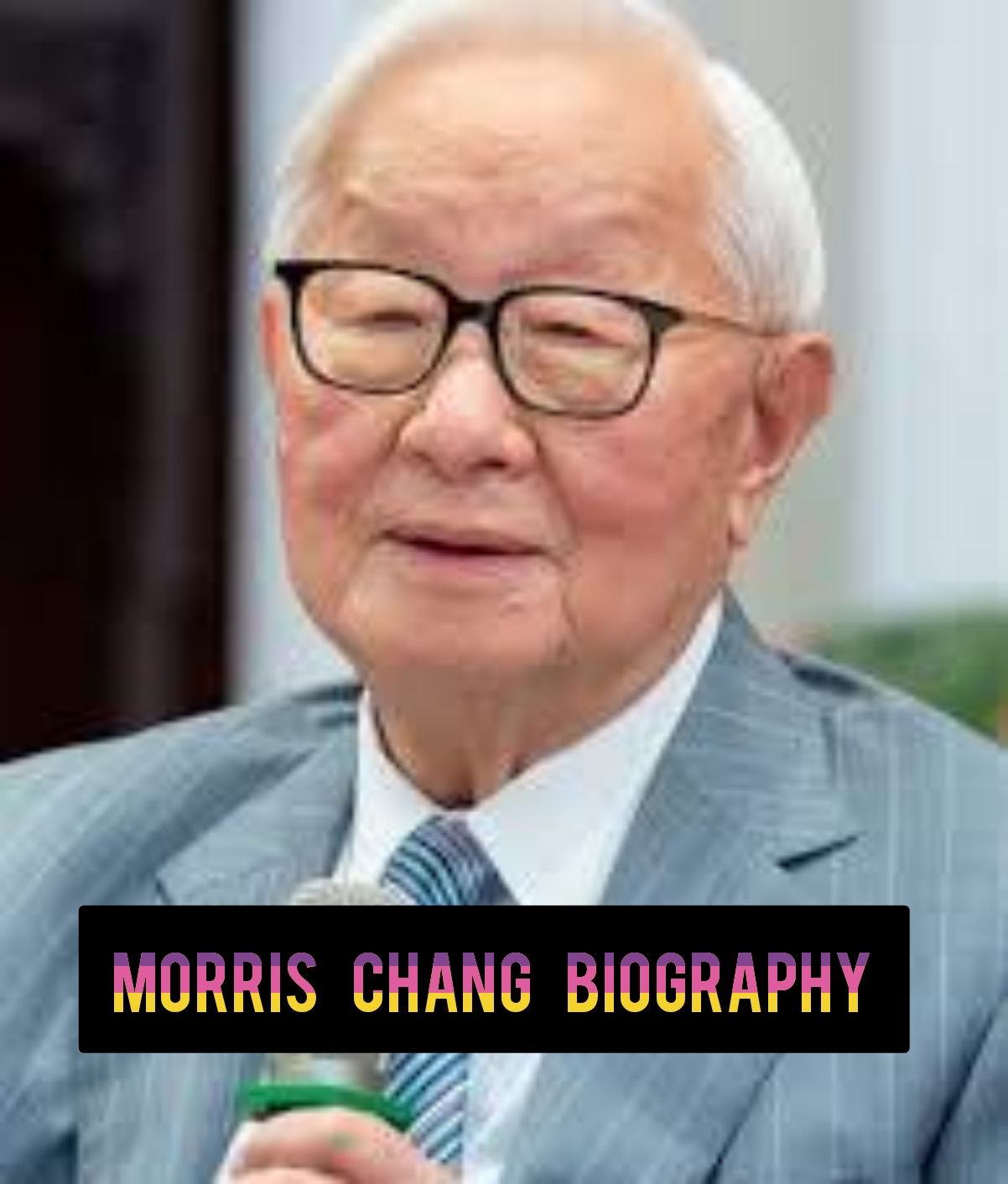
Morris Chang Biography
Morris Chang remains as one of the most influential figures in the history of technology. As the founder of Taiwan Semiconductor Manufacturing Company, commonly known as TSMC, he transformed the way the world produces the tiny silicon chips that power smartphones, computers, cars, artificial intelligence systems, and countless other devices. His vision created an entirely new business model that allowed countless innovators to bring their ideas to life without the enormous cost of building their own factories. Today TSMC ranks among the most valuable and strategically important companies on the planet, and Chang’s name is permanently linked to the rise of Taiwan as a global technology powerhouse.
This biography traces the full arc of his remarkable journey from a childhood marked by war and displacement to the creation of an industry that underpins modern life. It explores the personal choices, professional setbacks, bold decisions, and lasting contributions that define his story.
An interesting fact that draws the reader in appears right at the start of his professional story. When Morris Chang founded TSMC in 1987, he was already fifty five years old. Most people at that age begin thinking about retirement. Chang instead left the United States, moved to Taiwan, and launched a company that would eventually become one of the most critical industrial enterprises in the world. Bill Gates, Steve Jobs, and other celebrated founders began their companies in their twenties. Chang proved that transformative entrepreneurship has no fixed age limit.
Morris Chang Early Life
Morris Chang was born on July 10, 1931, in Ningbo, Chekiang province, China, into a middle class family. His father, Chang Wei kuan, had received a Western style education and worked in banking and government finance. His mother came from a family with scholarly roots. The household valued learning, yet the times offered little stability.
Chang’s childhood unfolded against a backdrop of almost constant conflict. The Second Sino Japanese War, the broader Second World War, and the Chinese Civil War forced the family to move repeatedly. Before the age of eighteen he had lived in six different cities and changed schools ten times. He experienced air raids in Guangzhou and Chongqing. He crossed front lines while the family fled Japanese occupied Shanghai. Periods of relative calm in Hong Kong gave way to sudden flight when Japanese forces occupied the territory after the attack on Pearl Harbor. The family later reached the wartime capital of Chongqing, then returned to Shanghai after the war ended, only to flee again as Communist forces advanced in 1948.
These years left a lasting imprint. Chang later described the dominant realities of his early life as war, poverty, and injustice. The family never starved, yet their existence remained modest. Constant movement taught him adaptability and the value of education as a portable asset. As a boy he dreamed of becoming a novelist or journalist. His father firmly discouraged the idea, warning that writers often struggled to make a living. Practical careers in science or engineering, he insisted, offered greater security.
In 1949, at the age of eighteen, Chang left China for the United States. An uncle who taught at Northeastern University helped him gain admission to Harvard University. He arrived in July of that year as one of the very few Chinese students in the freshman class. Harvard felt like paradise after years of upheaval. He performed well academically and placed in the top ten percent of his class. Yet after one year he decided that a more specialized technical education would improve his career prospects. He transferred to the Massachusetts Institute of Technology.
At MIT he earned a Bachelor of Science degree in mechanical engineering in 1952 and a Master of Science degree in 1953. He continued for a Master of Engineering degree completed in 1955. He attempted the qualifying examination for a doctoral program twice and failed both times. Rather than persist, he chose to enter the job market. Years later he would call that failure one of the greatest strokes of luck in his life because it directed him into the semiconductor industry at its very beginning.
Morris Chang Personal Life
Chang became a United States citizen in 1962. While studying at MIT he met Christine Chen, who was attending Boston University. They married in 1952 when both were twenty two years old. The couple had one daughter, Chang Hsiao lin. The marriage lasted nearly four decades, though they separated at the end of 1981. They delayed formal divorce until 1991 so that their daughter could complete college without the disruption of a legal separation. Chang has always spoken of this period with restraint and respect for the privacy of his family.
In 2001 he married Sophie Chang. Through this marriage he gained two stepdaughters. Sophie Chang is a cousin of Terry Gou, the founder of Foxconn. The couple has maintained a low public profile regarding their private life. They divide time between residences in Hsinchu, near TSMC’s headquarters, and Taipei.
Chang’s personal interests reveal a man of quiet intellectual tastes. He has long enjoyed classical music, particularly works through the era of Gustav Mahler. He plays bridge with skill and dedication. Reading remains a lifelong habit; he has spoken of recent books ranging from historical novels to political memoirs. In earlier decades he was known for smoking a pipe, a habit he eventually set aside for health reasons after receiving heart stents. He continues to follow global economic and political developments closely and keeps a Bloomberg terminal in his office.
A lesser known aspect of his character is his commitment to writing. Despite the practical path his father urged, Chang never entirely abandoned his early literary ambitions. In 1998 he published the first volume of his autobiography covering the years from 1931 to 1964. He insisted on writing it in Chinese, even though he had rarely used the language for nearly forty years after leaving mainland China. The second volume, covering 1964 to 2018, appeared in 2024 after years of intermittent work interrupted by the pandemic and health concerns. He has said the process allowed him to relive his life and that he wrote primarily for his own satisfaction.
Morris Chang Rise to Prominence
After leaving MIT in 1955, Chang received job offers from Ford Motor Company and from the semiconductor division of Sylvania Electric Products. The difference in salary was only one dollar a month in Sylvania’s favor. He chose the semiconductor path, a decision that would define the rest of his career. At Sylvania he learned the fundamentals of transistor technology through self study and practical work improving production yields.
Three years later, in 1958, he joined Texas Instruments in Dallas. TI was then a rising force in the young semiconductor industry. Chang advanced rapidly. Within a few years he managed engineering sections. The company sponsored his doctoral studies at Stanford University, where he earned a PhD in electrical engineering in 1964. He returned to TI and continued climbing the ranks. By the 1970s he had become group vice president responsible for the company’s worldwide semiconductor business. Under his leadership TI became the world’s leading producer of integrated circuits. He introduced aggressive price reductions on chips, a strategy that expanded markets and forced competitors to follow.
Yet success at TI eventually stalled. Strategic disagreements arose. Chang believed the company should focus intensely on semiconductors. Corporate leadership preferred to diversify into consumer products such as home computers. He was passed over for higher positions. In 1981 he was moved to a role overseeing quality and productivity, a shift he later described as being put out to pasture. In 1983 he resigned.
He next became president and chief operating officer of General Instrument Corporation. The fit proved poor. After only one year he left that post as well. At fifty four, with two recent professional disappointments behind him, Chang faced an uncertain future. Venture capital offers existed, yet he waited for the right opportunity.
That opportunity arrived from Taiwan. In 1985 the government invited him to become president of the Industrial Technology Research Institute, known as ITRI. The mandate was clear: strengthen Taiwan’s industrial and technological base. Chang accepted and moved to Taiwan after decades in the United States. While evaluating opportunities he recognized a structural change underway in the semiconductor industry. Designing chips and manufacturing them were becoming separable activities. Companies that specialized only in design, later called fabless firms, needed reliable factories that would not compete with them. Chang proposed the pure play foundry model, a company that manufactured chips solely for other companies.
In 1987, with financial support from the Taiwanese government and technology partnership from the Dutch firm Philips, he founded Taiwan Semiconductor Manufacturing Company. The initial capital reached approximately 145 million dollars. Many industry observers remained skeptical. Established chip makers preferred to keep manufacturing in house. Chang persisted. An early order from Intel in 1988 provided crucial validation. TSMC began to attract customers and grow.
Morris Chang Major Achievements
The pure play foundry model proved revolutionary. It dramatically lowered the barrier to entry for chip designers. Entrepreneurs and established firms alike could focus on innovation in circuit design without the multi billion dollar cost of building fabrication plants. TSMC’s success enabled the rise of companies such as Nvidia, Qualcomm, and many others. Jensen Huang of Nvidia has publicly stated that his company would not exist in its present form without TSMC.
Under Chang’s leadership TSMC expanded steadily. The company listed on the Taiwan stock exchange in 1994 and later on the New York Stock Exchange, becoming the first Taiwanese firm to do so. Revenue grew from hundreds of millions to tens of billions of dollars. Process technology advanced through successive generations of smaller transistors. TSMC achieved leadership in advanced nodes that power smartphones and high performance computing. By the 2020s the company held a dominant share of the global foundry market, often exceeding sixty percent, and produced the most sophisticated chips for Apple, Nvidia, and other leading technology firms.
Chang served as chief executive officer from the founding until 2005, returned to the role during the difficult period after the 2008 financial crisis, and remained chairman until his full retirement in 2018. He received numerous honors recognizing his contributions. These include the IEEE Robert N. Noyce Medal in 2000, the Nikkei Asia Prize in 2005, the Computer History Museum Fellow Award in 2007, and the IEEE Medal of Honor in 2011 for outstanding leadership in the semiconductor industry. The Taiwanese government awarded him the Order of Propitious Clouds in 2018 and the Order of Dr. Sun Yat sen in 2024. He has been elected to the United States National Academy of Engineering and has served as a life member emeritus of the MIT Corporation. An MIT building now bears the names of Morris and Sophie Chang in recognition of their support.
Beyond commercial success, Chang helped establish Taiwan as a central node in the global technology supply chain. The semiconductor industry became a cornerstone of the island’s economy and a source of national pride. His emphasis on integrity, customer trust, and continuous technological advancement shaped TSMC’s corporate culture and set standards that continue to influence the broader industry.
Morris Chang Challenges Setbacks
Chang’s path contained repeated obstacles that tested his resilience. The wartime childhood already described forced constant adaptation. Academic disappointment at MIT redirected him, yet the early years at Sylvania taught hard lessons when that division struggled and eventually declined. The long rise at Texas Instruments ended in frustration when strategic differences and internal politics limited further advancement.
The brief tenure at General Instrument reinforced the sense that traditional American corporate paths might no longer fit. Accepting the invitation to Taiwan required leaving a familiar country and culture at midlife. Founding TSMC demanded convincing skeptical investors during a period of industry weakness. Early customers were limited. Recruiting top talent proved difficult because many preferred established integrated device manufacturers.
Natural disasters tested the company as well. After a major earthquake struck Taiwan in 1999, Chang pushed managers to restore production capacity rapidly while the company also contributed substantial relief funds. The global financial crisis of 2008 brought sharper difficulties. Revenue fell, technological issues with a key process node damaged relations with important customers including Nvidia, and internal decisions about workforce reductions created tension. At age seventy seven Chang returned as chief executive to stabilize the situation. He addressed quality problems, compensated affected customers, and worked to restore trust and direction.
Later years brought geopolitical pressures. Restrictions on technology transfers and concerns about supply chain security placed TSMC at the center of tensions between major powers. Chang has spoken openly about the end of unconstrained free trade in advanced semiconductors and the severe challenges that reality creates for continued growth. Through each difficulty he emphasized preparation, learning from mistakes without repeating them, and maintaining focus on technological leadership and customer service.
Morris Chang Legacy Current Status
Morris Chang retired fully from TSMC leadership in 2018 at the age of eighty six. He has remained a respected public voice on technology, economics, and geopolitics. He has served multiple times as a presidential envoy representing Taiwan at APEC meetings. In recent years he has continued to appear at selected industry events and to meet with long time associates such as Nvidia chief executive Jensen Huang. In early 2026 he made a notable public appearance for dinner with Huang after a period of reduced visibility.
His net worth, derived largely from TSMC shareholdings, places him among the wealthiest individuals connected to the semiconductor industry. More significant than personal wealth is the institutional legacy. TSMC continues to lead in advanced manufacturing and is expanding production capacity in the United States, Japan, and Europe while maintaining its core operations in Taiwan. The pure play foundry model he pioneered has become the dominant structure of the industry. Generations of engineers and entrepreneurs have built careers and companies because of the manufacturing capacity he made available.
Chang’s autobiography, completed in two volumes, offers a primary record of his experiences and reflections. He has expressed satisfaction at having achieved the highest goal he set for himself in the mid 1980s: building a great company. At the same time he has noted that success at that level remains rare and that preparation meeting opportunity explains much of what appears as luck.
Conclusion
The life of Morris Chang illustrates the power of persistence, technical mastery, and strategic vision applied over decades. From a childhood shaped by conflict he built a career that helped define the digital age. His decision at midlife to create an entirely new kind of company changed the economics of innovation worldwide. The chips manufactured by TSMC sit inside devices used by billions of people every day. That tangible impact, combined with the example of late blooming entrepreneurship, forms a lasting contribution that extends far beyond any single company or country.
FAQs
What is Morris Chang best known for
Morris Chang is best known as the founder of Taiwan Semiconductor Manufacturing Company and the pioneer of the pure play semiconductor foundry model. This model allows companies to design chips without owning factories and has become the foundation of the modern chip industry.
When and where was Morris Chang born
Morris Chang was born on July 10, 1931, in Ningbo, Chekiang province, China.
What degrees did Morris Chang earn
He earned bachelor’s and master’s degrees in mechanical engineering from the Massachusetts Institute of Technology and a PhD in electrical engineering from Stanford University. He also attended Harvard University for one year before transferring to MIT.
Why did Morris Chang leave Texas Instruments
He left after strategic disagreements with corporate leadership and after being passed over for higher positions. He believed the company should focus more sharply on semiconductors rather than diversifying into consumer products.
How old was Morris Chang when he founded TSMC
He was fifty five years old when he founded TSMC in 1987.
What is the pure play foundry model
It is a business model in which a company manufactures semiconductor chips exclusively for other companies and does not design or sell its own branded chips. This approach removes competition between the manufacturer and its customers.
Is Morris Chang still involved with TSMC
He retired from all executive and chairman roles in 2018. He remains a respected figure and occasionally appears at industry events or meets with long time partners, but he no longer holds operational responsibility.
What awards has Morris Chang received
Major awards include the IEEE Medal of Honor, the IEEE Robert N. Noyce Medal, the Computer History Museum Fellow Award, the Order of Propitious Clouds, and the Order of Dr. Sun Yat sen, among others.
Does Morris Chang have a family
He has one daughter from his first marriage and two stepdaughters from his second marriage to Sophie Chang. He has generally kept family details private.
What is Morris Chang’s lasting impact on technology
His creation of the foundry model enabled the growth of the fabless semiconductor industry, accelerated innovation in electronics, and positioned Taiwan as a critical center of global technology manufacturing.