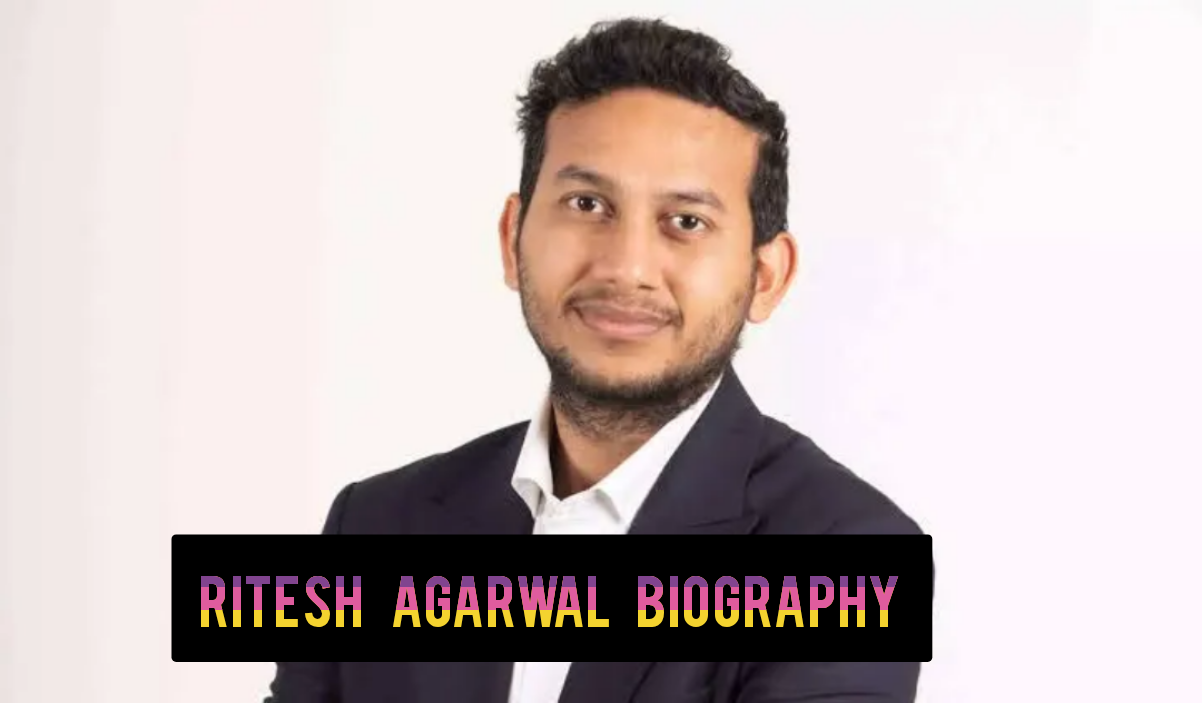
Ritesh Agarwal Biography
Ritesh Agarwal stands as one of the most remarkable figures in modern Indian entrepreneurship. From a modest background in a small town in Odisha he built a global hospitality technology company that transformed how millions of travelers find affordable and standardized stays. As the founder and Group CEO of PRISM, the parent company of OYO, he has guided the business through rapid expansion, severe challenges, and a determined return to profitability. His journey from college dropout to young billionaire and Shark Tank India panelist continues to inspire aspiring founders across the world.
At just nineteen years old Ritesh Agarwal became the first Indian selected for the prestigious Thiel Fellowship. That single recognition gave him the confidence and resources to turn a personal travel frustration into a company that would one day operate hundreds of thousands of storefronts across more than thirty five countries.
Ritesh Agarwal Early Life
Ritesh Agarwal was born on 16 November 1993 in Bissam Cuttack, a small town in the state then known as Orissa and now called Odisha. He grew up in Titilagarh and later in Rayagada where his Marwari family ran a modest retail shop. The family business taught him early lessons about customers, cash flow, and the daily realities of small scale commerce. He is the youngest of four siblings and his father Ramesh Agarwal managed the shop while his mother handled the household.
From a young age Ritesh showed unusual curiosity. He taught himself basic computer programming at around the age of eight by reading his elder brother’s school books and experimenting on a computer that stood in his father’s office. Access to technology was limited in small town Odisha in those days, yet he made the most of every opportunity. By the age of thirteen he was already selling SIM cards door to door, gaining his first real experience of sales and hustling.
His schooling began at Sacred Heart School in Rayagada. Later the family sent him to St. John’s Senior Secondary School in Kota, Rajasthan, a town famous for preparing students for competitive engineering entrance examinations. Like many ambitious Indian teenagers of his generation he prepared for the Indian Institutes of Technology entrance test. While in Kota he even self published a practical guide titled The Encyclopedia of Indian Engineering Colleges that listed and described top institutions. The book reflected his habit of identifying gaps in information and packaging solutions for others.
After finishing school he moved to Delhi in 2011 and enrolled at the Indian School of Business and Finance to study a University of London international programme. The move was partly to satisfy his parents’ hopes for a conventional education. Yet classrooms could not hold his attention for long. He spent more time attending entrepreneurship events, traveling across India on tight budgets, and thinking about business ideas than sitting in lectures. The experience of staying in unpredictable budget hotels across the country planted the seed for what would become his life’s work.
Ritesh Agarwal Personal Life
Ritesh Agarwal married Geetansha Sood on 7 March 2023 in a ceremony held in Delhi. The couple had known each other for more than a decade before tying the knot. Geetansha, who hails from Lucknow and comes from a business family, has been a steady presence through the intense years of building the company. In December 2023 they welcomed their first child, a son named Aryan. Ritesh has spoken publicly about the joy of fatherhood and how the sleepless nights of building a startup prepared him in unexpected ways for the sleepless nights of parenting.
He maintains a disciplined personal lifestyle. He is vegetarian and has never consumed coffee or alcohol, a fact he has shared openly on Shark Tank India. Fitness has become more important to him in recent years. He follows functional high intensity training and sometimes works out late at night after long work hours. He enjoys cycling, reading business books, watching documentaries, and traveling. His favorite films include Munna Bhai M.B.B.S. and 3 Idiots. He remains an avid car enthusiast and occasionally shares glimpses of his collection that includes models from Mercedes and BMW.
Despite the public profile that comes with running a large company and appearing on national television, Ritesh keeps family life relatively private. He has spoken with affection about the values his late father instilled in him, especially the importance of staying grounded even when success arrives. His father passed away in March 2023 after a fall, a personal loss that came during a period of intense professional activity. Ritesh has continued to credit the early lessons from home for shaping his approach to business and life.
Ritesh Agarwal Rise to prominence
The turning point in Ritesh Agarwal’s life arrived through direct experience rather than theory. As a teenager traveling across India he repeatedly stayed in budget hotels that offered wildly inconsistent quality. Some rooms were clean and comfortable. Others were poorly maintained and overpriced for what they delivered. He realized that travelers had almost no reliable way to know what they would get. At the same time small hotel owners struggled to attract guests in a fragmented market.
In 2011 and 2012 he launched Oravel Stays, an online platform that listed budget accommodations much like an early version of Airbnb focused on India. The idea attracted some attention and the startup joined the Venture Nursery accelerator programme. Yet the pure marketplace model had limitations. Travelers still faced uncertainty about standards once they arrived. Ritesh concluded that the real opportunity lay in standardizing the experience itself.
In 2013 he received the Thiel Fellowship, a one hundred thousand dollar grant and mentorship programme created by Peter Thiel for young people who choose to build companies instead of attending college. He was the first Indian and the first Asian resident selected. The fellowship gave him both capital and the freedom to rethink the business completely. That same year he relaunched the company as OYO Rooms, short for On Your Own. The new model involved partnering with small hotels, upgrading rooms to consistent standards, and offering them under a single trusted brand at affordable prices.
The early days were extremely hands on. OYO began with a handful of hotels in the Gurgaon area near Delhi. Occupancy in one of the first properties rose dramatically after the OYO partnership. Word spread among both travelers and hotel owners. Funding followed. By 2015 the company was expanding rapidly across Indian cities. Major investors including SoftBank, Sequoia, and Lightspeed provided capital that fueled further growth. By 2018 OYO had raised one billion dollars and achieved unicorn status. International expansion began into markets such as China, the United Kingdom, the United Arab Emirates, Indonesia, and later the United States.
Ritesh’s youth often worked against him in the beginning. Investors sometimes asked his father to promise that the young founder would not return to college. Cold emails went unanswered. Established players doubted that a teenager from Odisha could build a technology driven hospitality company. He persisted through those early rejections and gradually converted skeptics into believers through results.
Ritesh Agarwal Major achievements
Under Ritesh Agarwal’s leadership OYO grew into one of the world’s largest hospitality technology platforms by room count and storefronts. At various points the network included tens of thousands of hotels and hundreds of thousands of rooms and homes across dozens of countries. The company introduced standardized checklists for cleanliness, Wi Fi, air conditioning, and other essentials that many budget properties previously lacked. This approach brought a level of predictability that had been missing from the lower end of the Indian hotel market and later in other emerging markets.
Financial milestones followed the operational ones. OYO raised more than three billion dollars in total funding over the years. In 2019 the company reached a peak valuation of around ten billion dollars. Ritesh himself appeared on the Forbes 30 Under 30 Asia list and later featured in various rich lists as one of the youngest self made Indian billionaires. In 2020 Hurun listed him with a net worth of approximately 1.1 billion dollars. More recent estimates from Hurun and other trackers place his wealth in the range of several thousand crore rupees, reflecting both the recovery of the business and his significant equity stake.
Awards and recognition have included the Thiel Fellowship, the Business World Young Entrepreneur Award, EY Entrepreneur of the Year in the services category, and inclusion in Bloomberg’s list of most influential people. In 2024 he joined the panel of Shark Tank India as its youngest shark, using the platform to mentor and invest in early stage startups. He has continued in that role in subsequent seasons, bringing practical operator experience to the show.
More recently the parent company rebranded from Oravel Stays to PRISM to reflect a broader portfolio that includes multiple hotel brands such as OYO, Townhouse, Sunday, Palette, Motel 6, and Studio 6 after the acquisition of G6 Hospitality. PRISM has reported strong financial recovery with consecutive years of positive EBITDA and rising net profits. In FY26 the company posted a sharp increase in profit and revenue growth, positioning it for a proposed public listing. Ritesh has also spoken about the growing role of technology and artificial intelligence in running hospitality operations more efficiently.
Beyond pure business metrics, the company’s impact lies in formalizing a large part of the unorganized budget hotel sector, creating employment, and making travel more accessible for millions of middle class customers in India and other markets.
Ritesh Agarwal Challenges/setbacks
Success did not arrive without serious obstacles. The original Oravel Stays model struggled because simply listing hotels was not enough. Quality varied too widely and customer trust remained limited. That early setback forced a complete pivot that became the foundation of OYO.
Rapid growth itself created new problems. Expanding into thousands of properties at high speed led to inconsistent experiences. Some guests complained about rooms that did not match descriptions. Hotel partners sometimes felt pressure around contracts and commissions. In the late 2010s the company faced public criticism, media scrutiny, and internal operational strain. Ritesh and his team had to remove underperforming properties from the network and rebuild systems for quality control.
The COVID 19 pandemic delivered the most severe test. Global travel collapsed almost overnight. Occupancy rates plunged, revenues disappeared, and the company was forced into painful decisions including layoffs and property exits. Like many hospitality businesses OYO faced an existential crisis. Ritesh later described the period as one that required focusing on survival and then on rebuilding with greater discipline.
Regulatory challenges also appeared. In 2022 the Competition Commission of India imposed a fine related to competitive practices. Earlier allegations from a former co founder regarding fund handling were denied by the company. These episodes added to the public pressure that comes with operating a high profile startup.
International expansion brought its own difficulties. Different markets demanded different approaches. China, Europe, and the United States each presented unique regulatory, cultural, and competitive hurdles. The company had to learn which markets offered the best long term fit and adjust accordingly.
Through each setback Ritesh emphasized learning and adaptation. He has spoken about the value of failing early and in public, describing it as a kind of vaccine against the fear that stops many people from starting. The company shifted strategy toward more sustainable growth, stronger unit economics, technology driven efficiency, and a clearer focus on core markets and profitable brands. The turnaround from heavy losses to consistent profitability stands as evidence of that resilience.
Ritesh Agarwal Legacy/current status
As of 2026 Ritesh Agarwal continues to lead PRISM as Founder and Group CEO. The company operates a diversified portfolio of hotel and home brands across more than thirty five countries with hundreds of thousands of storefronts. A significant portion of revenue now comes from international markets, particularly the United States following the G6 Hospitality acquisition. India remains an important market but no longer the sole focus.
PRISM has filed updated documents for a substantial initial public offering, signaling confidence in the business model and long term prospects. Financial results in recent years show rising revenue, expanding EBITDA, and meaningful net profits. Technology and artificial intelligence play an increasing role in operations, from partner tools to dynamic pricing and guest experience management.
On the public stage Ritesh remains active as a Shark Tank India panelist, sharing practical advice with the next generation of founders. He occasionally speaks at industry events about the future of hospitality, the rise of spiritual tourism in India, and the importance of building durable companies rather than chasing short term valuations. His personal net worth estimates vary across different rich lists but consistently place him among the youngest self made Indian billionaires.
His story continues to resonate because it combines classic elements of the Indian startup narrative with global ambition. A young man from a small town who dropped out of college, received early validation from Silicon Valley, scaled aggressively, survived a near death experience for the business during the pandemic, and then steered the company back to health. The rebrand to PRISM and the preparation for a public listing mark the latest chapter rather than the end of the story.
Conclusion
Ritesh Agarwal’s journey demonstrates that clarity of purpose and willingness to adapt can overcome both limited resources and public skepticism. He turned a personal inconvenience experienced during budget travel into a company that improved standards for millions of guests and created opportunities for countless small hotel owners. The path included early failure, explosive growth, painful corrections, and eventual recovery. What remains constant is a practical focus on solving real problems at scale. For young entrepreneurs the lesson is not that every idea will succeed, but that persistence, learning from setbacks, and building something useful can create lasting impact far beyond the original vision.
FAQs
Who is Ritesh Agarwal?
Ritesh Agarwal is an Indian entrepreneur and the founder and Group CEO of PRISM, the parent company of the global hospitality brand OYO. He is known for building one of the world’s largest networks of standardized budget hotels and homes and for serving as a panelist on Shark Tank India.
When and where was Ritesh Agarwal born?
Ritesh Agarwal was born on 16 November 1993 in Bissam Cuttack, Odisha, India. He was raised in Titilagarh and Rayagada.
What is the meaning of OYO?
OYO stands for On Your Own. The name reflects the idea that travelers should feel in control of their stay experience.
Is Ritesh Agarwal married?
Yes. He married Geetansha Sood on 7 March 2023. The couple has a son named Aryan who was born in December 2023.
Did Ritesh Agarwal complete his college education?
No. He enrolled in a college programme in Delhi but dropped out to focus on his startup. He was selected for the Thiel Fellowship in 2013, which supported young founders who chose entrepreneurship over formal higher education.
What are some of Ritesh Agarwal’s major awards?
He received the Thiel Fellowship in 2013, appeared on the Forbes 30 Under 30 Asia list, won the Business World Young Entrepreneur Award, and received the EY Entrepreneur of the Year award in the services category among other recognitions.
How did OYO begin?
The company started as Oravel Stays, a listing platform for budget accommodations. After realizing that quality consistency was the bigger problem, Ritesh Agarwal pivoted the business in 2013 to OYO Rooms, which standardized rooms in partner hotels and offered them under a single brand.
What is PRISM?
PRISM is the current corporate name of the parent company formerly known as Oravel Stays. The rebrand reflects a broader portfolio of hospitality brands and technology solutions beyond the original OYO brand.
Does Ritesh Agarwal appear on Shark Tank India?
Yes. He joined the panel as an investor and judge starting with season 3 in 2024 and has continued in subsequent seasons.
What challenges did OYO face during the pandemic?
The COVID 19 crisis caused a near total collapse in travel demand. The company faced sharp revenue declines, had to reduce costs including through layoffs, exit certain properties, and fundamentally rethink its growth strategy in order to survive and later return to profitability.